


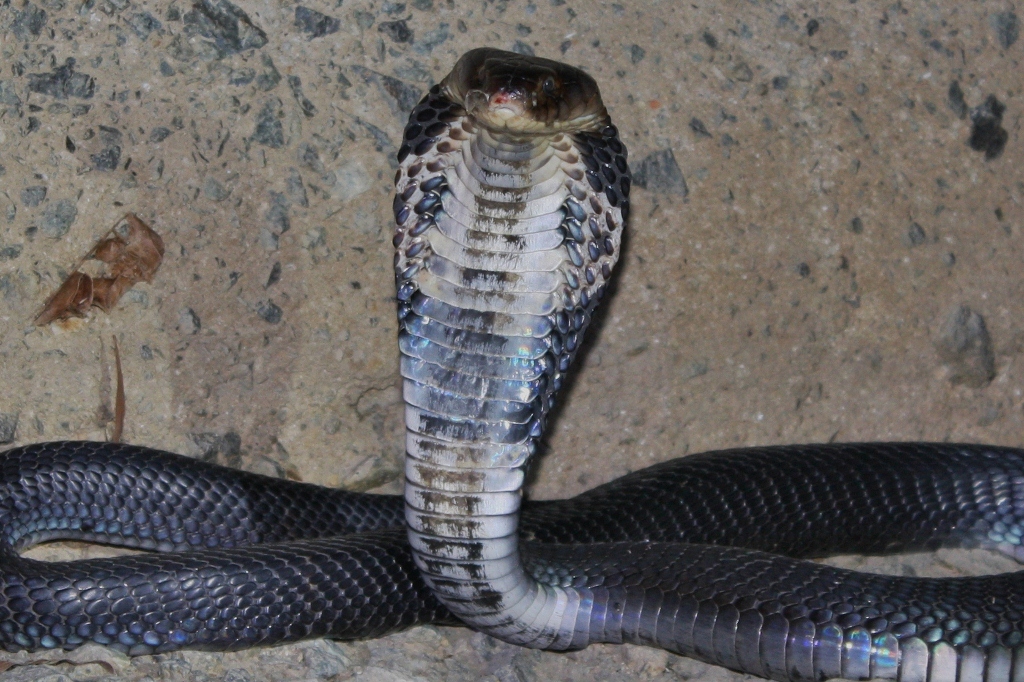
CHINESE COBRA
Naja atra
DESCRIPTION
Chinese Cobra (Naja atra) is a highly venomous snake known for its distinctive hood and slender body. It typically exhibits a range of colors from yellowish-brown to dark brown, often with lighter bands or spots. This species is primarily found in forests and grasslands, where it is known for its agility and ability to climb trees, making it an adept hunter in various environments.
FUN FACTS
- Chinese Cobras are known for their impressive ability to control their venom output, allowing them to deliver dry bites when they feel threatened rather than using venom
- This adaptability helps them survive encounters with larger predators
- | The venom of the Chinese Cobra is neurotoxic, affecting the nervous system and potentially leading to respiratory failure in humans if untreated
- Despite their dangerous reputation, they play a crucial role in controlling rodent populations in their habitats
QUICK INFO
Lifespan10-15 years in the wild, up to 20 years in captivi
Average Weight1-2 kg
Average Length1.2-1.5 m
Diet TypeCarnivore
Social Structuresolitary, typically found alone except during mating season
Activity PatternDiurnal
Breeding SeasonSpring (March-May)
- Habitat
- Chinese Cobras inhabit a variety of environments, including forests, grasslands, and agricultural areas. They are often found near water sources, which provide both hydration and hunting opportunities.
- Biomes
- Temperate Forest, Grassland, Agricultural
- Native Range
- The native range of the Chinese Cobra includes parts of Southeast Asia, particularly in southern China, Taiwan, and northern Vietnam.
- Continent
- Asia
- Countries
- China, Taiwan, Vietnam
- Diet
- Chinese Cobras primarily feed on small mammals, birds, and other reptiles. They are skilled at ambushing their prey, using their venom to immobilize it quickly.
- Diet Type
- Carnivore
- Favorite Food
- small mammals, birds, reptiles
- Social Structure
- solitary, typically found alone except during mating season
- Activity Pattern
- Diurnal
- Group Size
- 1
- Territorial
- 0
 VU
VU
1-2 kg
Weight
1.2-1.5 m
Length
- Coloration
- Typically yellowish-brown to dark brown with lighter bands or spots.
- Sexual Dimorphism
- Males are generally larger than females.
- Lifespan
- 10-15 years in the wild, up to 20 years in captivi
- Offspring per Birth
- 10-30
- Sexual Maturity
- 2-3 years
- Breeding Season
- Spring (March-May)
LC
Least Concern
IUCN Red List Status
- Population Status
- The population of Chinese Cobras is currently stable, but habitat destruction poses a potential threat.
- Wild Population Estimate
- Unknown
- Population Trend
- Stable
- Endangered
- 0
- Threats
- Main threats include habitat loss due to agriculture and urbanization, as well as persecution due to fear of venomous snakes. Additionally, they are sometimes collected for the pet trade.
- Predators
- Birds of prey, larger snakes, and mammals such as mongooses.
- Defense Mechanisms
- Chinese Cobras can deliver a potent venom through their fangs, which they use to subdue prey and defend themselves. They also display a hood and hiss loudly to deter threats.
- Found in Zoos
- Common