


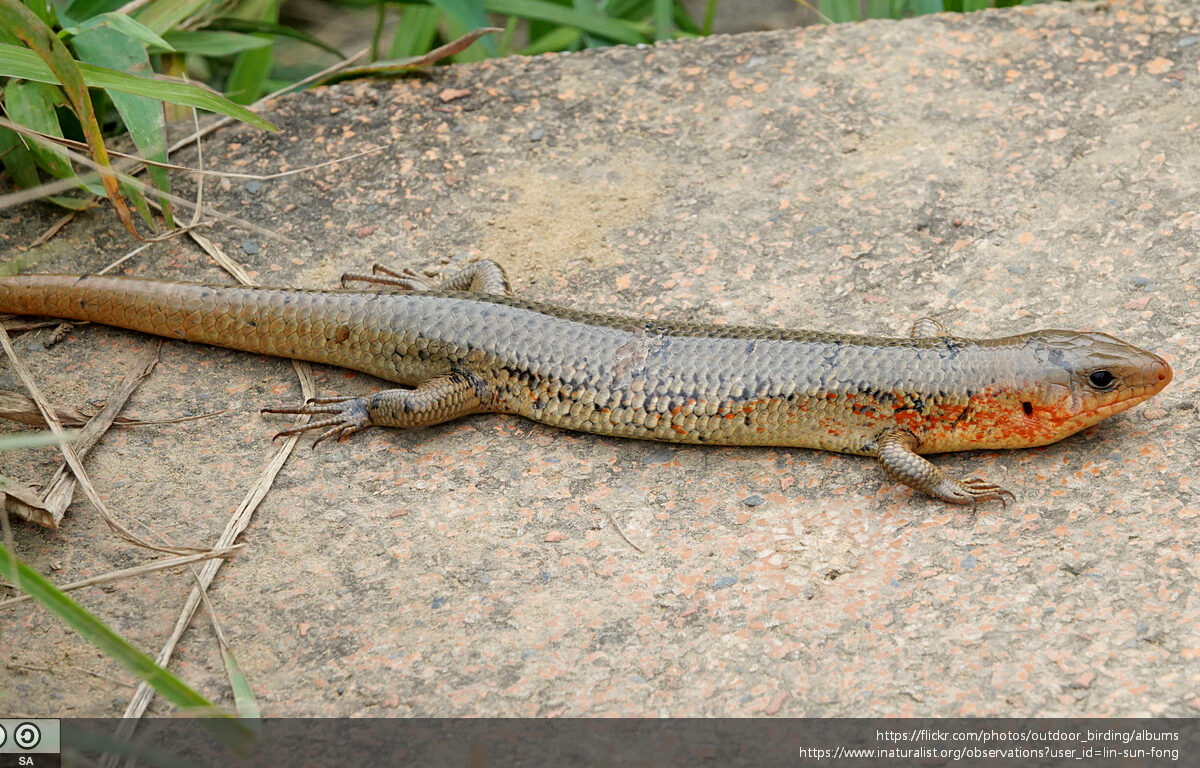
CHINESE SKINK
Plestiodon chinensis
DESCRIPTION
Chinese Skink (Plestiodon chinensis) is a small to medium-sized lizard characterized by its smooth, shiny scales and elongated body. It typically exhibits a coloration that ranges from brown to gray, often with lighter stripes or spots along its sides. This species is known for its burrowing behavior, often found hiding under rocks or leaf litter, and it plays a significant role in its ecosystem as both a predator and prey.
FUN FACTS
- Chinese Skinks are known for their ability to regenerate their tails after losing them, a fascinating adaptation that helps them evade predators
- Additionally, they have a unique method of locomotion, often using their limbs to push off surfaces while maintaining a streamlined body for quick movement
QUICK INFO
Lifespan5-10 years in the wild
Average Length15-25 cm
Diet TypeInsectivore
Social Structuresolitary, individuals typically do not form social groups
Activity PatternDiurnal
Breeding SeasonSpring (April-June)
- Habitat
- Chinese Skinks inhabit a variety of environments, including forests, grasslands, and urban areas. They prefer areas with ample cover, such as leaf litter or rocks, which provide shelter from predators.
- Biomes
- Temperate Forest, Grassland, Urban
- Native Range
- The species is native to East Asia, particularly found in China and surrounding regions.
- Continent
- Asia
- Countries
- China, Taiwan, Japan, Korea
- Diet
- Chinese Skinks primarily feed on insects and other small invertebrates, making them effective insectivores. They may also consume small fruits and plant matter occasionally.
- Diet Type
- Insectivore
- Favorite Food
- insects, small invertebrates
- Social Structure
- solitary, individuals typically do not form social groups
- Activity Pattern
- Diurnal
- Group Size
- 1
- Territorial
- 0
 VU
VU
 LC
LC
 LC
LC
15-25 cm
Length
- Coloration
- brown to gray with lighter stripes or spots
- Sexual Dimorphism
- males may be slightly larger and more colorful than females
- Lifespan
- 5-10 years in the wild
- Offspring per Birth
- 3-10
- Sexual Maturity
- 1-2 years
- Breeding Season
- Spring (April-June)
LC
Least Concern
IUCN Red List Status
- Population Status
- The population is currently stable, with no significant declines reported.
- Wild Population Estimate
- unknown
- Population Trend
- Stable
- Endangered
- 0
- Threats
- Main threats include habitat loss due to urbanization and agricultural expansion. Additionally, they face predation from domestic animals and other wildlife.
- Predators
- birds of prey, snakes, domestic cats
- Defense Mechanisms
- Chinese Skinks can shed their tails when threatened, allowing them to escape while the predator is distracted.
- Found in Zoos
- Uncommon