


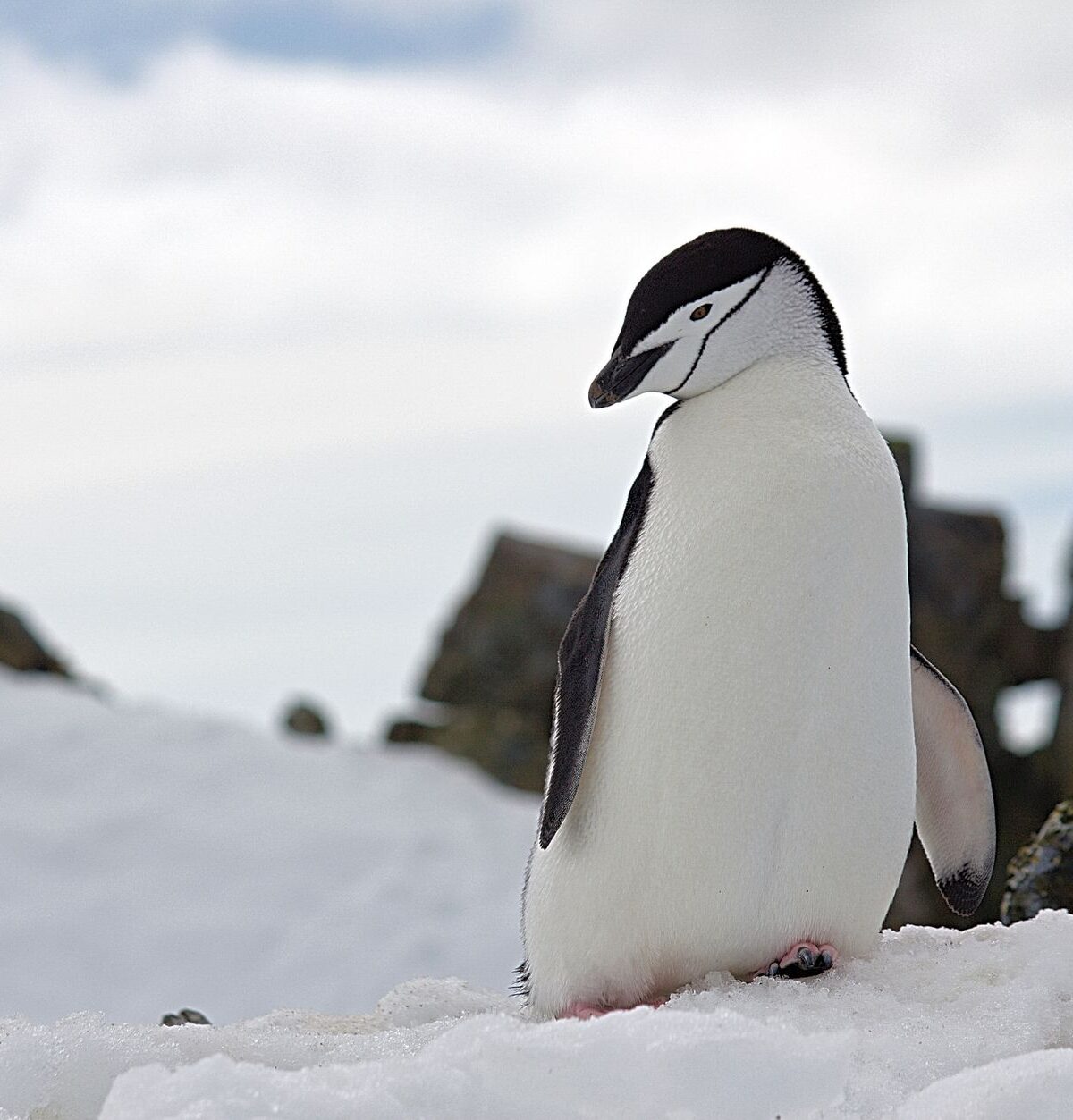
CHINSTRAP PENGUIN
DESCRIPTION
Chinstrap Penguin, also known as the brass penguin, is a medium-sized penguin characterized by its distinctive black cap and a narrow black band under its head that resembles a chinstrap. These penguins are known for their lively and social behavior, often seen in large colonies during the breeding season. They primarily inhabit sub-Antarctic islands and are well-adapted to their cold, harsh environments, often nesting on rocky shores and ice-free areas.
FUN FACTS
- Chinstrap Penguins are known for their energetic and acrobatic swimming abilities, often leaping out of the water in a behavior called porpoising
- They can dive to depths of over 70 meters in search of food, showcasing their remarkable adaptation to marine life.| These penguins are named for the distinctive black line that runs under their beak, resembling a chinstrap
- This unique feature helps to identify them among other penguin species and adds to their charming appearance
QUICK INFO
Lifespan15-20 years in the wild, up to 30 in captivity
Average Weight3-5 kg
Average Length68-76 cm
Diet TypeCarnivore
Social Structuregroup — they are often found in large colonies, especially during the breeding season.
Activity PatternDiurnal
Breeding SeasonSpring (October-December)
- Habitat
- Chinstrap Penguins inhabit icy coastal regions and rocky shorelines, often nesting in colonies on steep cliffs or rocky outcrops. They are typically found in areas with access to open water for foraging.
- Biomes
- Marine, Polar
- Native Range
- Chinstrap Penguins are native to the sub-Antarctic islands, including the South Shetland Islands and the South Orkney Islands, as well as parts of the Antarctic Peninsula.
- Continent
- Antarctica
- Countries
- Antarctica, Argentina, Chile
- Diet
- Chinstrap Penguins primarily feed on krill, fish, and other small marine organisms. Their diet can vary seasonally based on the availability of prey.
- Diet Type
- Carnivore
- Favorite Food
- krill
- Social Structure
- group — they are often found in large colonies, especially during the breeding season.
- Activity Pattern
- Diurnal
- Group Size
- 100-2000
- Territorial
- 0

 LC
LC
 LC
LC
3-5 kg
Weight
68-76 cm
Length
- Coloration
- They have a black head, white underparts, and a grayish back, with a distinctive black line under their beak.
- Sexual Dimorphism
- Males and females are similar in appearance, but males are generally larger.
- Lifespan
- 15-20 years in the wild, up to 30 in captivity
- Offspring per Birth
- 1-2
- Sexual Maturity
- 3-4 years
- Breeding Season
- Spring (October-December)
LC
Least Concern
IUCN Red List Status
- Population Status
- The population of Chinstrap Penguins is considered stable, with large colonies present in their native range.
- Wild Population Estimate
- 8 million
- Population Trend
- Stable
- Endangered
- 0
- Threats
- Main threats to Chinstrap Penguins include climate change, which affects their food supply, and human activities such as fishing and tourism. Additionally, changes in sea ice patterns can impact their breeding success.
- Predators
- Leopard seals, sea lions, and skuas are known predators of Chinstrap Penguins, particularly targeting their eggs and chicks.
- Defense Mechanisms
- Chinstrap Penguins use vocalizations and aggressive displays to defend their nests and young from potential threats.
- Found in Zoos
- Uncommon