


CHUCKWALLA
DESCRIPTION
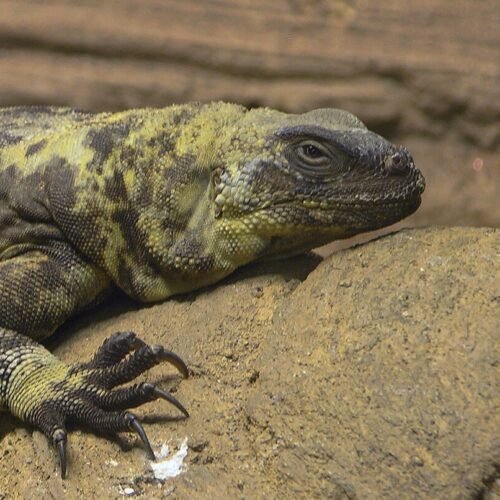
Chuckwallas are large, robust lizards characterized by their stocky bodies and thick, rounded tails. They have a distinctive coloration that ranges from gray to brown, often with lighter spots or patterns that help them blend into their rocky desert habitats. These lizards are known for their ability to inflate their bodies by swallowing air, which helps them fit into crevices and evade predators.
FUN FACTS
- Chuckwallas are known for their unique ability to inflate their bodies, which not only helps them escape predators but also aids in thermoregulation by increasing their surface area
- This inflation can make them appear much larger and more intimidating to potential threats
- | These lizards are excellent climbers and can often be seen basking on rocks or hiding in crevices to avoid the heat of the desert sun
- Their strong limbs and claws allow them to navigate their rocky habitats with ease
QUICK INFO
Lifespan10-20 years in the wild
Average Weight0.5-1.5 kg
Average Length30-50 cm
Diet TypeHerbivore
Social Structuresolitary, occasionally seen in small groups during basking
Activity PatternDiurnal
Breeding SeasonSpring (April-June)
- Habitat
- Chuckwallas inhabit rocky, arid environments such as deserts and scrublands. They are often found in areas with abundant boulders and crevices that provide shelter and protection from predators.
- Biomes
- Desert, Scrubland
- Native Range
- Chuckwallas are native to the southwestern United States and northwestern Mexico.
- Continent
- North America
- Countries
- United States, Mexico
- Diet
- Chuckwallas primarily feed on a variety of plant materials, including leaves, flowers, and fruits. They are known to consume a significant amount of vegetation, which is essential for their survival in arid environments.
- Diet Type
- Herbivore
- Favorite Food
- leaves, flowers, fruits
- Social Structure
- solitary, occasionally seen in small groups during basking
- Activity Pattern
- Diurnal
- Group Size
- 1-5
- Territorial
- 0
 VU
VU
 LC
LC
0.5-1.5 kg
Weight
30-50 cm
Length
- Coloration
- gray to brown with lighter spots or patterns
- Lifespan
- 10-20 years in the wild
- Offspring per Birth
- 5-15
- Sexual Maturity
- 2-3 years
- Breeding Season
- Spring (April-June)
LC
Least Concern
IUCN Red List Status
- Population Status
- Chuckwalla populations are generally stable, but local populations may be affected by habitat loss.
- Wild Population Estimate
- unknown
- Population Trend
- Stable
- Endangered
- 0
- Threats
- Main threats include habitat destruction due to urban development and off-road vehicle activity. Additionally, climate change poses a long-term risk to their desert habitats.
- Predators
- birds of prey, snakes, and larger mammals
- Defense Mechanisms
- Chuckwallas can inflate their bodies to fit into rock crevices, making it difficult for predators to extract them.
- Found in Zoos
- Uncommon