


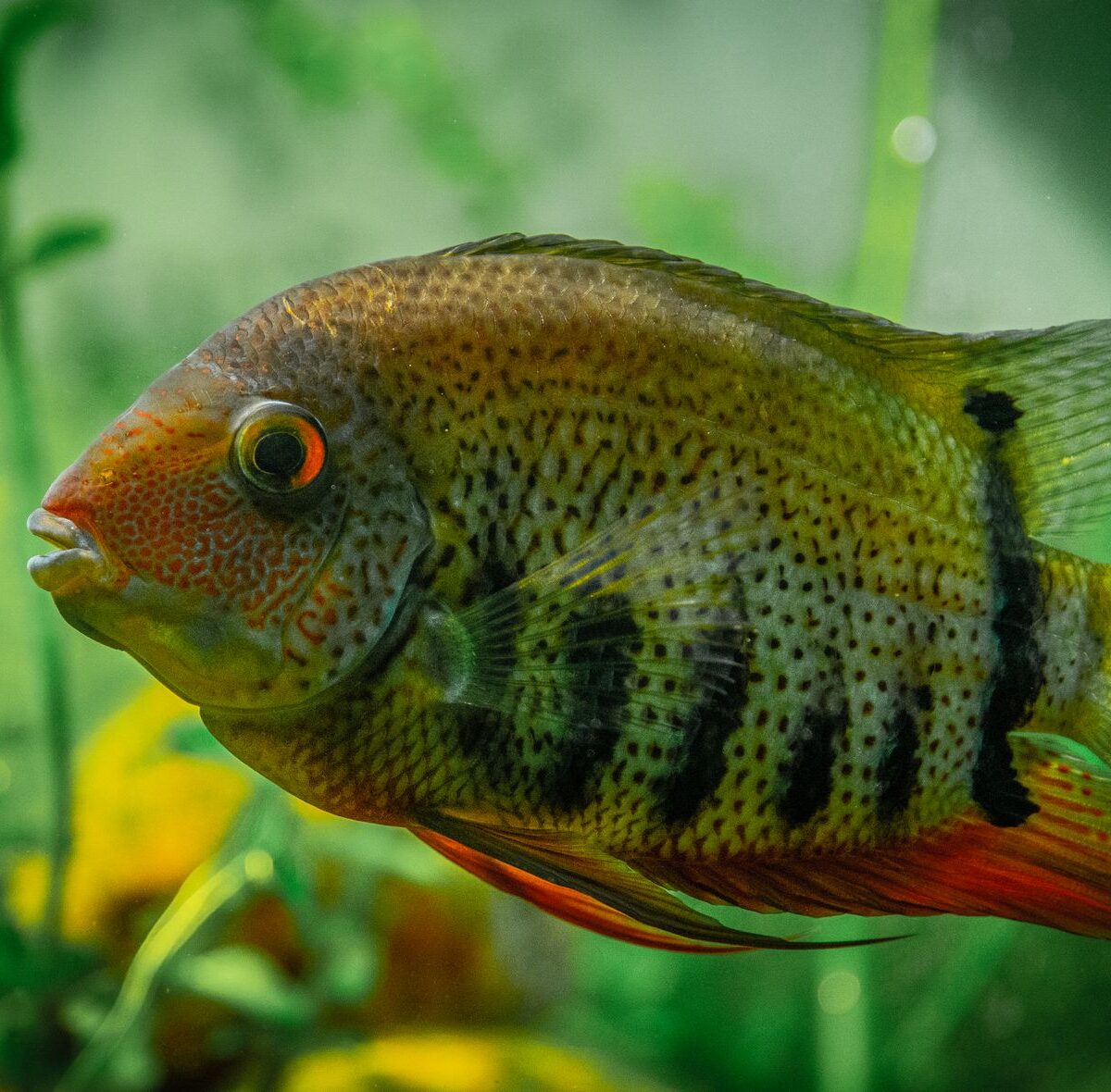
CICHLID
DESCRIPTION
Cichlids are a diverse group of freshwater fish known for their vibrant colors and complex behaviors. Commonly known as African Cichlids, they are found primarily in the African Great Lakes, where they exhibit a wide range of sizes and shapes. These fish are known for their territorial nature and intricate breeding behaviors, often involving mouthbrooding, where females carry fertilized eggs in their mouths until they hatch.
FUN FACTS
- Cichlids are known for their remarkable adaptability, having evolved into thousands of species with unique traits in isolated environments like the African Great Lakes
- | They exhibit fascinating parental care behaviors, with some species practicing mouthbrooding, where the female carries her young in her mouth for protection until they are ready to fend for themselves
QUICK INFO
Lifespan10-15 years in the wild, up to 20 years in captivi
Average Weight0.5-2 kg
Average Length10-30 cm
Diet TypeOmnivore
Social StructureCichlids can be solitary or social, often forming small groups or pairs during breeding. Their social interactions can be quite dynamic, with established hierarchies.
Activity PatternDiurnal
Breeding SeasonYear-round, with peaks during warmer months
- Habitat
- Cichlids inhabit freshwater environments, particularly lakes, rivers, and streams. They are often found in rocky substrates or areas with dense vegetation, which provide shelter and breeding sites.
- Biomes
- Freshwater, Lakes, Rivers
- Native Range
- Cichlids are primarily native to Africa, particularly the Great Lakes such as Lake Malawi, Lake Tanganyika, and Lake Victoria, but they can also be found in parts of Central and South America.
- Continent
- Africa, South America
- Countries
- Malawi, Tanzania, Uganda, Colombia, Venezuela
- Diet
- Cichlids are omnivorous, feeding on a variety of food sources including algae, small invertebrates, and other fish. Their diet can vary significantly depending on the species and their specific habitat.
- Diet Type
- Omnivore
- Favorite Food
- algae, small invertebrates, fish
- Social Structure
- Cichlids can be solitary or social, often forming small groups or pairs during breeding. Their social interactions can be quite dynamic, with established hierarchies.
- Activity Pattern
- Diurnal
- Group Size
- 1-10
- Territorial
- 1
 VU
VU
0.5-2 kg
Weight
10-30 cm
Length
- Coloration
- Cichlids exhibit a wide range of colors, including bright blues, yellows, and reds, often with intricate patterns.
- Sexual Dimorphism
- Males are typically larger and more colorful than females, especially during breeding.
- Lifespan
- 10-15 years in the wild, up to 20 years in captivi
- Offspring per Birth
- 10-50
- Sexual Maturity
- 6-12 months
- Breeding Season
- Year-round, with peaks during warmer months
EN
Endangered
IUCN Red List Status
- Population Status
- Cichlid populations vary widely, with some species being abundant while others are threatened or endangered due to habitat loss.
- Wild Population Estimate
- Unknown
- Population Trend
- Decreasing
- Endangered
- 1
- Threats
- Cichlids face threats from habitat destruction, pollution, and invasive species. Overfishing and the aquarium trade also contribute to population declines in certain species.
- Predators
- Larger fish, birds, and some mammals are known to prey on cichlids, particularly juveniles.
- Defense Mechanisms
- Cichlids often use their coloration for camouflage and can exhibit aggressive behaviors to defend their territory.
- Compatible Animals
- other cichlids, catfish, some tetras
- Found in Zoos
- Common