


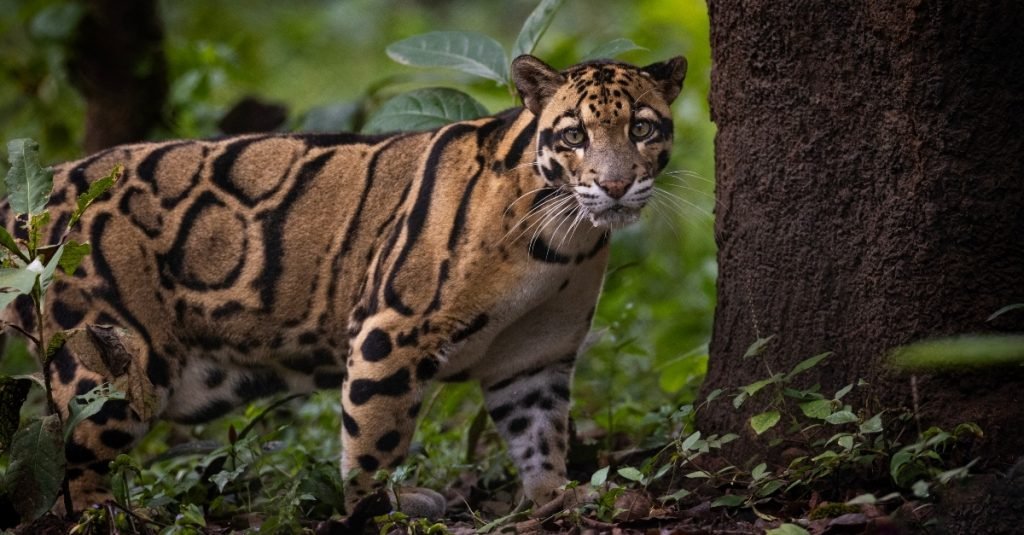
CLOUDED LEOPARD
DESCRIPTION
The Clouded Leopard (Neofelis nebulosa) is a medium-sized wild cat known for its distinctive cloud-like spots and large, rounded ears. It has a long body and a long tail, which aids in balance as it navigates through the trees of its forest habitat. This elusive feline is primarily arboreal, spending much of its time in the canopy, and is known for its stealthy hunting techniques, often stalking prey from above.
FUN FACTS
- Clouded leopards are known for their unique ability to climb down trees headfirst, a skill that is rare among cats
- This adaptation allows them to navigate their arboreal habitat with ease and hunt effectively from above.| Unlike many other big cats, clouded leopards have a relatively short and stocky build, which contributes to their agility in the trees
- Their long tails can be as long as their bodies, providing balance as they leap between branches
QUICK INFO
Lifespan10-15 years in the wild, up to 20 years in captivi
Average Weight11-23 kg
Average Length75-110 cm
Diet TypeCarnivore
Social Structuresolitary, typically living alone except during mating season or when a mother is raising her young
Activity PatternCrepuscular
Breeding SeasonYear-round, with peaks depending on the region
- Habitat
- Clouded leopards inhabit tropical and subtropical forests, often favoring areas with dense vegetation and a high canopy. They are adept climbers and are often found in trees, where they can hunt and rest.
- Biomes
- Tropical Rainforest, Subtropical Forest
- Native Range
- Clouded leopards are found in Southeast Asia, ranging from the Himalayan foothills to the forests of China, and down through the Malay Peninsula and into Sumatra and Borneo.
- Continent
- Asia
- Countries
- Bhutan, India, Nepal, Myanmar, Thailand, Laos, Vietnam, Malaysia, Indonesia, China
- Diet
- Clouded leopards are carnivorous and primarily hunt small to medium-sized mammals and birds. Their diet includes species such as deer, monkeys, and various rodents.
- Diet Type
- Carnivore
- Favorite Food
- deer, monkeys, rodents
- Social Structure
- solitary, typically living alone except during mating season or when a mother is raising her young
- Activity Pattern
- Crepuscular
- Group Size
- 1
- Territorial
- 1
11-23 kg
Weight
75-110 cm
Length
- Coloration
- The fur is a rich golden or grayish color with dark, cloud-like spots and stripes.
- Sexual Dimorphism
- Males are generally larger than females.
- Lifespan
- 10-15 years in the wild, up to 20 years in captivi
- Gestation Period
- 93-95 days
- Offspring per Birth
- 1-5
- Sexual Maturity
- 2-3 years
- Breeding Season
- Year-round, with peaks depending on the region
VU
Vulnerable
IUCN Red List Status
- Population Status
- The population of clouded leopards is currently declining due to habitat loss and poaching.
- Wild Population Estimate
- Less than 10,000
- Population Trend
- Decreasing
- Endangered
- 1
- Threats
- The main threats to clouded leopards include habitat destruction due to logging and agriculture, as well as poaching for their beautiful pelts. Additionally, they face threats from the illegal wildlife trade.
- Conservation Program
- Various conservation programs are in place, including habitat protection and anti-poaching initiatives.
- Defense Mechanisms
- Clouded leopards rely on their camouflage and arboreal skills to evade predators and ambush prey.
- Found in Zoos
- Uncommon