


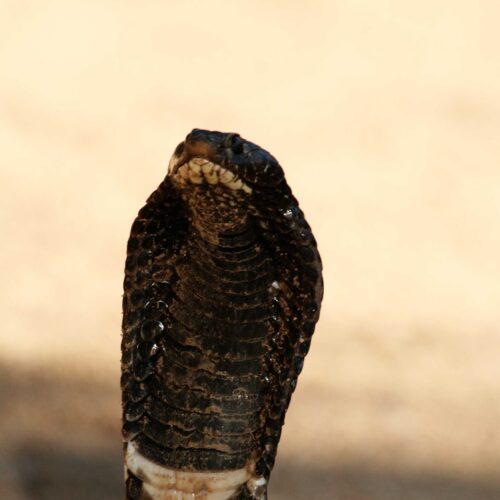
COBRA
Naja spp.
DESCRIPTION
Cobras are highly recognizable snakes known for their distinctive hood, which they can expand when threatened. They possess a slender body and can vary in color from black to brown, with some species displaying vibrant patterns. Cobras are primarily found in tropical and subtropical regions, where they play a crucial role in controlling rodent populations and maintaining ecological balance.
FUN FACTS
- Cobras are known for their unique ability to 'dance' when they hear music, which is actually a response to movement rather than sound
- Additionally, the king cobra, the largest venomous snake in the world, can reach lengths of up to 5.5 meters and is capable of consuming other snakes, including its own species.| Cobras have a fascinating method of hunting; they can sense the heat emitted by their prey, allowing them to locate warm-blooded animals even in complete darkness
- This adaptation is crucial for their survival in various habitats, making them effective nocturnal hunters
QUICK INFO
Lifespan10-20 years in the wild, up to 30 in captivity
Average Weight2-4 kg
Average Length1.5-2.5 m
Diet TypeCarnivore
Social Structuresolitary
Activity PatternNocturnal
Breeding SeasonSpring (March-May)
- Habitat
- Cobras inhabit a variety of environments, including forests, grasslands, and agricultural areas. They often prefer areas with ample cover and access to water sources.
- Biomes
- Tropical Rainforest, Savanna, Grassland
- Native Range
- Cobras are native to Africa and Asia, with various species distributed across these continents.
- Continent
- Africa, Asia
- Countries
- India, Indonesia, Egypt, South Africa, Thailand
- Diet
- Cobras primarily feed on small mammals, birds, and other reptiles. They are known for their ability to consume prey that is larger than their head due to their flexible jaws.
- Diet Type
- Carnivore
- Favorite Food
- rodents, birds
- Social Structure
- solitary
- Activity Pattern
- Nocturnal
- Group Size
- 1
- Territorial
- 0
 VU
VU

2-4 kg
Weight
1.5-2.5 m
Length
- Coloration
- varies from black, brown, to yellow with patterns
- Sexual Dimorphism
- males are typically larger than females
- Lifespan
- 10-20 years in the wild, up to 30 in captivity
- Offspring per Birth
- 10-30
- Sexual Maturity
- 2-4 years
- Breeding Season
- Spring (March-May)
VU
Vulnerable
IUCN Red List Status
- Population Status
- Some species are common, while others are threatened due to habitat loss and hunting.
- Wild Population Estimate
- unknown
- Population Trend
- Decreasing
- Endangered
- 1
- Threats
- Main threats include habitat destruction, poaching for their skin and venom, and human-wildlife conflict. Many species are also affected by the illegal pet trade.
- Predators
- birds of prey, larger snakes, mongooses
- Defense Mechanisms
- Cobras can deliver a potent venom through their fangs, which they use to immobilize prey and defend themselves. They also exhibit warning displays, such as hood expansion and hissing.
- Found in Zoos
- Common