


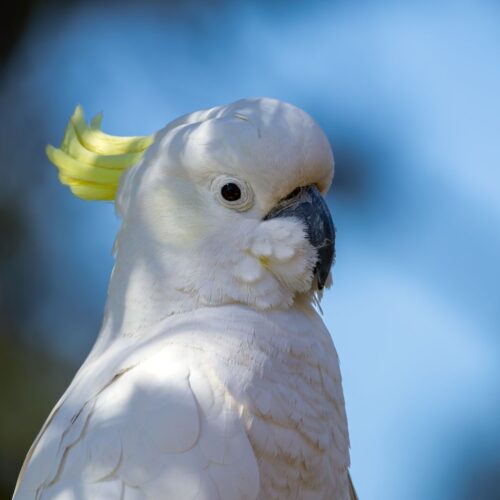
COCKATOO
Cacatua spp.
DESCRIPTION
Cockatoos are medium to large-sized parrots known for their striking crests and sociable nature. They are highly intelligent and can mimic human speech and sounds.
FUN FACTS
- Cockatoos can live for over 60 years in captivity | They are known for their ability to use tools | Some species can learn to mimic human speech very effectively
QUICK INFO
Lifespan20-40 years in wild, up to 60 in captivity
Average Weight300-900 g
Average Length30-60 cm
Diet TypeHerbivore
Social Structuregroup — they often form large flocks for foraging and socializing.
Activity PatternDiurnal
Breeding SeasonSpring (August-December)
- Habitat
- Cockatoos inhabit a variety of environments, including forests, woodlands, and savannas. They prefer areas with abundant food sources and nesting sites.
- Biomes
- Tropical Rainforest, Savanna, Woodland
- Native Range
- Cockatoos are native to Australia, New Guinea, and surrounding islands.
- Continent
- Australia, Asia
- Countries
- Australia, Indonesia, Papua New Guinea
- Diet
- Cockatoos primarily eat seeds, nuts, fruits, and roots. They have strong beaks that allow them to crack open hard seeds and nuts.
- Diet Type
- Herbivore
- Favorite Food
- seeds, nuts, fruits
- Social Structure
- group — they often form large flocks for foraging and socializing.
- Activity Pattern
- Diurnal
- Group Size
- 10-30
- Territorial
- 1
 VU
VU
 LC
LC
300-900 g
Weight
30-60 cm
Length
- Coloration
- Cockatoos typically have white, black, or pink plumage, often with bright yellow or orange crests.
- Sexual Dimorphism
- Males and females may have subtle differences in coloration and size, but are often difficult to distinguish.
- Lifespan
- 20-40 years in wild, up to 60 in captivity
- Offspring per Birth
- 1-3
- Sexual Maturity
- 2-4 years
- Breeding Season
- Spring (August-December)
EN
Endangered
IUCN Red List Status
- Population Status
- Some species are common, while others are threatened due to habitat loss.
- Wild Population Estimate
- Unknown
- Population Trend
- Decreasing
- Endangered
- 1
- Threats
- Main threats include habitat destruction, illegal trapping for the pet trade, and competition with invasive species.
- Predators
- Birds of prey, snakes, and large mammals may prey on cockatoos.
- Defense Mechanisms
- Cockatoos use loud vocalizations and their strong beaks to defend themselves.
- Compatible Animals
- other parrots, small mammals
- Found in Zoos
- Common