


COLLARED FLYCATCHER
Ficedula albicollis
DESCRIPTION
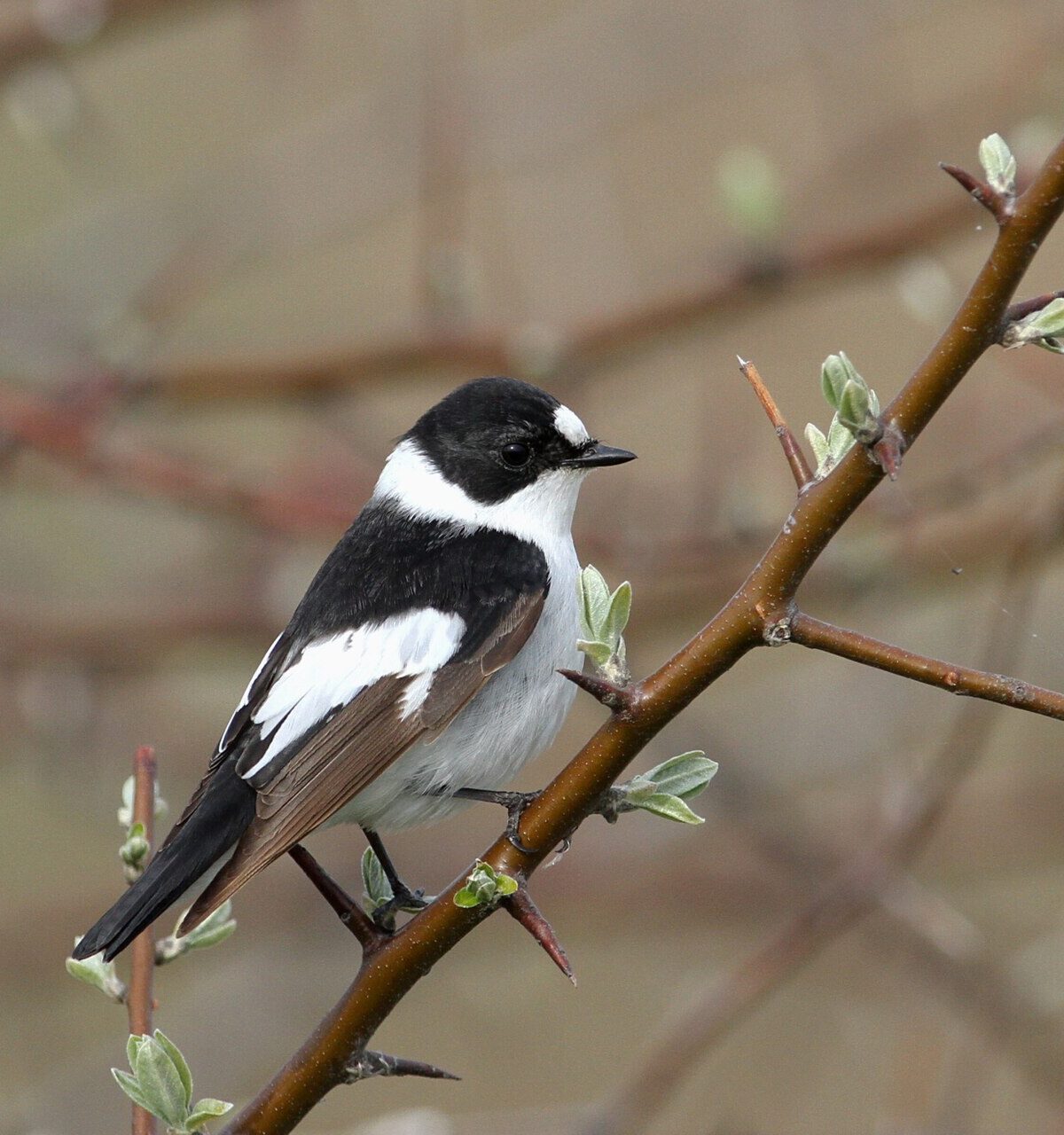
Collared Flycatcher (Ficedula albicollis) is a small passerine bird known for its striking appearance, particularly the male's black and white plumage with a distinctive white collar. This species is often found in deciduous and mixed forests, where it can be seen flitting about in search of insects. During the breeding season, males are known for their melodious songs, which they use to attract females and establish territory.
FUN FACTS
- The Collared Flycatcher is known for its impressive migratory journey, traveling thousands of kilometers from its breeding grounds in Europe to wintering areas in Africa
- This species is also a skilled insect hunter, often seen catching prey mid-flight, showcasing its agility and precision.| Interestingly, the male Collared Flycatcher is known to engage in elaborate courtship displays, which include singing and showcasing its plumage to attract females
- These displays are crucial for establishing territory and attracting a mate during the breeding season
QUICK INFO
Lifespan3-5 years in the wild
Average Weight10-15 g
Average Length12-13 cm
Diet TypeInsectivore
Social Structurepair, typically monogamous during the breeding season
Activity PatternDiurnal
Breeding SeasonSpring (April-June)
- Habitat
- This species prefers deciduous and mixed forests, often near open areas or edges where it can easily find food. It is also found in parks and gardens during migration.
- Biomes
- Temperate Forest, Boreal Forest
- Native Range
- The Collared Flycatcher breeds in Eastern and Central Europe and migrates to Africa for the winter.
- Continent
- Europe, Africa
- Countries
- Sweden, Finland, Poland, Hungary, Romania, Serbia, Bulgaria, Greece
- Diet
- The Collared Flycatcher primarily feeds on insects and other small invertebrates, which it catches in mid-air or forages for on tree branches. It may also consume some plant material, especially during the non-breeding season.
- Diet Type
- Insectivore
- Favorite Food
- small insects, caterpillars
- Social Structure
- pair, typically monogamous during the breeding season
- Activity Pattern
- Diurnal
- Group Size
- 1-2
- Territorial
- 1
 LC
LC
10-15 g
Weight
12-13 cm
Length
- Coloration
- Males have a striking black upper body with a white collar and underparts, while females are more subdued with brownish tones.
- Sexual Dimorphism
- Males are more brightly colored than females, with distinct black and white plumage.
- Lifespan
- 3-5 years in the wild
- Offspring per Birth
- 4-6
- Sexual Maturity
- 1 year
- Breeding Season
- Spring (April-June)
LC
Least Concern
IUCN Red List Status
- Population Status
- The population of Collared Flycatchers is currently stable, although habitat loss poses a potential threat.
- Wild Population Estimate
- 100,000-200,000
- Population Trend
- Stable
- Endangered
- 0
- Threats
- Main threats include habitat destruction due to logging and agricultural expansion. Climate change may also impact their migratory patterns and breeding success.
- Predators
- Common predators include larger birds of prey, such as sparrowhawks and jays, as well as domestic cats.
- Defense Mechanisms
- They rely on their agility and speed to evade predators, often using quick flight maneuvers.
- Found in Zoos
- Uncommon