


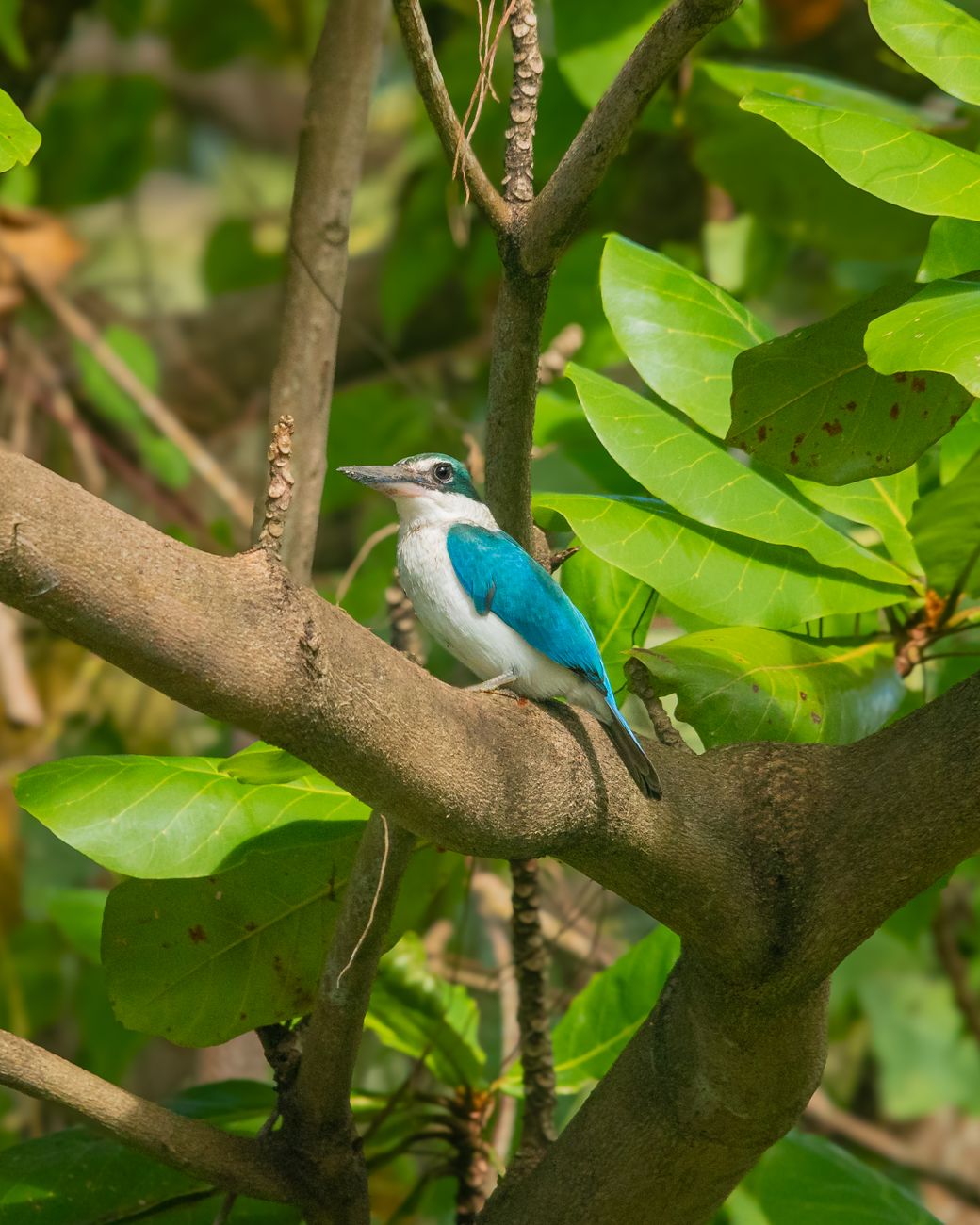
COLLARED KINGFISHER
Todiramphus chloris
DESCRIPTION
Collared Kingfisher (Todiramphus chloris) is a striking bird known for its vibrant blue-green plumage and distinctive white collar around its neck. This species is often found near coastal areas, mangroves, and estuaries, where it can be seen perched on branches or wires, scanning the water for prey. Its behavior includes a mix of solitary hunting and occasional social interactions, particularly during the breeding season when pairs are formed.
FUN FACTS
- Collared Kingfishers are known for their impressive diving skills, which allow them to catch fish with remarkable precision
- They can often be seen hovering above the water before making a swift plunge to catch their prey
- | These birds are also known for their loud, distinctive calls, which can be heard from a distance, making them a favorite among birdwatchers
- Their striking appearance and vocalizations contribute to their popularity in aviculture
QUICK INFO
Lifespanup to 10 years in the wild
Average Weight100-150 g
Average Length25-30 cm
Diet TypePiscivore
Social Structurepair, often seen alone or in breeding pairs
Activity PatternDiurnal
Breeding SeasonSpring to early summer
- Habitat
- This species thrives in coastal habitats, including mangroves, mudflats, and estuaries, as well as in some forested areas near water. They prefer environments with abundant food sources and suitable nesting sites.
- Biomes
- Coastal, Mangrove, Tropical Rainforest
- Native Range
- Collared Kingfisher is native to a wide range across Southeast Asia, the Pacific Islands, and parts of Australia.
- Continent
- Asia, Australia
- Countries
- Indonesia, Philippines, Papua New Guinea, Australia, Solomon Islands
- Diet
- Collared Kingfishers primarily feed on small fish, crustaceans, and insects, which they catch by diving into the water from their perches. They are skilled hunters, often using a sit-and-wait strategy to ambush their prey.
- Diet Type
- Piscivore
- Favorite Food
- small fish, crustaceans
- Social Structure
- pair, often seen alone or in breeding pairs
- Activity Pattern
- Diurnal
- Group Size
- 1-2
- Territorial
- 1
 LC
LC
100-150 g
Weight
25-30 cm
Length
- Coloration
- vibrant blue-green with a white collar and underparts
- Lifespan
- up to 10 years in the wild
- Offspring per Birth
- 3-5
- Sexual Maturity
- 1-2 years
- Breeding Season
- Spring to early summer
LC
Least Concern
IUCN Red List Status
- Population Status
- The population of Collared Kingfisher is currently stable, with no major declines reported.
- Wild Population Estimate
- unknown
- Population Trend
- Stable
- Endangered
- 0
- Threats
- Main threats include habitat loss due to coastal development and pollution. However, the species is adaptable and can thrive in modified habitats.
- Predators
- Larger birds of prey, snakes, and domestic cats are known to prey on Collared Kingfishers.
- Defense Mechanisms
- They rely on their ability to quickly dive into water to escape predators.
- Found in Zoos
- Uncommon