


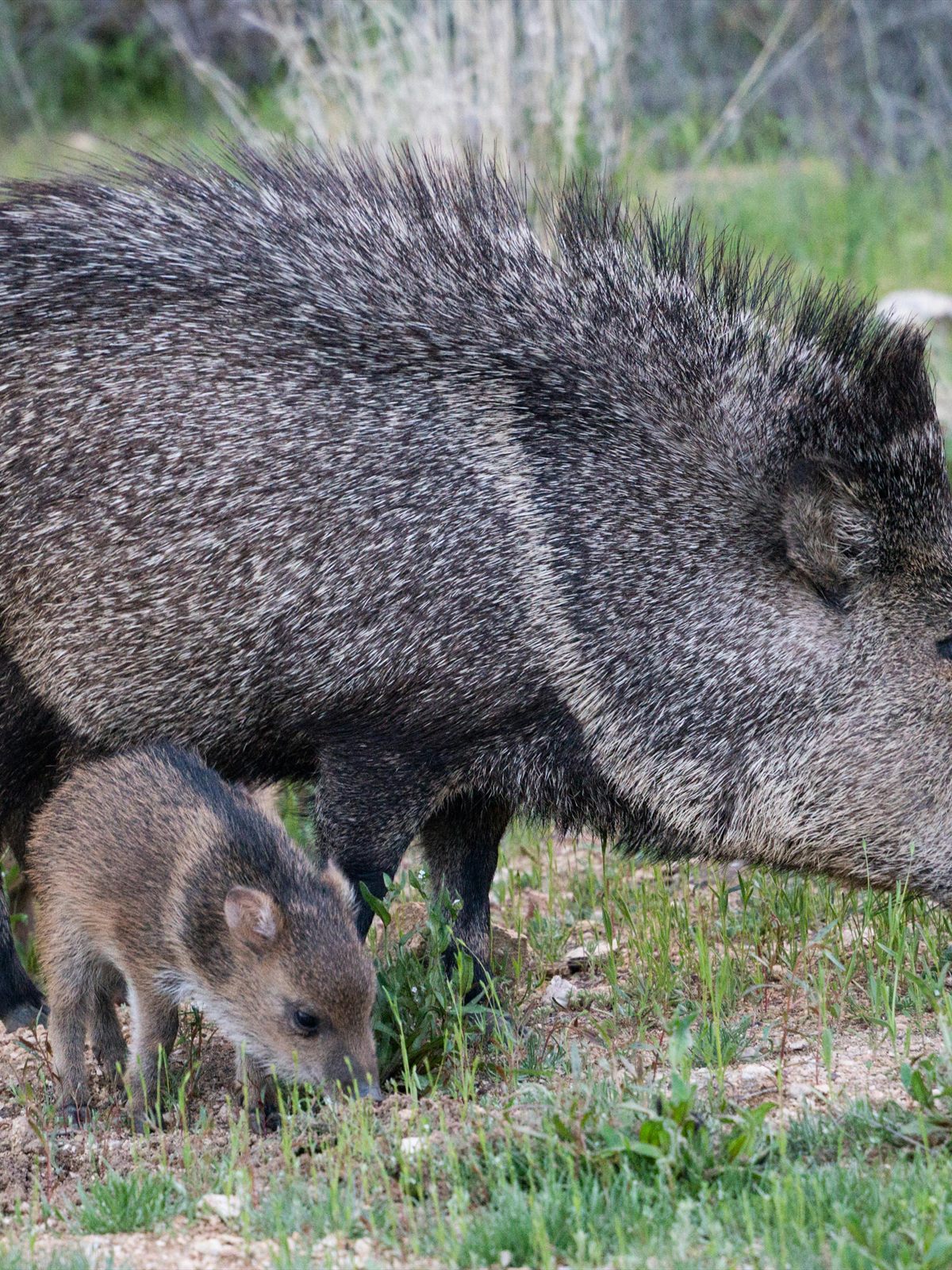
COLLARED PECCARY
Dicotyles tajacu
DESCRIPTION
Also called Javelina and Pecari, the Collared Peccary is a medium-sized mammal characterized by its stout body and short legs. It has a distinctive collar of white fur around its neck, which contrasts with its grayish-brown body. Collared Peccaries are social animals that often travel in groups, foraging for food and communicating through a variety of vocalizations.
FUN FACTS
- Collared Peccaries have a unique digestive system that allows them to efficiently process tough plant materials, making them well-suited for their foraging lifestyle
- | They play an important ecological role by helping to disperse seeds through their feces, contributing to the health of their ecosystems
QUICK INFO
Lifespan10-15 years in the wild, up to 20 in captivity
Average Weight20-30 kg
Average Length0.9-1.3 m
Diet TypeOmnivore
Social StructureThey are typically found in groups, which provide social interaction and protection from predators.
Activity PatternCrepuscular
Breeding SeasonYear-round, peaking in wet seasons
- Habitat
- Collared Peccaries inhabit a range of environments, including forests, scrublands, and grasslands. They prefer areas with dense vegetation that provide cover and food sources.
- Biomes
- Tropical Rainforest, Savanna, Desert
- Native Range
- They are native to the Americas, ranging from the southwestern United States to South America.
- Continent
- North America, South America
- Countries
- United States, Mexico, Brazil, Argentina, Peru
- Diet
- Collared Peccaries are omnivorous, feeding on a variety of plant materials, fruits, and small animals. They are known to root in the ground for tubers and other edible plants.
- Diet Type
- Omnivore
- Favorite Food
- fruits, roots, and tubers
- Social Structure
- They are typically found in groups, which provide social interaction and protection from predators.
- Activity Pattern
- Crepuscular
- Group Size
- 5-20
- Territorial
- 0
 LC
LC
 NT
NT
20-30 kg
Weight
0.9-1.3 m
Length
- Coloration
- grayish-brown with a distinctive white collar
- Lifespan
- 10-15 years in the wild, up to 20 in captivity
- Gestation Period
- 150 days
- Offspring per Birth
- 1-4
- Sexual Maturity
- 1-2 years
- Breeding Season
- Year-round, peaking in wet seasons
LC
Least Concern
IUCN Red List Status
- Population Status
- The population of Collared Peccaries is generally stable, though local declines may occur due to habitat loss.
- Wild Population Estimate
- 100,000+
- Population Trend
- Stable
- Endangered
- 0
- Threats
- Main threats include habitat destruction due to agriculture and urban development, as well as hunting in some areas. However, they are adaptable and can thrive in modified habitats.
- Predators
- Coyotes, mountain lions, jaguars, and humans are known predators of Collared Peccaries.
- Defense Mechanisms
- They can defend themselves by running quickly and using their sharp tusks if threatened.
- Found in Zoos
- Common