


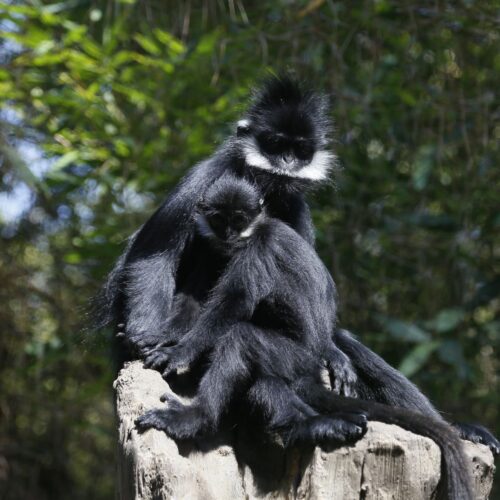
COLOBUS MONKEY
DESCRIPTION
Colobus monkeys are a group of Old World monkeys known for their distinctive black and white coloration and long tails. They are primarily arboreal and are found in the forests of Africa.
FUN FACTS
- Colobus monkeys have a unique digestive system that allows them to break down cellulose from leaves | They are known for their acrobatic skills, leaping between branches with ease | Their long tails help them maintain balance while navigating the treetops
QUICK INFO
Lifespan20-30 years in the wild, up to 40 in captivity
Average Weight4-10 kg
Average Length50-70 cm
Diet TypeHerbivore
Social Structuregroup — typically matriarchal with a dominant female leading the group.
Activity PatternDiurnal
Breeding SeasonYear-round, with peaks depending on the region.
- Habitat
- Colobus monkeys inhabit tropical rainforests and woodlands. They are highly adapted to life in the trees, spending most of their time in the canopy.
- Biomes
- Tropical Rainforest
- Native Range
- Central and East Africa, particularly in countries with dense forests.
- Continent
- Africa
- Countries
- Uganda, Kenya, Tanzania, Rwanda, Democratic Republic of the Congo
- Diet
- Colobus monkeys are herbivores, primarily feeding on leaves, fruits, and flowers. Their specialized stomachs help them digest tough plant material.
- Diet Type
- Herbivore
- Favorite Food
- leaves, fruits
- Social Structure
- group — typically matriarchal with a dominant female leading the group.
- Activity Pattern
- Diurnal
- Group Size
- 5-20
- Territorial
- 1
 VU
VU
 VU
VU
4-10 kg
Weight
50-70 cm
Length
- Coloration
- black and white fur with a long tail.
- Sexual Dimorphism
- males are generally larger than females.
- Lifespan
- 20-30 years in the wild, up to 40 in captivity
- Gestation Period
- 150 days
- Offspring per Birth
- 1
- Sexual Maturity
- 3-4 years
- Breeding Season
- Year-round, with peaks depending on the region.
VU
Vulnerable
IUCN Red List Status
- Population Status
- Population numbers are declining due to habitat loss and hunting.
- Wild Population Estimate
- unknown
- Population Trend
- Decreasing
- Endangered
- 1
- Threats
- Main threats include deforestation, habitat fragmentation, and hunting for bushmeat. These factors have led to significant population declines.
- Conservation Program
- Various local and international conservation efforts are in place to protect their habitats.
- Predators
- large birds of prey, leopards
- Defense Mechanisms
- They use loud vocalizations to communicate and warn others of danger.
- Found in Zoos
- Common