


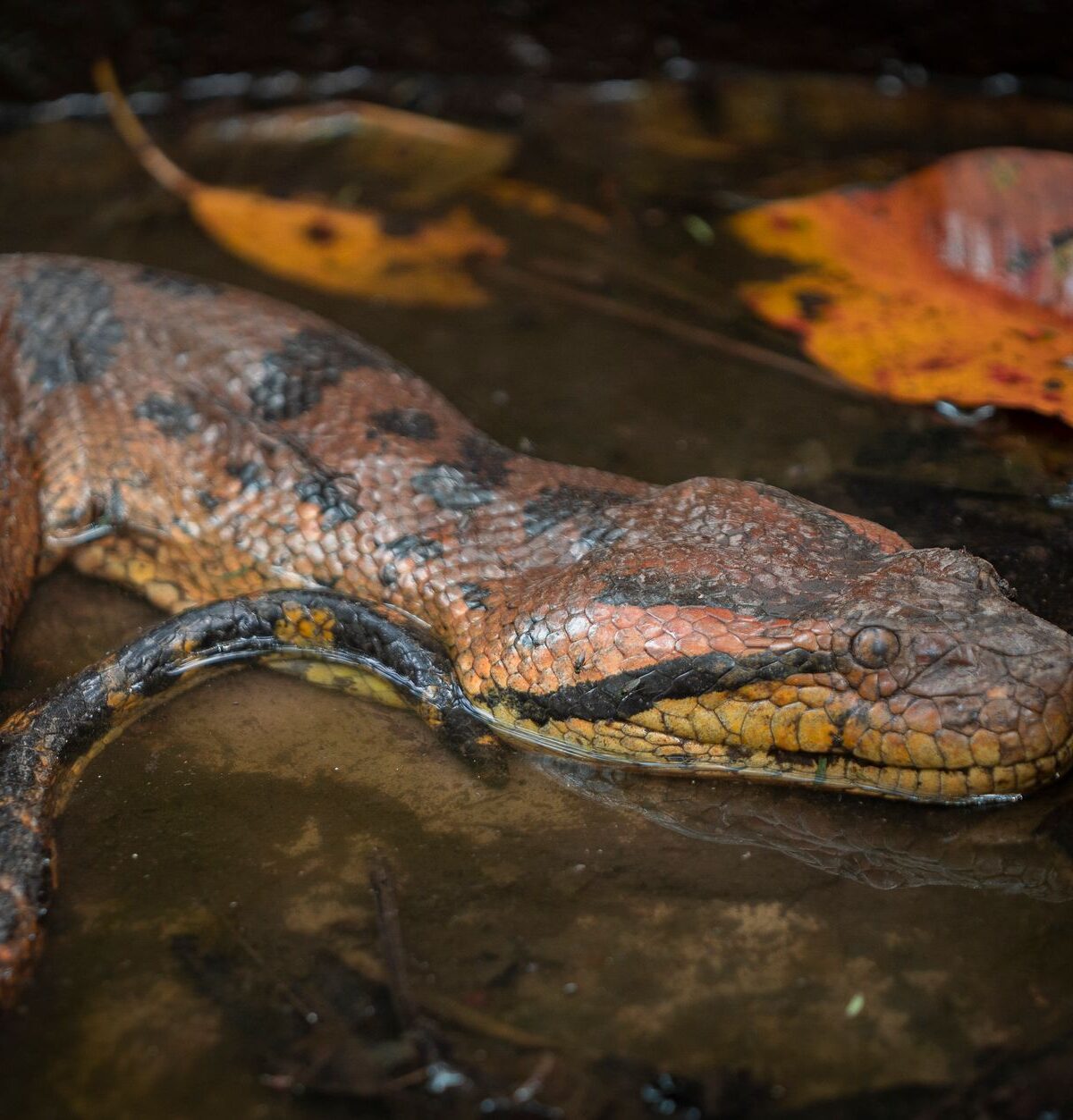
COLOMBIAN OR BROWN RAINBOW BOA
Epicrates maurus
DESCRIPTION
Colombian or Brown Rainbow Boa (Epicrates maurus) is commonly known as the Rainbow Boa due to its striking iridescent coloration that reflects light in a spectrum of colors. This species exhibits a robust body with a distinctive pattern of dark brown or black markings against a lighter background, which can vary from yellow to orange. They are primarily nocturnal and are known for their arboreal tendencies, often found in trees or shrubs in their natural habitat.
FUN FACTS
- The iridescent sheen of the Colombian or Brown Rainbow Boa is not due to pigments but rather the microscopic structure of their scales, which refracts light
- This unique feature makes them one of the most visually striking snakes in the world
- | Despite their size, these snakes are known for their gentle temperament, which makes them a favorite among reptile enthusiasts and collectors
- They can be easily tamed and are often handled without aggression
QUICK INFO
Lifespan15-20 years in the wild, up to 30 years in captivi
Average Weight2-4 kg
Average Length1.5-2.5 m
Diet TypeCarnivore
Social Structuresolitary
Activity PatternNocturnal
Breeding SeasonSpring (March-May)
- Habitat
- These snakes inhabit tropical rainforests and humid environments, often near water sources. They prefer areas with dense vegetation that provide cover and hunting opportunities.
- Biomes
- Tropical Rainforest
- Native Range
- The native range of the Colombian or Brown Rainbow Boa includes the tropical regions of South America, particularly in countries like Colombia and Venezuela.
- Continent
- South America
- Countries
- Colombia, Venezuela
- Diet
- Colombian or Brown Rainbow Boas primarily feed on small mammals and birds. They are constrictors, using their muscular bodies to subdue prey before consumption.
- Diet Type
- Carnivore
- Favorite Food
- small mammals, birds
- Social Structure
- solitary
- Activity Pattern
- Nocturnal
- Group Size
- 1
- Territorial
- 0
 VU
VU
2-4 kg
Weight
1.5-2.5 m
Length
- Coloration
- Iridescent with a pattern of dark brown or black markings on a lighter background.
- Sexual Dimorphism
- Females are generally larger than males.
- Lifespan
- 15-20 years in the wild, up to 30 years in captivi
- Gestation Period
- 120-150 days
- Offspring per Birth
- 10-30
- Sexual Maturity
- 2-3 years
- Breeding Season
- Spring (March-May)
LC
Least Concern
IUCN Red List Status
- Population Status
- The population is currently stable, but habitat loss poses a potential threat.
- Wild Population Estimate
- Unknown
- Population Trend
- Stable
- Endangered
- 0
- Threats
- Main threats include habitat destruction due to deforestation and the illegal pet trade. These factors can lead to localized declines in their populations.
- Predators
- Birds of prey, larger snakes, and mammals such as jaguars may prey on Colombian or Brown Rainbow Boas.
- Defense Mechanisms
- They may use their coloration for camouflage and can also constrict their prey effectively.
- Found in Zoos
- Common