


COLORADO RIVER TOAD
Incilius alvarius
DESCRIPTION
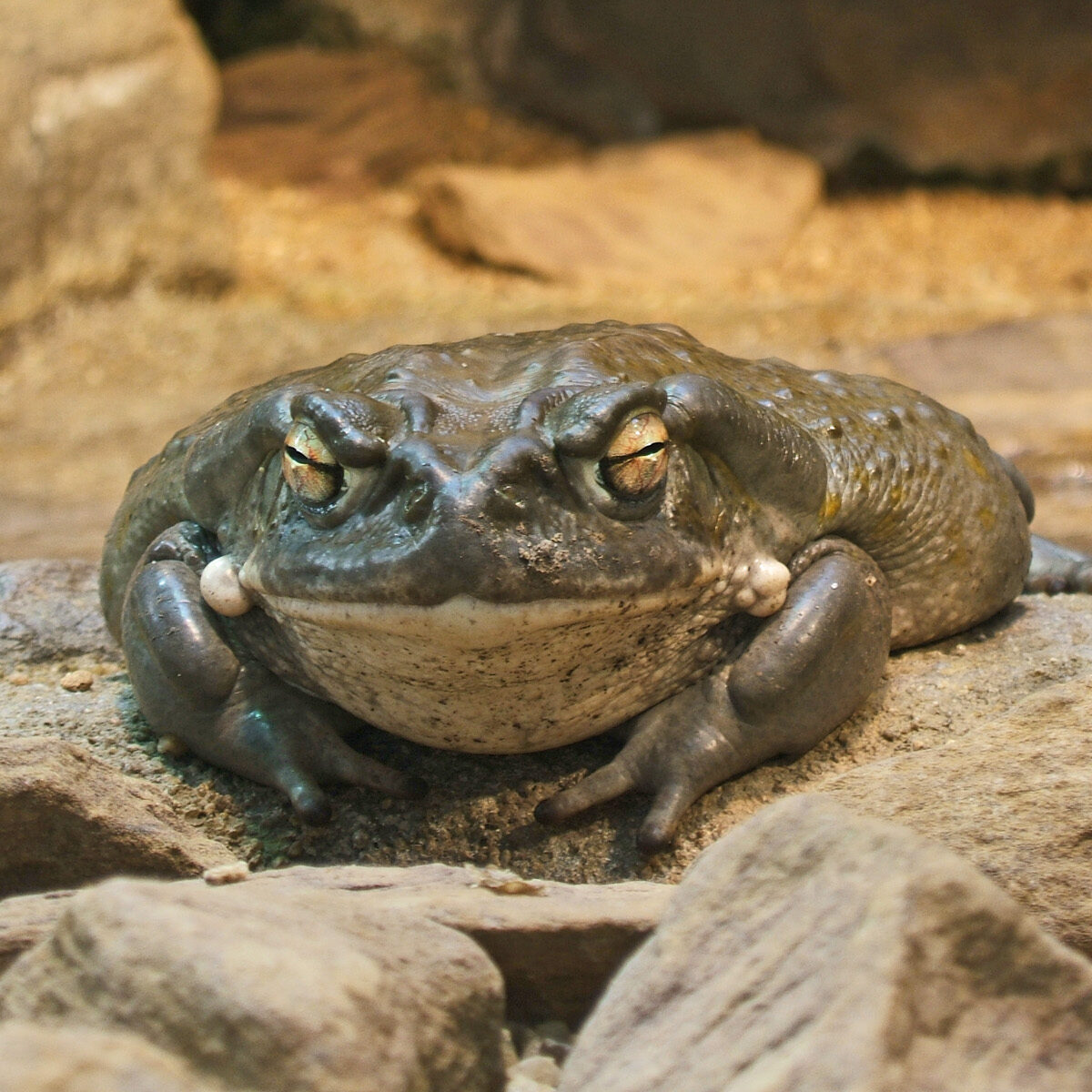
Colorado River Toad (Incilius alvarius) is commonly known as the Sonoran Desert Toad and is recognized for its large size and distinctive appearance. This toad can grow up to 7 inches in length and has a robust body with smooth, warty skin that is typically olive green to brown in color. It is primarily nocturnal, emerging at night to hunt and breed, and is known for its unique ecological role in desert environments, where it helps control insect populations.
FUN FACTS
- The Colorado River Toad is known for its psychoactive secretions, which contain 5-MeO-DMT, a substance that has been used in traditional practices for its hallucinogenic effects
- This toad's unique adaptations allow it to survive in harsh desert environments, including the ability to enter a state of estivation during extreme drought conditions
QUICK INFO
Lifespan10-15 years in the wild, up to 20 in captivity
Average Weight200-500 g
Average Length15-20 cm
Diet TypeInsectivore
Social Structuresolitary, with occasional pairings during breeding
Activity PatternNocturnal
Breeding SeasonSpring to early summer
- Habitat
- This species is typically found in arid and semi-arid regions, often near water sources such as rivers and ponds. It prefers habitats with sandy or loose soil for burrowing.
- Biomes
- Desert, Grassland
- Native Range
- The Colorado River Toad is native to the southwestern United States and northwestern Mexico.
- Continent
- North America
- Countries
- United States, Mexico
- Diet
- The Colorado River Toad primarily feeds on insects and other small invertebrates. It has also been observed consuming small vertebrates on occasion.
- Diet Type
- Insectivore
- Favorite Food
- insects, small invertebrates
- Social Structure
- solitary, with occasional pairings during breeding
- Activity Pattern
- Nocturnal
- Group Size
- 1-2
- Territorial
- 0
 VU
VU
 LC
LC

200-500 g
Weight
15-20 cm
Length
- Coloration
- olive green to brown with warty skin
- Sexual Dimorphism
- males are generally smaller than females
- Lifespan
- 10-15 years in the wild, up to 20 in captivity
- Offspring per Birth
- 1,000-5,000 eggs
- Sexual Maturity
- 2-3 years
- Breeding Season
- Spring to early summer
LC
Least Concern
IUCN Red List Status
- Population Status
- The population is currently stable, but local declines have been noted in some areas due to habitat loss.
- Wild Population Estimate
- unknown
- Population Trend
- Stable
- Endangered
- 0
- Threats
- Main threats include habitat destruction due to urban development and pollution. Additionally, they are vulnerable to climate change impacts that affect their breeding habitats.
- Predators
- birds, snakes, mammals, and larger amphibians
- Defense Mechanisms
- The toad secretes toxic substances from its skin, which can deter predators.
- Found in Zoos
- Uncommon