


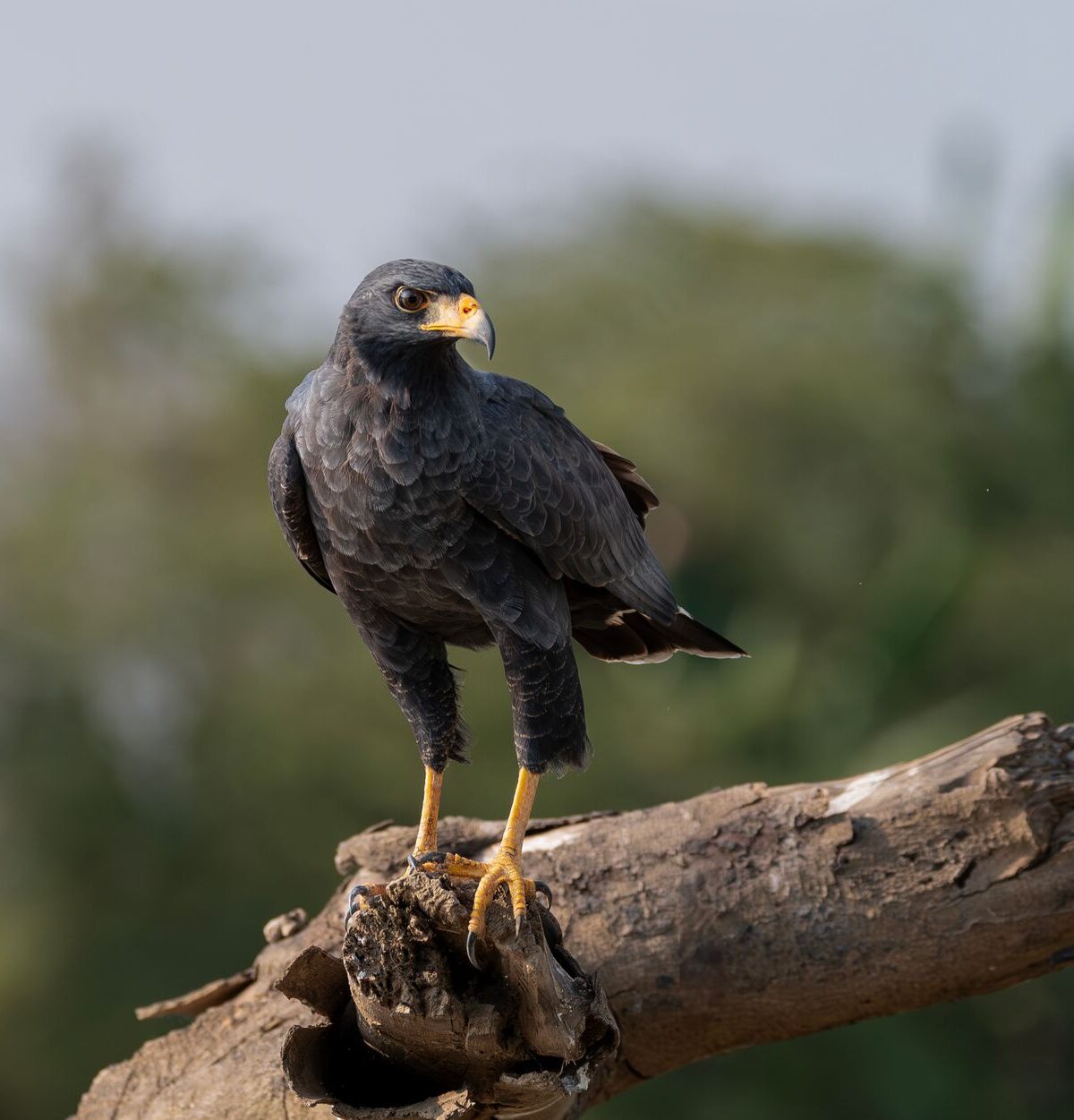
COMMON BLACK HAWK
DESCRIPTION
Common Black Hawk, also known as the Black Hawk, is a large raptor characterized by its striking black plumage and distinctive yellow legs. This bird of prey is often found near water bodies, where it exhibits a unique hunting behavior, often seen diving to catch fish or scavenging for carrion. Its adaptability to various habitats, including wetlands and coastal areas, makes it a versatile predator in its ecological niche.
FUN FACTS
- Common Black Hawks are known for their unique vocalizations, which include a series of loud, harsh calls that can be heard from a distance
- These calls play a crucial role in communication, especially during the breeding season when establishing territory
- | Interestingly, Common Black Hawks have been observed using tools, such as dropping stones into the water to create ripples that attract fish, showcasing their intelligence and adaptability in hunting strategies
QUICK INFO
Lifespan10-15 years in the wild, up to 20 years in captivi
Average Weight1.5-2.5 kg
Average Length50-60 cm
Diet TypeCarnivore
Social StructureThey are typically solitary or found in pairs, especially during the breeding season.
Activity PatternDiurnal
Breeding SeasonSpring (March-May)
- Habitat
- They inhabit a variety of wetland environments, including marshes, rivers, and coastal areas. Their preference for habitats near water sources is crucial for their hunting strategies.
- Biomes
- Wetlands, Coastal
- Native Range
- The Common Black Hawk is native to parts of Central and South America, ranging from southern Texas to Argentina.
- Continent
- North America, South America
- Countries
- United States, Mexico, Guatemala, Honduras, Nicaragua, Costa Rica, Panama, Colombia, Venezuela, Ecuador, Peru, Brazil, Argentina
- Diet
- Common Black Hawks primarily feed on fish, but they also consume small mammals, birds, and carrion. Their hunting techniques include both aerial pursuits and opportunistic scavenging.
- Diet Type
- Carnivore
- Favorite Food
- fish
- Social Structure
- They are typically solitary or found in pairs, especially during the breeding season.
- Activity Pattern
- Diurnal
- Group Size
- 1-2
- Territorial
- 1
1.5-2.5 kg
Weight
50-60 cm
Length
- Coloration
- Predominantly black with a white tail and yellow legs.
- Sexual Dimorphism
- Males and females are similar in appearance, though females are generally larger.
- Lifespan
- 10-15 years in the wild, up to 20 years in captivi
- Offspring per Birth
- 1-3
- Sexual Maturity
- 2-3 years
- Breeding Season
- Spring (March-May)
LC
Least Concern
IUCN Red List Status
- Population Status
- The population is currently stable, but habitat loss poses a potential threat.
- Wild Population Estimate
- Unknown
- Population Trend
- Stable
- Endangered
- 0
- Threats
- Main threats include habitat destruction due to urbanization and agricultural expansion. Pollution of water bodies can also impact their food sources.
- Predators
- Larger raptors, such as eagles, may prey on young or injured Common Black Hawks.
- Defense Mechanisms
- They are known to be aggressive when defending their nests and will dive at potential threats.
- Found in Zoos
- Uncommon