


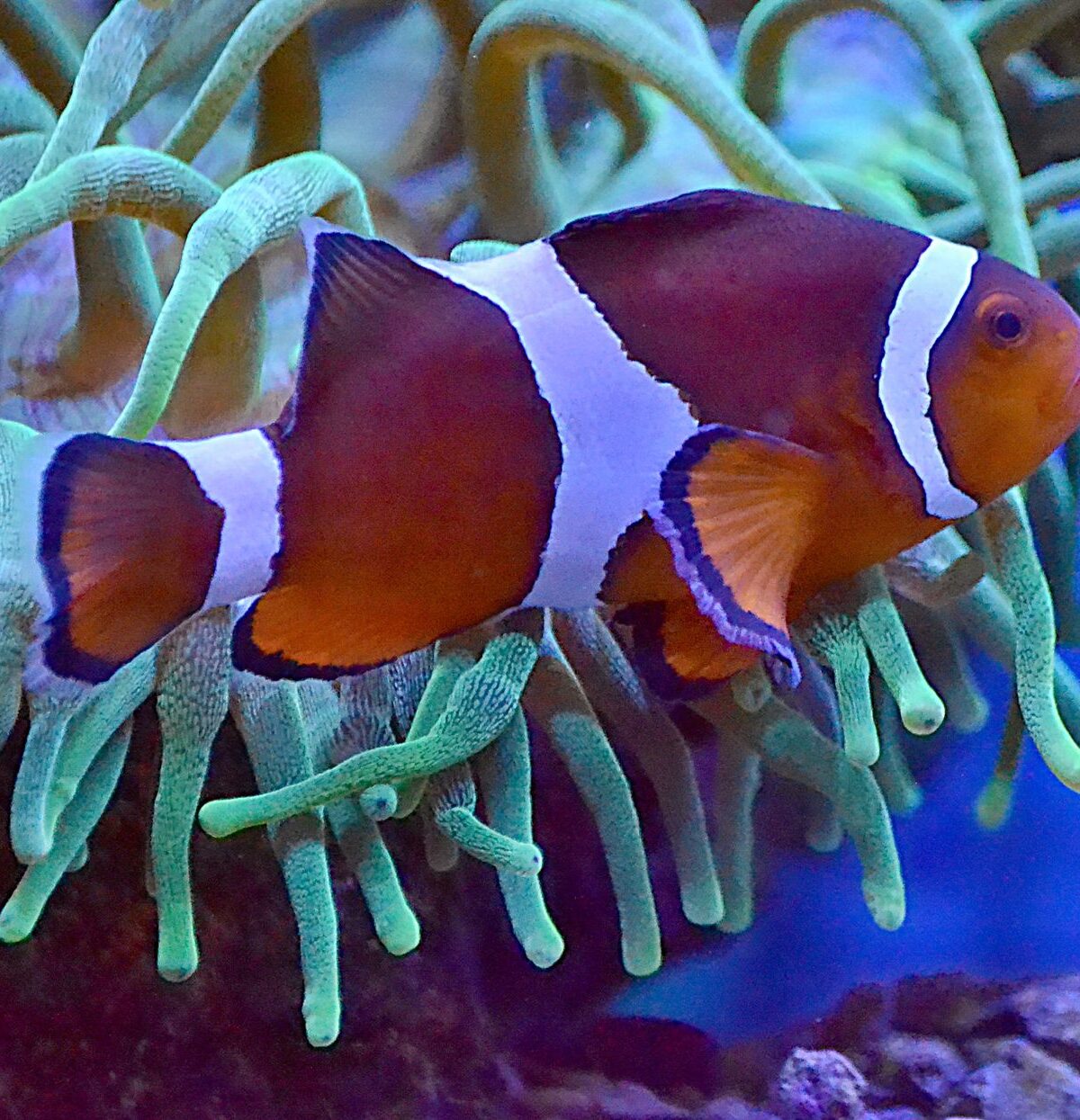
COMMON CLOWNFISH
DESCRIPTION
Common Clownfish, also known as Anemonefish, is a small, brightly colored fish that typically exhibits a vibrant orange body with white bands outlined in black. They are well-known for their symbiotic relationship with sea anemones, which provide them protection from predators while the clownfish offer the anemone nutrients and cleaning. These fish are highly territorial and can often be seen swimming in and out of their host anemones, showcasing their bold and curious nature.
FUN FACTS
- Clownfish are known for their unique ability to live among the stinging tentacles of sea anemones without being harmed
- This is due to a special mucus coating on their skin that protects them from the anemone's stings
- | Clownfish are also famous for their role in the animated film 'Finding Nemo,' which has significantly increased public interest in their conservation and habitat protection
- The film showcases their vibrant colors and unique behaviors, making them a favorite among marine life enthusiasts
QUICK INFO
Lifespan6-10 years in the wild, up to 20 in captivity
Average Weight0.1-0.2 kg
Average Length4-5 inches
Diet TypeOmnivore
Social StructureThey typically live in small groups consisting of a dominant breeding pair and several non-breeding individuals.
Activity PatternDiurnal
Breeding SeasonYear-round in tropical regions
- Habitat
- Common Clownfish inhabit shallow, warm waters of coral reefs, particularly in the Indo-Pacific region. They are often found in association with sea anemones, which provide them shelter.
- Biomes
- Coral Reef, Marine
- Native Range
- Common Clownfish are native to the warm waters of the Indian and Pacific Oceans, including the Red Sea.
- Continent
- Asia, Australia, Africa
- Countries
- Indonesia, Australia, Philippines, Papua New Guinea, Solomon Islands, Maldives
- Diet
- Common Clownfish primarily feed on zooplankton, algae, and small invertebrates. They may also consume leftover food from their anemone host.
- Diet Type
- Omnivore
- Favorite Food
- zooplankton, algae
- Social Structure
- They typically live in small groups consisting of a dominant breeding pair and several non-breeding individuals.
- Activity Pattern
- Diurnal
- Group Size
- 2-10
- Territorial
- 1
 LC
LC
0.1-0.2 kg
Weight
4-5 inches
Length
- Coloration
- vibrant orange with white bands
- Sexual Dimorphism
- males are generally smaller than females
- Lifespan
- 6-10 years in the wild, up to 20 in captivity
- Gestation Period
- 6-8 days
- Offspring per Birth
- 100-1000
- Sexual Maturity
- 1-2 years
- Breeding Season
- Year-round in tropical regions
LC
Least Concern
IUCN Red List Status
- Population Status
- The population of Common Clownfish is currently stable, with no immediate threats to their numbers.
- Wild Population Estimate
- Unknown
- Population Trend
- Stable
- Endangered
- 0
- Threats
- Main threats include habitat loss due to coral reef degradation and climate change. Overfishing for the aquarium trade also poses a risk to their populations.
- Predators
- Larger fish, sharks, and some species of moray eels are known predators of Common Clownfish.
- Defense Mechanisms
- They rely on their symbiotic relationship with sea anemones for protection, as the anemones' stinging tentacles deter most predators.
- Compatible Animals
- other clownfish species, small reef fish
- Found in Zoos
- Common