


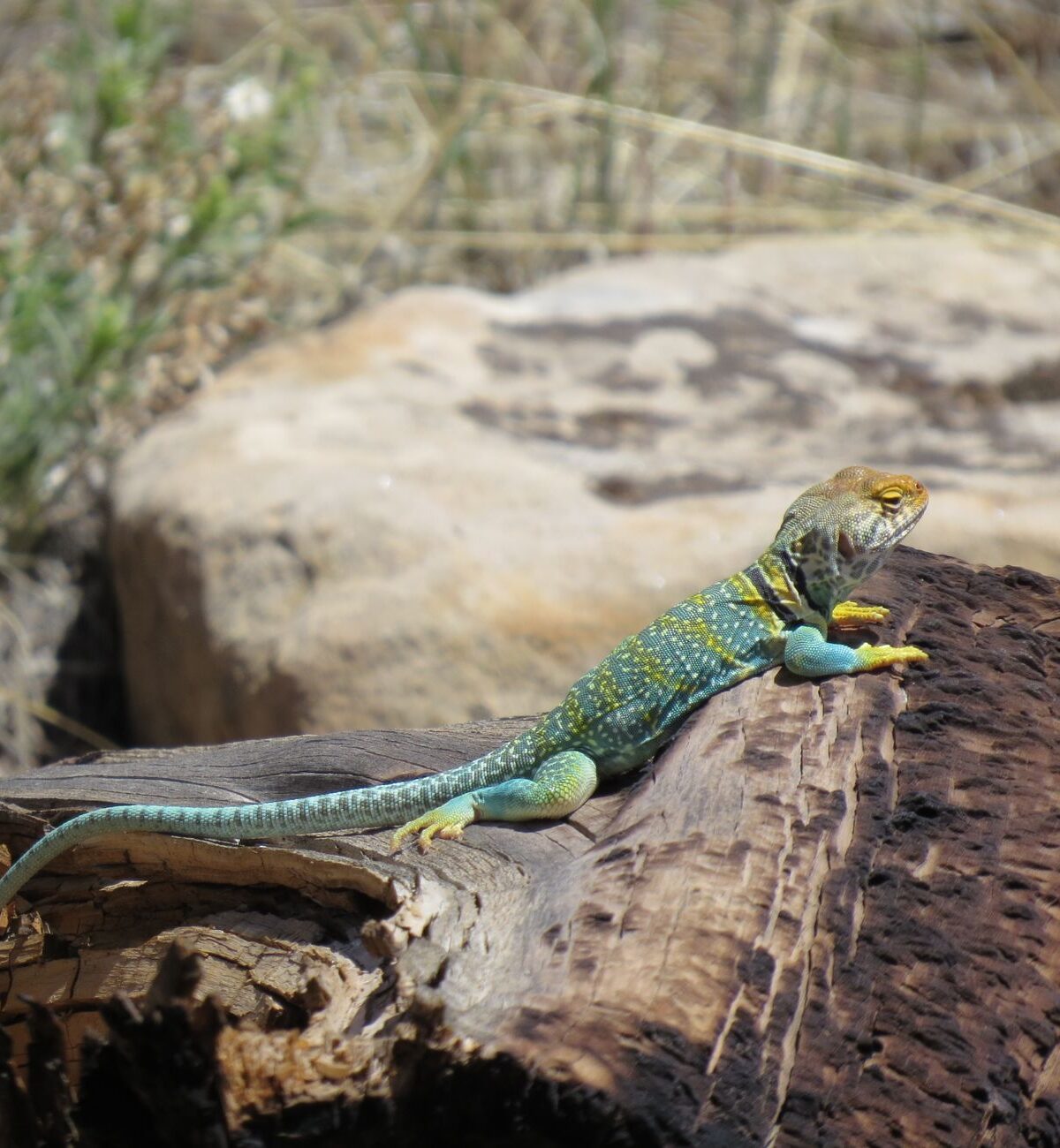
COMMON COLLARED LIZARD
Crotaphytus collaris
DESCRIPTION
Common Collared Lizard (Crotaphytus collaris) is a striking lizard known for its vibrant coloration, typically featuring a mix of green, blue, and yellow hues. This species is characterized by its distinctive black 'collars' around its neck, which are more pronounced in males. They are diurnal and often seen basking on rocks or logs, displaying territorial behavior, especially during the breeding season.
FUN FACTS
- Common Collared Lizards are known for their impressive speed, capable of running on their hind legs for short distances, which helps them evade predators
- Additionally, they have a unique ability to change their color slightly based on temperature and mood, making them fascinating subjects for study in behavioral ecology
QUICK INFO
Lifespan5-10 years in the wild, up to 15 years in captivit
Average Weight50-100 g
Average Length20-30 cm
Diet TypeInsectivore
Social Structuresolitary, with males being particularly territorial during the breeding season
Activity PatternDiurnal
Breeding SeasonSpring (April-June)
- Habitat
- These lizards inhabit arid and semi-arid environments, often found in rocky areas, grasslands, and open woodlands. They prefer habitats with plenty of sun exposure and places to hide from predators.
- Biomes
- Grassland, Desert
- Native Range
- Common Collared Lizards are native to the central United States, ranging from the eastern parts of New Mexico to western Missouri.
- Continent
- North America
- Countries
- United States
- Diet
- Common Collared Lizards primarily feed on insects and small invertebrates, but they may also consume plant material occasionally. Their diet can include grasshoppers, crickets, and other small arthropods.
- Diet Type
- Insectivore
- Favorite Food
- insects, particularly grasshoppers
- Social Structure
- solitary, with males being particularly territorial during the breeding season
- Activity Pattern
- Diurnal
- Group Size
- 1-3
- Territorial
- 1
 VU
VU
 LC
LC
 LC
LC
50-100 g
Weight
20-30 cm
Length
- Coloration
- vibrant green or blue with black markings
- Sexual Dimorphism
- males are typically more colorful and larger than females
- Lifespan
- 5-10 years in the wild, up to 15 years in captivit
- Offspring per Birth
- 3-10
- Sexual Maturity
- 1-2 years
- Breeding Season
- Spring (April-June)
LC
Least Concern
IUCN Red List Status
- Population Status
- The population is currently stable, but habitat loss poses a potential threat.
- Wild Population Estimate
- unknown
- Population Trend
- Stable
- Endangered
- 0
- Threats
- Main threats include habitat destruction due to urban development and agriculture. Additionally, they are vulnerable to predation by birds of prey and domestic animals.
- Predators
- birds of prey, snakes, domestic cats
- Defense Mechanisms
- They can run quickly to escape predators and may also use their coloration to blend into their surroundings.
- Found in Zoos
- Common