


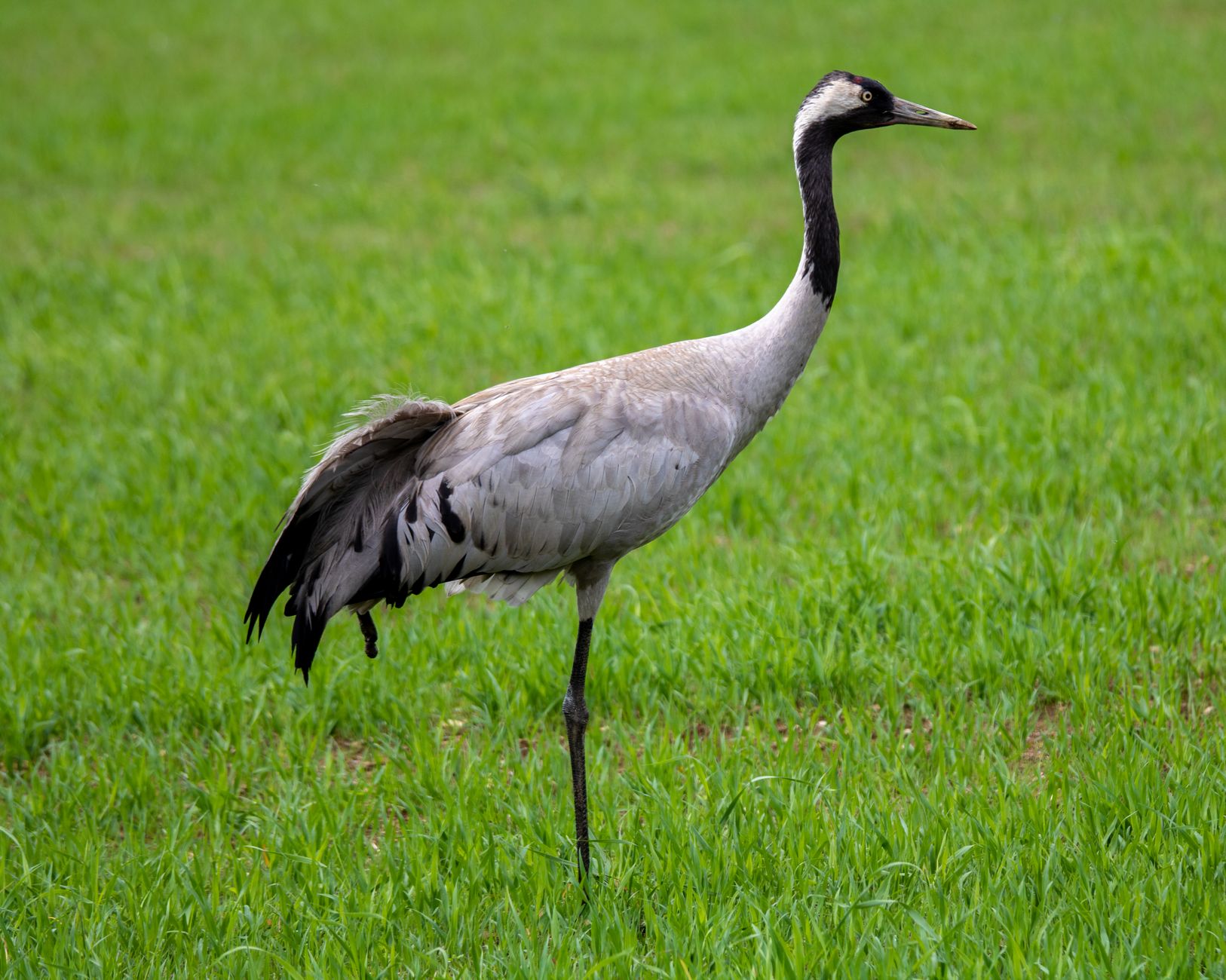
COMMON CRANE
DESCRIPTION
Common Crane, also known as the Eurasian Crane, is a large bird characterized by its long legs and neck, with a wingspan that can reach up to 2.4 meters. It has a predominantly gray plumage with a distinctive red crown on its head and a black stripe running from the eye to the back of the neck. These cranes are known for their elaborate courtship dances and are often seen in large flocks during migration, showcasing their strong social behavior and vocal communication.
FUN FACTS
- Common Cranes are known for their impressive migratory journeys, traveling thousands of kilometers between their breeding and wintering grounds
- They are also famous for their elaborate courtship dances, which involve synchronized movements and vocalizations that can be quite a spectacle to witness.| In some cultures, Common Cranes are symbols of longevity and good fortune, often featured in art and folklore
- Their graceful movements and striking appearance have made them a favorite subject for photographers and birdwatchers alike
QUICK INFO
Lifespan20-30 years in the wild
Average Weight4-6 kg
Average Length1.0-1.2 m
Diet TypeOmnivore
Social StructureCommon Cranes typically form monogamous pairs during the breeding season, but they can also be found in larger family groups or flocks outside of this period.
Activity PatternDiurnal
Breeding SeasonSpring (April-June)
- Habitat
- Common Cranes inhabit wetlands, marshes, and grasslands, often near shallow water bodies where they can forage for food. They prefer open areas for nesting and roosting, which provide visibility and safety from predators.
- Biomes
- Wetlands, Grasslands
- Native Range
- Common Cranes are found across Europe and Asia, migrating to warmer regions in the winter.
- Continent
- Europe, Asia
- Countries
- Norway, Sweden, Finland, Germany, Poland, Russia, China, India
- Diet
- Common Cranes primarily feed on plant material, including seeds, grains, and tubers, but they also consume small invertebrates and amphibians when available.
- Diet Type
- Omnivore
- Favorite Food
- grains, seeds, tubers
- Social Structure
- Common Cranes typically form monogamous pairs during the breeding season, but they can also be found in larger family groups or flocks outside of this period.
- Activity Pattern
- Diurnal
- Group Size
- 5-50
- Territorial
- 1
 LC
LC
 LC
LC
 VU
VU
4-6 kg
Weight
1.0-1.2 m
Length
- Coloration
- predominantly gray with a red crown and black neck markings
- Sexual Dimorphism
- males are generally larger than females
- Lifespan
- 20-30 years in the wild
- Offspring per Birth
- 1-2
- Sexual Maturity
- 3-4 years
- Breeding Season
- Spring (April-June)
LC
Least Concern
IUCN Red List Status
- Population Status
- The population of Common Cranes is currently stable in many regions, although some local populations may face threats.
- Wild Population Estimate
- 200,000-300,000
- Population Trend
- Stable
- Endangered
- 0
- Threats
- Main threats to Common Cranes include habitat loss due to agricultural expansion and wetland drainage, as well as hunting in some regions. Climate change also poses a potential risk by altering their migratory patterns and breeding habitats.
- Predators
- Wolves, Foxes, Eagles, large birds of prey
- Defense Mechanisms
- Common Cranes rely on their ability to fly and their social behavior to evade predators, often using alarm calls to warn others of danger.
- Compatible Animals
- none
- Found in Zoos
- Common