


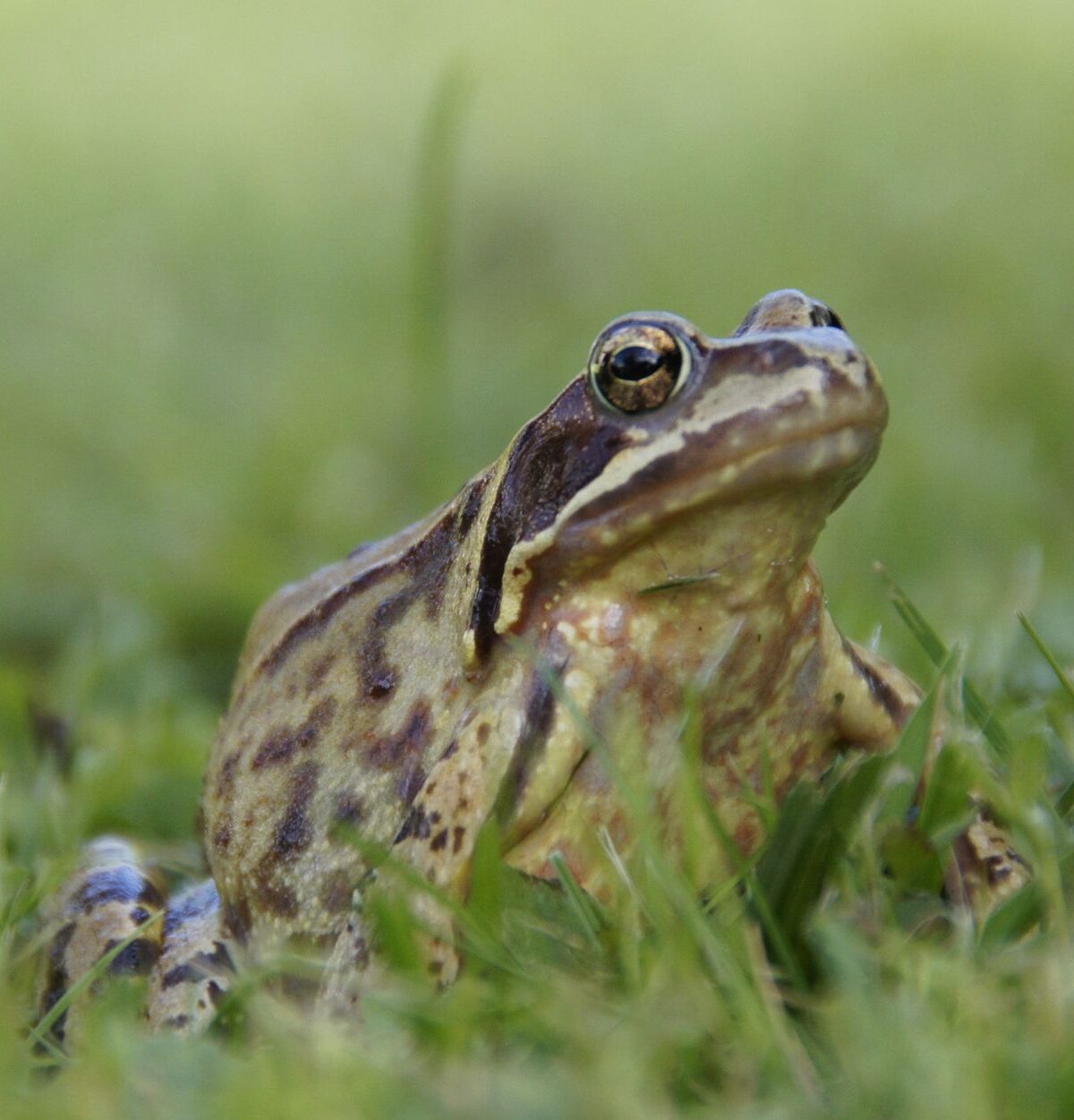
COMMON FROG
Rana temporaria
DESCRIPTION
Common Frog (Rana temporaria) is also known as the European Common Frog and Grass Frog. This amphibian typically exhibits a smooth, moist skin that can vary in color from green to brown, often with dark spots. They are known for their distinctive croaking calls during the breeding season and are commonly found in a variety of habitats, including gardens, woodlands, and wetlands.
FUN FACTS
- Common Frogs can absorb water through their skin, which helps them stay hydrated in their moist habitats
- They also have a unique breeding behavior where males call to attract females, creating a chorus of croaks that can be heard from a distance.|These frogs are capable of hibernating during the winter months, often burying themselves in mud or leaf litter to survive the cold
- Their ability to adapt to various environments makes them a resilient species across Europe
QUICK INFO
Lifespan5-10 years in the wild, up to 15 years in captivit
Average Weight20-30 g
Average Length6-10 cm
Diet TypeInsectivore
Social Structuresolitary, but can gather in groups during breeding
Activity PatternNocturnal
Breeding SeasonSpring (March-May)
- Habitat
- Common Frogs thrive in moist environments such as ponds, marshes, and damp woodlands. They require water bodies for breeding and often seek shelter in vegetation or under rocks.
- Biomes
- Temperate Forest, Grassland, Wetland
- Native Range
- Common Frogs are native to much of Europe, ranging from the British Isles to Scandinavia and down to the Mediterranean region.
- Continent
- Europe
- Countries
- United Kingdom, France, Germany, Italy, Spain
- Diet
- Common Frogs primarily feed on insects, worms, and other small invertebrates. They are opportunistic feeders and will consume whatever prey is available in their environment.
- Diet Type
- Insectivore
- Favorite Food
- insects, worms
- Social Structure
- solitary, but can gather in groups during breeding
- Activity Pattern
- Nocturnal
- Group Size
- 5-50
- Territorial
- 0
20-30 g
Weight
6-10 cm
Length
- Coloration
- varies from green to brown with dark spots
- Sexual Dimorphism
- males are generally smaller and have darker throats during breeding season
- Lifespan
- 5-10 years in the wild, up to 15 years in captivit
- Offspring per Birth
- 1000-3000 eggs
- Sexual Maturity
- 2-3 years
- Breeding Season
- Spring (March-May)
LC
Least Concern
IUCN Red List Status
- Population Status
- The population of Common Frogs is currently stable in many areas, although some local declines have been observed.
- Wild Population Estimate
- unknown
- Population Trend
- Stable
- Endangered
- 0
- Threats
- Main threats to Common Frogs include habitat loss due to urbanization and agricultural practices, as well as pollution in their aquatic environments. Climate change also poses a risk by altering their breeding habitats.
- Predators
- birds (such as herons and crows), mammals (like foxes and badgers), and reptiles (including snakes)
- Defense Mechanisms
- Common Frogs can use their jumping ability to escape predators and may also exhibit a camouflaged coloration to blend into their surroundings.
- Compatible Animals
- newts, other frog species
- Found in Zoos
- Common