


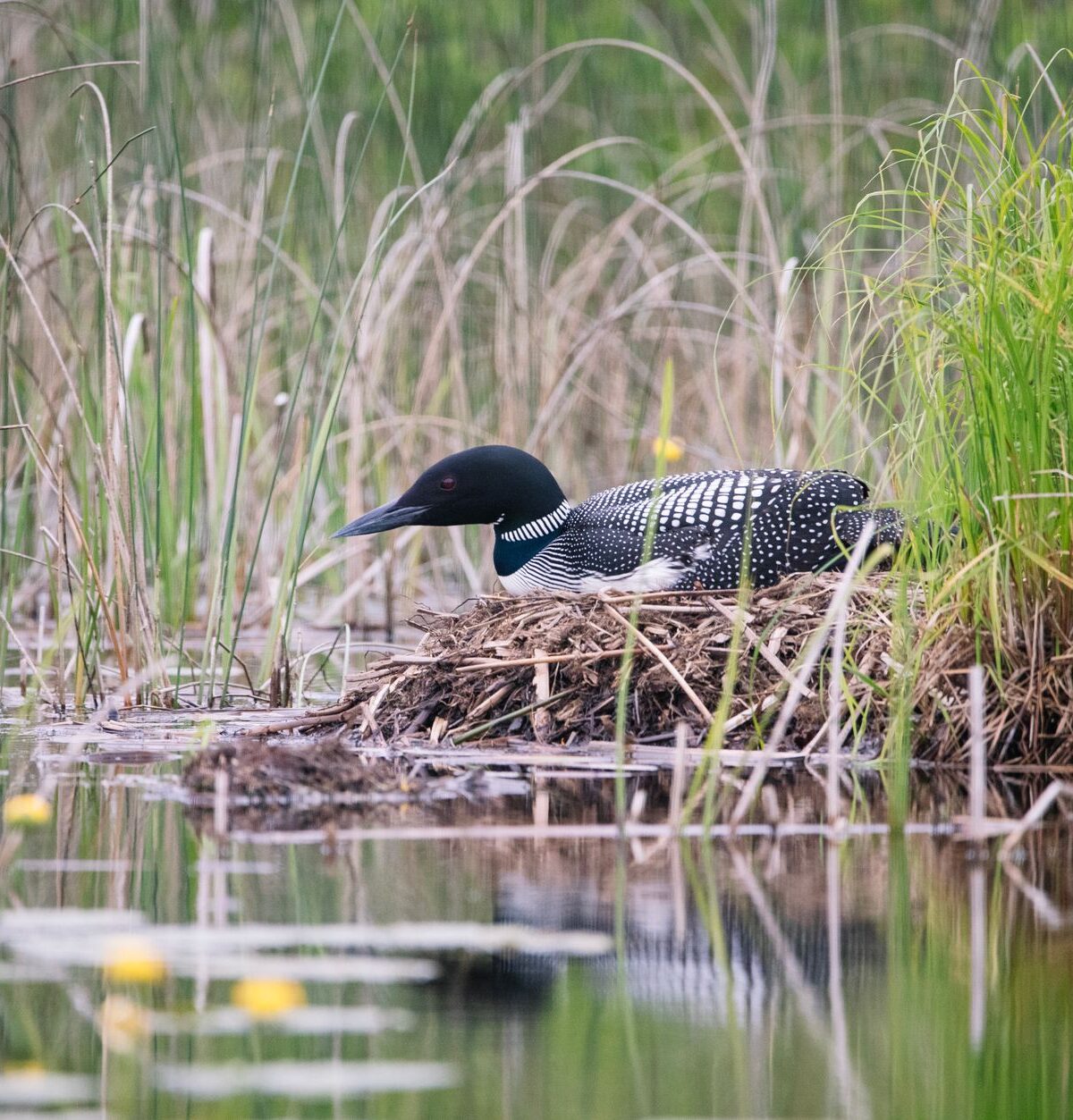
COMMON LOON
Gavia immer
DESCRIPTION
Common Loon (Gavia immer), also known as the Great Northern Diver, is a striking aquatic bird recognized for its distinctive black and white plumage and haunting calls. This species is primarily found in northern lakes and coastal waters, where it is an expert diver, capable of reaching depths of up to 200 feet in search of fish. During the breeding season, they are known for their elaborate courtship displays and strong territorial behavior, often seen gliding gracefully across the water or diving for food.
FUN FACTS
- Common Loons are famous for their eerie, haunting calls, which can be heard echoing across northern lakes at night
- These calls serve various purposes, including communication between mates and signaling territory to other loons
- | The Common Loon is an exceptional diver, capable of holding its breath for up to 90 seconds while hunting underwater
- Their streamlined bodies and webbed feet make them agile swimmers, allowing them to pursue fish with remarkable speed and precision
QUICK INFO
Lifespan15-20 years in the wild
Average Weight2-5 kg
Average Length65-75 cm
Diet TypePiscivore
Social Structurepair, typically monogamous during the breeding season
Activity PatternDiurnal
Breeding SeasonSpring (April-July)
- Habitat
- Common Loons inhabit freshwater lakes and coastal marine environments, favoring clear waters with abundant fish populations. They require large, undisturbed areas for nesting, often choosing secluded shorelines.
- Biomes
- Freshwater, Marine
- Native Range
- Common Loons are found across North America, breeding in Canada and the northern United States, and wintering along the coasts of the United States and parts of Mexico.
- Continent
- North America
- Countries
- Canada, United States
- Diet
- Common Loons primarily feed on fish, but they also consume crustaceans and amphibians. Their hunting technique involves diving underwater to catch prey, showcasing their impressive swimming abilities.
- Diet Type
- Piscivore
- Favorite Food
- fish
- Social Structure
- pair, typically monogamous during the breeding season
- Activity Pattern
- Diurnal
- Group Size
- 1-2
- Territorial
- 1
 LC
LC
 LC
LC
2-5 kg
Weight
65-75 cm
Length
- Coloration
- black and white with a distinctive checkered pattern on the back
- Sexual Dimorphism
- males are generally larger than females
- Lifespan
- 15-20 years in the wild
- Offspring per Birth
- 1-3
- Sexual Maturity
- 3-4 years
- Breeding Season
- Spring (April-July)
LC
Least Concern
IUCN Red List Status
- Population Status
- The population of Common Loons is currently stable, although they face threats from habitat loss and pollution.
- Wild Population Estimate
- approximately 1 million
- Population Trend
- Stable
- Endangered
- 0
- Threats
- Main threats to Common Loons include habitat destruction, lead poisoning from ingested fishing tackle, and disturbances from recreational boating. Climate change also poses a risk by altering their breeding habitats.
- Predators
- eagles, large gulls, and raccoons are known to prey on loon eggs and chicks; adult loons have few natural predators but may be threatened by large birds of prey.
- Defense Mechanisms
- Common Loons are known to use aggressive displays and vocalizations to defend their territory from intruders.
- Found in Zoos
- Rare