


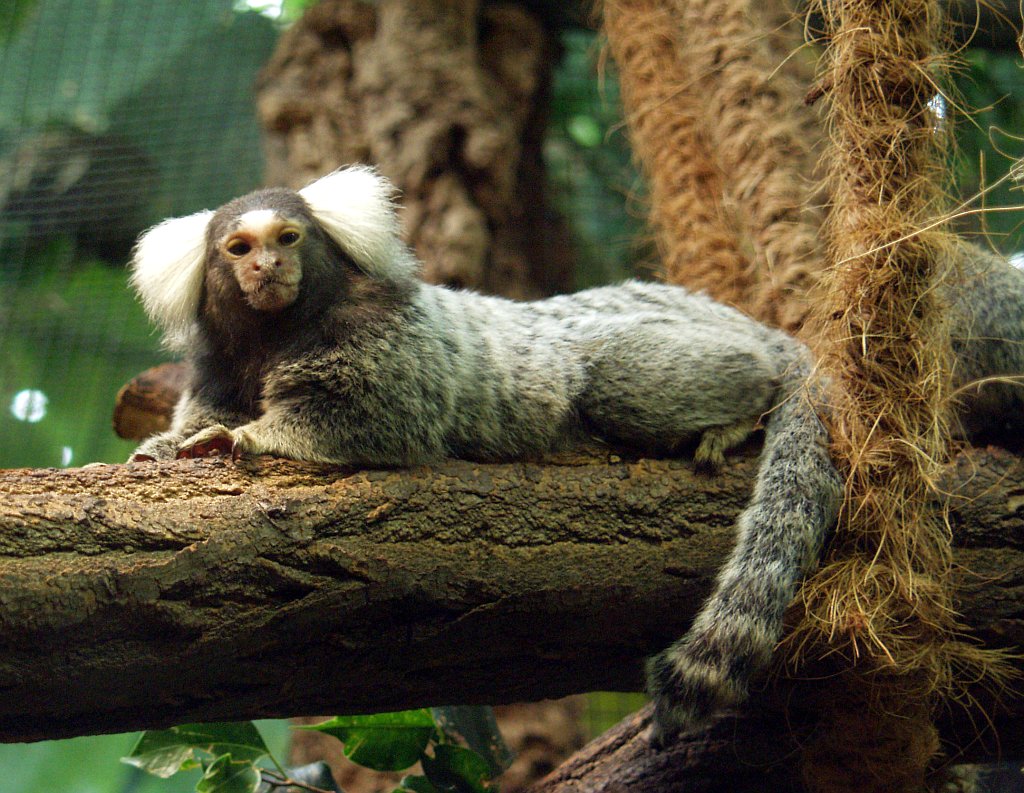
COMMON MARMOSET
Callithrix jacchus
DESCRIPTION
The Common Marmoset is a small primate characterized by its distinctive white ear tufts and a long, non-prehensile tail. It has a body length of about 24-30 cm and weighs around 300-500 grams. These monkeys are highly social and live in family groups, often engaging in playful behavior and vocal communication.
FUN FACTS
- Common Marmosets are one of the smallest primate species, making them popular in the pet trade, although they require specialized care and social interaction
- They have a unique social structure where older siblings often help care for younger ones, showcasing their strong family bonds
QUICK INFO
Lifespan5-10 years in the wild, up to 15 years in captivit
Average Weight300-500 grams
Average Length24-30 cm
Diet TypeOmnivore
Social StructureThey live in small family groups, typically consisting of 3-15 individuals, which include a breeding pair and their offspring.
Activity PatternDiurnal
Breeding SeasonYear-round, with peaks depending on environmental conditions
- Habitat
- Common Marmosets inhabit a variety of forested environments, including tropical and subtropical forests. They are often found in the canopy layer, where they can easily access food sources.
- Biomes
- Tropical Rainforest, Subtropical Forest
- Native Range
- They are native to the northeastern regions of Brazil.
- Continent
- South America
- Countries
- Brazil
- Diet
- Common Marmosets primarily consume a diet of fruits, insects, and tree sap. They are known to use their specialized teeth to gouge tree bark and access the sap inside.
- Diet Type
- Omnivore
- Favorite Food
- Fruits, insects, tree sap
- Social Structure
- They live in small family groups, typically consisting of 3-15 individuals, which include a breeding pair and their offspring.
- Activity Pattern
- Diurnal
- Group Size
- 3-15
- Territorial
- 1
 VU
VU
 LC
LC
300-500 grams
Weight
24-30 cm
Length
- Coloration
- They have a brownish-gray body with white facial markings and ear tufts.
- Sexual Dimorphism
- Males and females are similar in size and appearance.
- Lifespan
- 5-10 years in the wild, up to 15 years in captivit
- Gestation Period
- 145 days
- Offspring per Birth
- 1-3
- Sexual Maturity
- 1-2 years
- Breeding Season
- Year-round, with peaks depending on environmental conditions
LC
Least Concern
IUCN Red List Status
- Population Status
- The population is currently stable, but habitat loss poses a threat.
- Wild Population Estimate
- Unknown
- Population Trend
- Stable
- Endangered
- 0
- Threats
- Main threats include habitat destruction due to deforestation and the illegal pet trade. These factors have led to localized declines in some areas.
- Predators
- Birds of prey, snakes, and larger mammals can pose threats to Common Marmosets.
- Defense Mechanisms
- They use vocalizations to warn of predators and can escape quickly into the trees.
- Compatible Animals
- Other small primates, such as tamarins, in controlled environments.
- Found in Zoos
- Common