


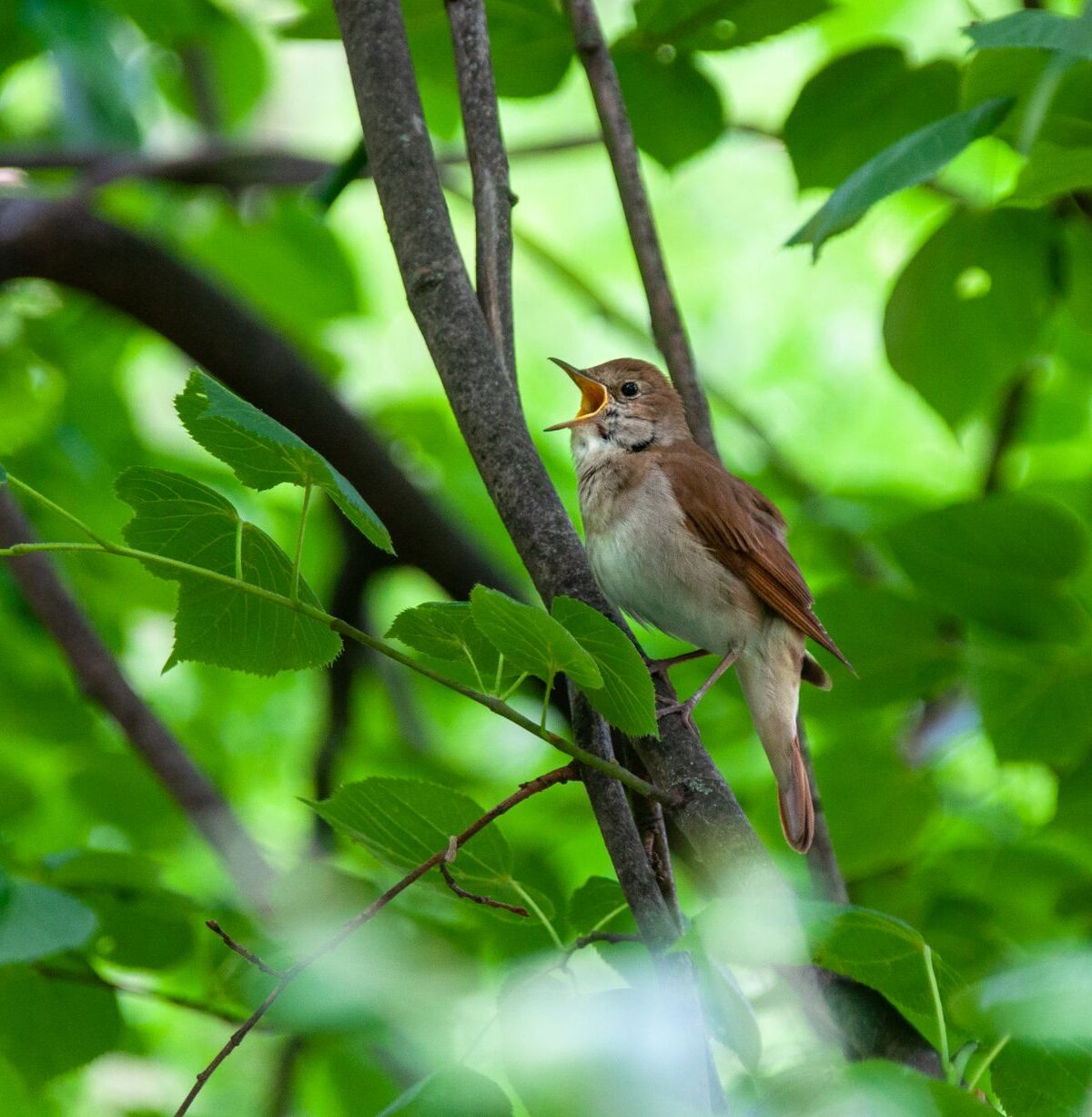
COMMON NIGHTINGALE
Luscinia megarhynchos
DESCRIPTION
Common Nightingale (Luscinia megarhynchos) is a small, migratory songbird known for its powerful and beautiful song, which is often heard at night. It has a brownish upper body and a lighter, buff-colored underbelly, making it well-camouflaged in its natural habitat. This species is primarily found in dense shrubbery and woodlands, where it forages for food and sings to establish territory and attract mates.
FUN FACTS
- The song of the Common Nightingale has inspired poets and musicians for centuries, often symbolizing love and beauty in literature
- Interestingly, these birds are known to mimic the calls of other bird species, adding to the complexity of their song repertoire
QUICK INFO
Lifespan2-5 years in the wild, up to 10 years in captivity
Average Weight15-25 g
Average Length12.5-14.5 cm
Diet TypeInsectivore
Social Structuresolitary, typically found alone or in pairs during the breeding season
Activity PatternNocturnal
Breeding SeasonSpring (April-June)
- Habitat
- Common Nightingales prefer dense, shrubby habitats, often near water sources. They are commonly found in woodlands, gardens, and parks during the breeding season.
- Biomes
- Temperate Forest, Mediterranean
- Native Range
- The native range of the Common Nightingale extends across Europe, parts of Asia, and North Africa, with migratory populations traveling to sub-Saharan Africa for the winter.
- Continent
- Europe, Asia, Africa
- Countries
- United Kingdom, Germany, France, Italy, Greece, Turkey, Egypt
- Diet
- Common Nightingales primarily feed on insects, worms, and berries, showcasing a varied diet that changes with the seasons. They are known to forage on the ground and in low vegetation.
- Diet Type
- Insectivore
- Favorite Food
- insects, worms, berries
- Social Structure
- solitary, typically found alone or in pairs during the breeding season
- Activity Pattern
- Nocturnal
- Group Size
- 1-2
- Territorial
- 1
 LC
LC
 VU
VU
 LC
LC
15-25 g
Weight
12.5-14.5 cm
Length
- Coloration
- brownish upper body with a buff-colored underbelly
- Sexual Dimorphism
- males are generally more vocal and may have slightly brighter plumage than females
- Lifespan
- 2-5 years in the wild, up to 10 years in captivity
- Offspring per Birth
- 3-6
- Sexual Maturity
- 1 year
- Breeding Season
- Spring (April-June)
LC
Least Concern
IUCN Red List Status
- Population Status
- The population of Common Nightingales is currently stable, although they face habitat loss in some areas.
- Wild Population Estimate
- 1,000,000-2,000,000
- Population Trend
- Stable
- Endangered
- 0
- Threats
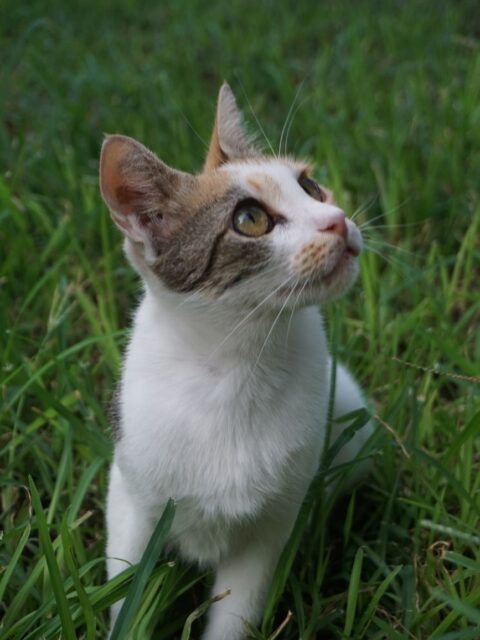
- Main threats include habitat destruction due to urbanization and agricultural expansion, as well as climate change affecting their migratory patterns. Additionally, they are vulnerable to predation by domestic cats and other animals.
- Predators
- domestic cats, birds of prey, snakes
- Defense Mechanisms
- Common Nightingales rely on their cryptic coloration and secretive behavior to avoid detection by predators.
- Found in Zoos
- Rare