


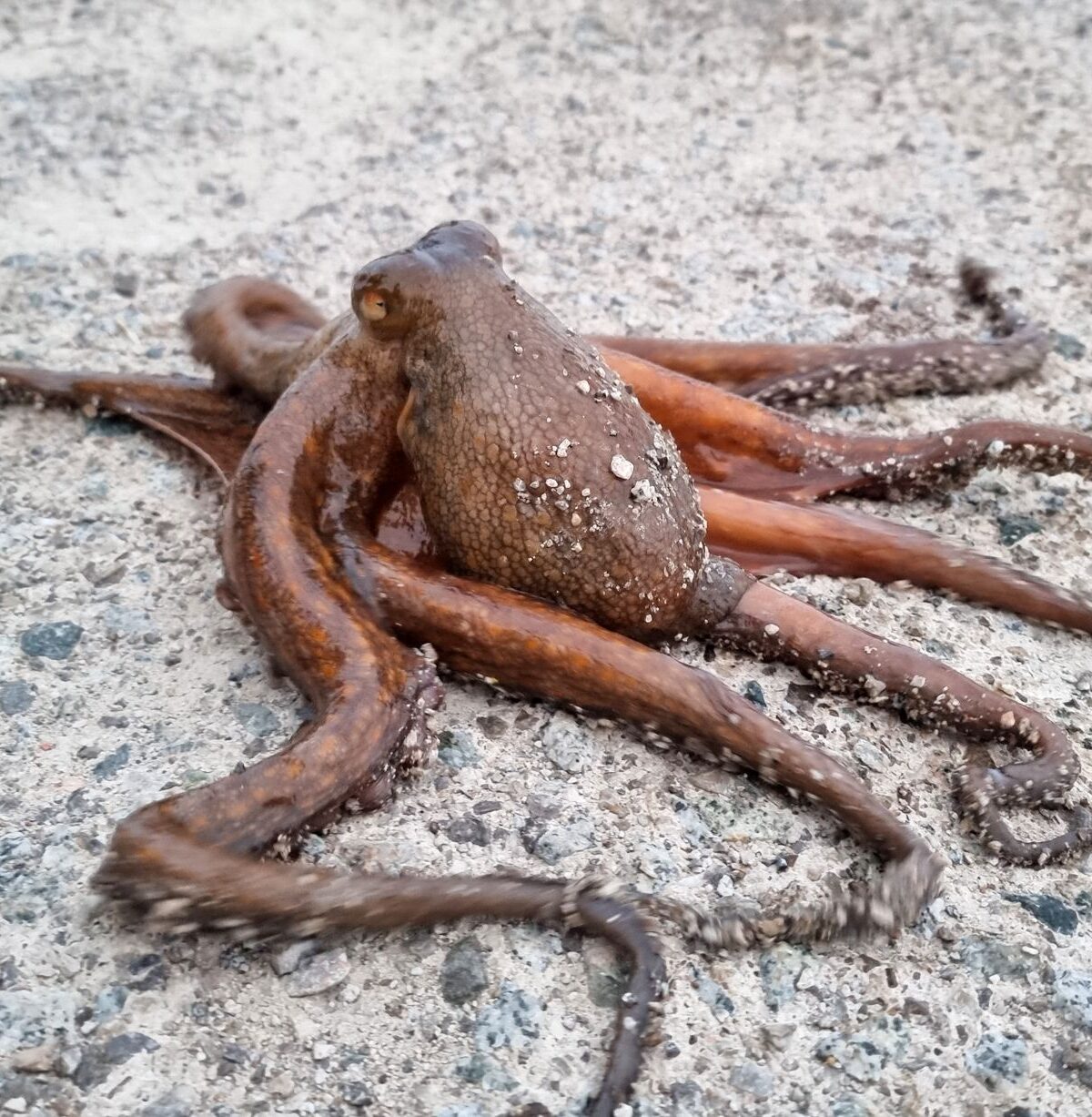
COMMON OCTOPUS
Octopus vulgaris
DESCRIPTION
Common Octopus (Octopus vulgaris) is a highly intelligent cephalopod known for its remarkable ability to change color and texture, allowing it to blend seamlessly into its surroundings. This species exhibits a soft, bulbous body with eight long, flexible arms lined with sensitive suckers, which it uses for locomotion and manipulation of objects. Common Octopus is primarily found in shallow coastal waters, where it exhibits a solitary lifestyle, often hiding in crevices or under rocks to avoid predators.
FUN FACTS
- Common Octopus has been observed using tools, such as coconut shells and shells, to create shelters or as shields against predators
- This behavior showcases their advanced problem-solving skills and adaptability in their environment
- | They have three hearts: two pump blood to the gills, while the third pumps it to the rest of the body
- This unique circulatory system is essential for their active lifestyle and helps them thrive in various marine habitats
QUICK INFO
Lifespan1-2 years in the wild, up to 5 years in captivity
Average Weight3-10 kg
Average Length0.9-1.2 m
Diet TypeCarnivore
Social Structuresolitary, typically lives alone except during mating
Activity PatternNocturnal
Breeding SeasonSpring to early summer
- Habitat
- This species inhabits a variety of marine environments, including rocky reefs, sandy bottoms, and seagrass beds. It prefers shallow waters but can also be found at depths of up to 200 meters.
- Biomes
- Marine
- Native Range
- Common Octopus is found in the warm and temperate waters of the Atlantic Ocean, from the Mediterranean Sea to the coasts of West Africa and the eastern United States.
- Continent
- Europe, Africa, North America
- Countries
- Spain, Portugal, France, Italy, Morocco, United States
- Diet
- Common Octopus primarily feeds on crustaceans, mollusks, and small fish, using its keen eyesight and dexterous arms to capture prey. It employs a strategy of ambush and stealth to hunt effectively.
- Diet Type
- Carnivore
- Favorite Food
- crabs, shrimp, and small fish
- Social Structure
- solitary, typically lives alone except during mating
- Activity Pattern
- Nocturnal
- Group Size
- 1
- Territorial
- 1
 LC
LC
 EN
EN
3-10 kg
Weight
0.9-1.2 m
Length
- Coloration
- varies from brown to reddish with the ability to change color for camouflage
- Sexual Dimorphism
- males are generally smaller than females
- Lifespan
- 1-2 years in the wild, up to 5 years in captivity
- Gestation Period
- 30-60 days
- Offspring per Birth
- 100-400
- Sexual Maturity
- 1-2 years
- Breeding Season
- Spring to early summer
LC
Least Concern
IUCN Red List Status
- Population Status
- The population of Common Octopus is currently stable, but local declines may occur due to overfishing.
- Wild Population Estimate
- unknown
- Population Trend
- Stable
- Endangered
- 0
- Threats
- Main threats include overfishing and habitat destruction, which can impact local populations. Climate change also poses a risk by altering marine ecosystems.
- Predators
- sharks, larger fish, sea otters, and some species of birds
- Defense Mechanisms
- Common Octopus can eject ink to create a smokescreen, allowing it to escape from predators. It also relies on its ability to camouflage and its intelligence to avoid detection.
- Compatible Animals
- none
- Found in Zoos
- Common