


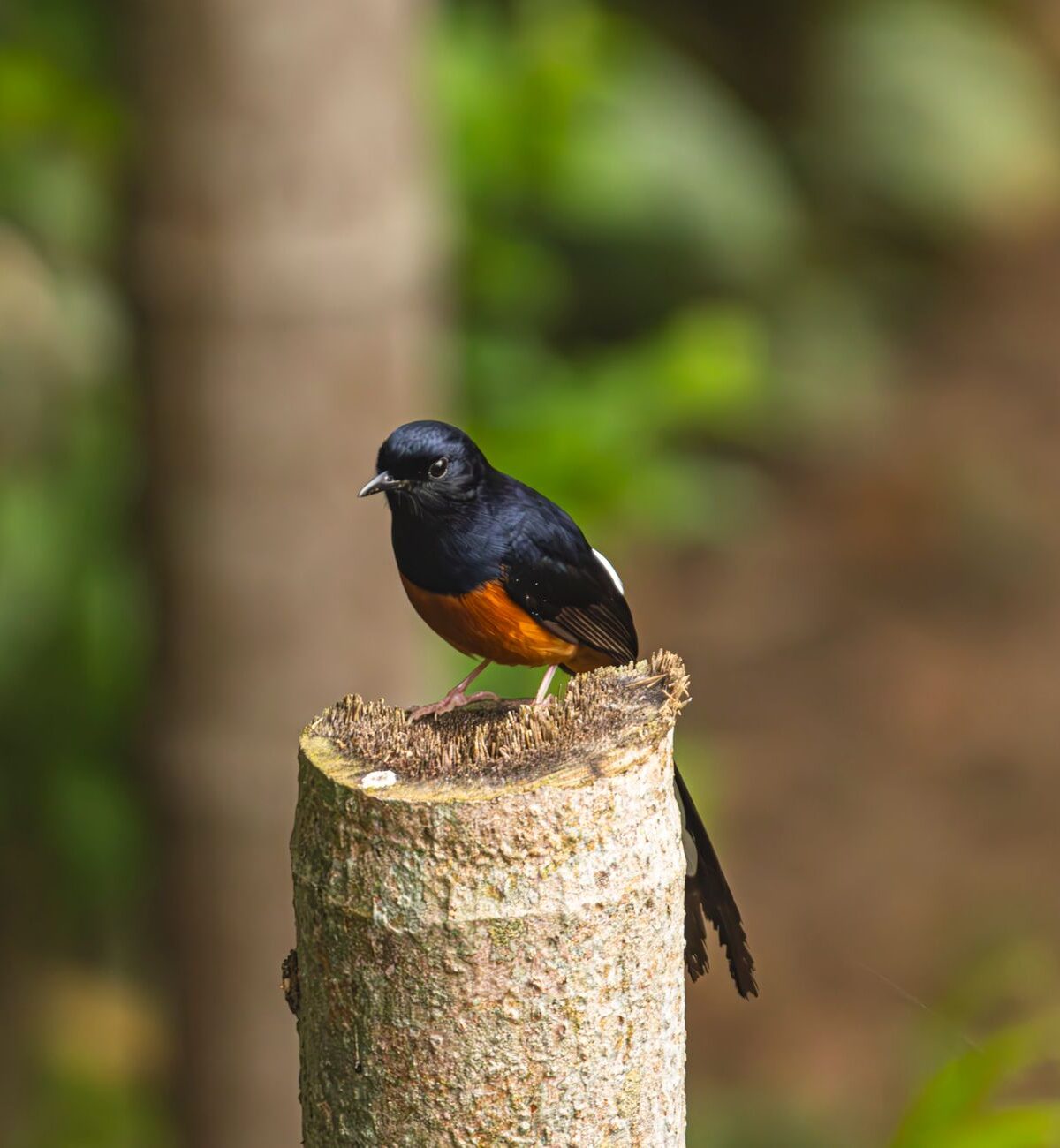
COMMON SHAMA THRUSH
DESCRIPTION
Common Shama Thrush, also known as Shama or Asian Shama, is a small to medium-sized bird characterized by its striking plumage, which features a glossy black upper body and a vibrant orange-brown underbelly. This species is known for its melodious song, which is often delivered from a prominent perch, making it a favorite among birdwatchers and enthusiasts. Inhabiting dense forests and shrubby areas, the Common Shama Thrush is an agile forager, often seen hopping along the ground in search of food.
FUN FACTS
- The Common Shama Thrush is renowned for its beautiful song, which can vary significantly between individuals, making each bird's call unique
- This species is also popular in aviculture, where it is often kept for its singing ability and striking appearance
QUICK INFO
Lifespanup to 10 years in the wild
Average Weight50-70 g
Average Length23-25 cm
Diet TypeInsectivore
Social Structuresolitary or in pairs, with males often defending territories during breeding season
Activity PatternDiurnal
Breeding SeasonSpring to early summer
- Habitat
- This species prefers dense, humid forests and shrubby areas, often near water sources. It is commonly found in both primary and secondary forests, as well as in gardens and parks.
- Biomes
- Tropical Rainforest, Temperate Forest
- Native Range
- The Common Shama Thrush is native to Southeast Asia, with a range that extends from India to Indonesia.
- Continent
- Asia
- Countries
- India, Nepal, Bangladesh, Myanmar, Thailand, Malaysia, Indonesia
- Diet
- The Common Shama Thrush primarily feeds on insects, fruits, and berries, showcasing a varied diet that allows it to thrive in its natural habitat.
- Diet Type
- Insectivore
- Favorite Food
- insects, fruits, berries
- Social Structure
- solitary or in pairs, with males often defending territories during breeding season
- Activity Pattern
- Diurnal
- Group Size
- 1-2
- Territorial
- 1
 LC
LC
 VU
VU
 LC
LC
50-70 g
Weight
23-25 cm
Length
- Coloration
- glossy black upper body with orange-brown underparts
- Sexual Dimorphism
- males are more brightly colored than females
- Lifespan
- up to 10 years in the wild
- Offspring per Birth
- 2-4
- Sexual Maturity
- 1 year
- Breeding Season
- Spring to early summer
LC
Least Concern
IUCN Red List Status
- Population Status
- The population of Common Shama Thrush is currently stable, though habitat loss poses a potential threat.
- Wild Population Estimate
- unknown
- Population Trend
- Stable
- Endangered
- 0
- Threats
- Main threats include habitat destruction due to deforestation and urbanization, which can lead to a decline in suitable living conditions.
- Predators
- snakes, birds of prey, domestic cats
- Defense Mechanisms
- Common Shama Thrushes rely on their agility and ability to hide among dense foliage to evade predators.
- Found in Zoos
- Uncommon