


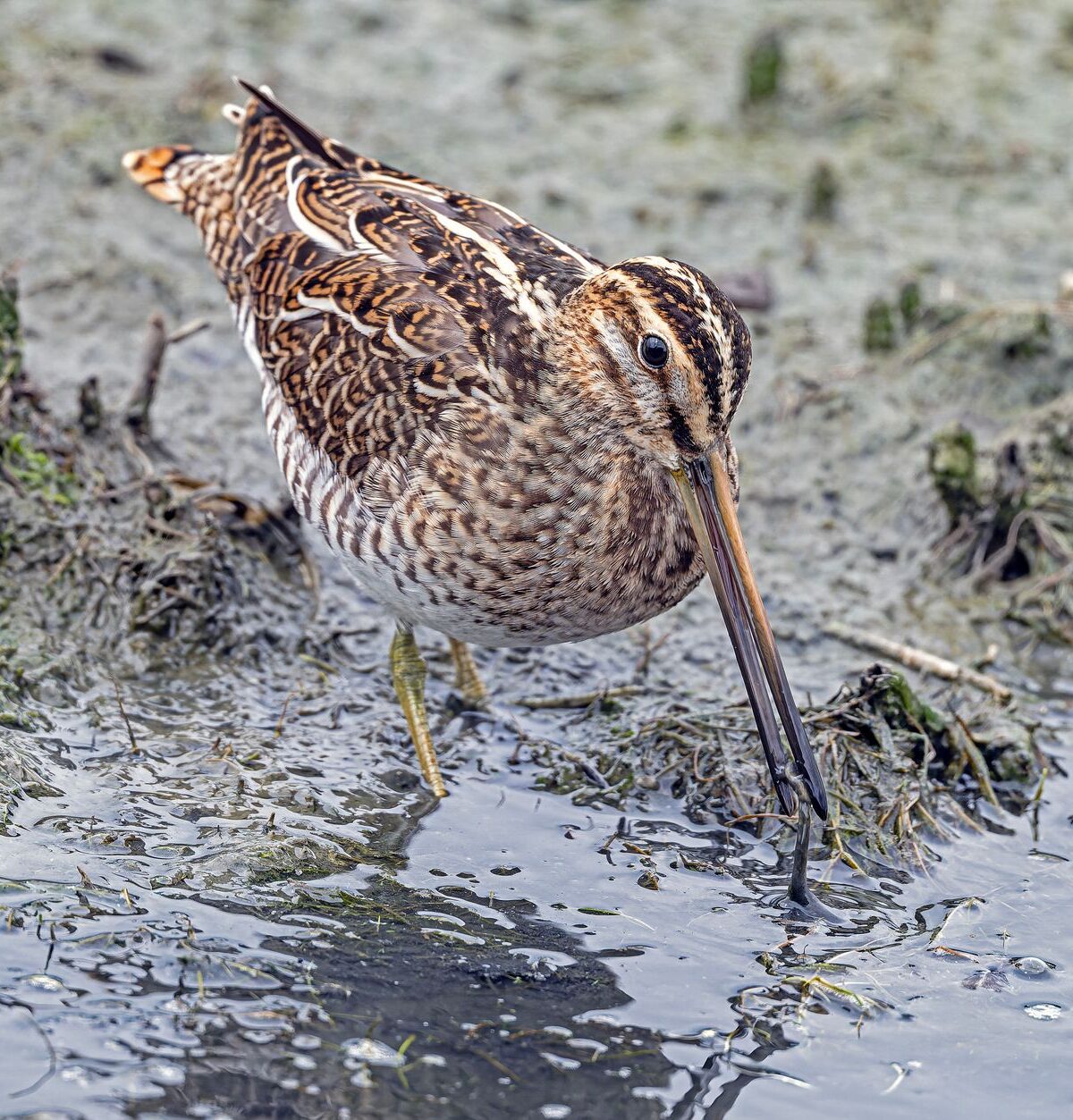
COMMON SNIPE
Gallinago gallinago
DESCRIPTION
Common Snipe (Gallinago gallinago) is a medium-sized wading bird known for its long bill and cryptic plumage, which provides excellent camouflage in its wetland habitats. It has a distinctive brown and buff coloration with streaks and spots that help it blend into the reeds and grasses where it forages. Behaviorally, Common Snipe is known for its erratic flight patterns and a unique display flight during the breeding season, where males produce a drumming sound by the air rushing through their tail feathers.
FUN FACTS
- Common Snipe is known for its unique display flight, where males perform aerial displays to attract females, producing a drumming sound that can be heard from the ground
- This drumming is created by the air rushing through their tail feathers, making it a fascinating aspect of their courtship behavior
- | Despite their name, Common Snipe can be quite elusive and are often difficult to spot in their natural habitat due to their excellent camouflage
- They are more often heard than seen, especially during the breeding season when males are actively displaying
QUICK INFO
Lifespan5-10 years in the wild
Average Weight150-250 g
Average Length25-30 cm
Diet TypeInsectivore
Social Structuresolitary, occasionally in small groups during migration
Activity PatternCrepuscular
Breeding SeasonSpring (April-June)
- Habitat
- Common Snipe prefers wetland habitats such as marshes, bogs, and wet grasslands, where it can find ample food and nesting sites. They are often found in areas with dense vegetation that provides cover from predators.
- Biomes
- Wetlands, Grasslands
- Native Range
- Common Snipe breeds across Europe and parts of Asia, migrating to Africa and southern Asia for the winter.
- Continent
- Europe, Asia, Africa
- Countries
- United Kingdom, France, Germany, Russia, India
- Diet
- Common Snipe primarily feeds on invertebrates, including earthworms, insects, and crustaceans, which it probes for in soft mud and shallow water.
- Diet Type
- Insectivore
- Favorite Food
- earthworms, insects
- Social Structure
- solitary, occasionally in small groups during migration
- Activity Pattern
- Crepuscular
- Group Size
- 1-5
- Territorial
- 1

 VU
VU
150-250 g
Weight
25-30 cm
Length
- Coloration
- brown and buff with streaks and spots
- Sexual Dimorphism
- males are slightly larger than females
- Lifespan
- 5-10 years in the wild
- Offspring per Birth
- 4
- Sexual Maturity
- 1 year
- Breeding Season
- Spring (April-June)
LC
Least Concern
IUCN Red List Status
- Population Status
- The population of Common Snipe is currently stable, although it faces habitat loss in some areas.
- Wild Population Estimate
- 1,000,000-2,000,000
- Population Trend
- Stable
- Endangered
- 0
- Threats
- Main threats include habitat destruction due to agricultural expansion and drainage of wetlands. Climate change also poses a risk by altering their breeding and feeding habitats.
- Predators
- foxes, birds of prey, and larger mammals may prey on Common Snipe, especially during the nesting season.
- Defense Mechanisms
- Common Snipe relies on its cryptic coloration for camouflage and will often remain motionless to avoid detection.
- Found in Zoos
- Rare