


COMMON TOAD
Bufo bufo
DESCRIPTION
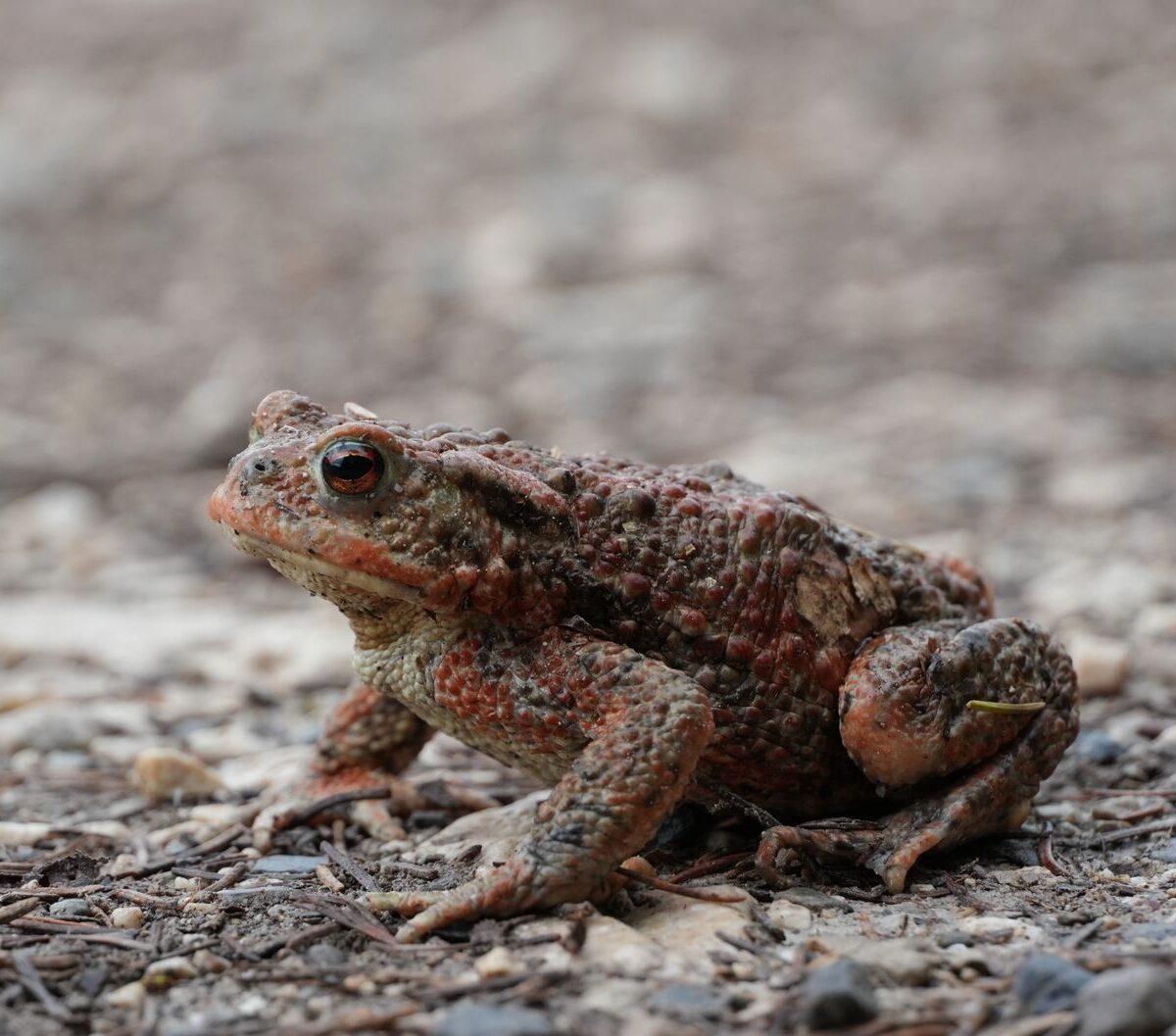
Common Toad (Bufo bufo) is also known as the European Toad and is characterized by its warty skin, which can vary in color from brown to olive green. This amphibian is typically found in a variety of habitats, including woodlands, grasslands, and gardens, where it prefers moist environments. Common Toads are primarily nocturnal and are known for their slow, deliberate movements, often seen during the breeding season when they migrate to ponds and other water bodies.
FUN FACTS
- Common Toads can live for over a decade in the wild, and some individuals have been known to reach up to 20 years in captivity
- They have a unique breeding behavior where males call to attract females, and during this time, they can be found in large numbers around breeding sites.|These toads have a remarkable ability to adapt to urban environments, often being found in gardens and parks
- Their warty skin not only provides camouflage but also helps them retain moisture, making them well-suited for various habitats
QUICK INFO
Lifespan10-12 years in the wild, up to 20 years in captivi
Average Weight50-100 g
Average Length7-10 cm
Diet TypeInsectivore
Social Structuresolitary, except during breeding
Activity PatternNocturnal
Breeding SeasonSpring (March-April)
- Habitat
- Common Toads inhabit a range of environments, including forests, grasslands, and urban areas, often near water sources for breeding. They prefer damp conditions and are often found under rocks or logs during the day.
- Biomes
- Temperate Forest, Grassland, Urban
- Native Range
- Common Toads are native to much of Europe, extending from the British Isles to Scandinavia and down to the Mediterranean region.
- Continent
- Europe
- Countries
- United Kingdom, France, Germany, Italy, Spain, Poland
- Diet
- Common Toads primarily feed on insects, worms, and other small invertebrates. They are opportunistic feeders and will consume a variety of prey items available in their environment.
- Diet Type
- Insectivore
- Favorite Food
- insects, worms
- Social Structure
- solitary, except during breeding
- Activity Pattern
- Nocturnal
- Group Size
- 1-10
- Territorial
- 0
 VU
VU
 LC
LC

50-100 g
Weight
7-10 cm
Length
- Coloration
- warty skin, typically brown or olive green with darker spots
- Sexual Dimorphism
- males are generally smaller and have darker throats than females
- Lifespan
- 10-12 years in the wild, up to 20 years in captivi
- Offspring per Birth
- 2000-3000 eggs
- Sexual Maturity
- 2-3 years
- Breeding Season
- Spring (March-April)
LC
Least Concern
IUCN Red List Status
- Population Status
- Common Toads are widespread and generally considered to be of least concern, although local populations may be affected by habitat loss.
- Wild Population Estimate
- unknown
- Population Trend
- Stable
- Endangered
- 0
- Threats
- Main threats to Common Toads include habitat destruction, pollution, and road mortality during migration. Climate change may also impact their breeding habitats.
- Predators
- birds, snakes, mammals, and larger amphibians
- Defense Mechanisms
- Common Toads secrete toxins from their skin as a defense mechanism against predators.
- Found in Zoos
- Common