


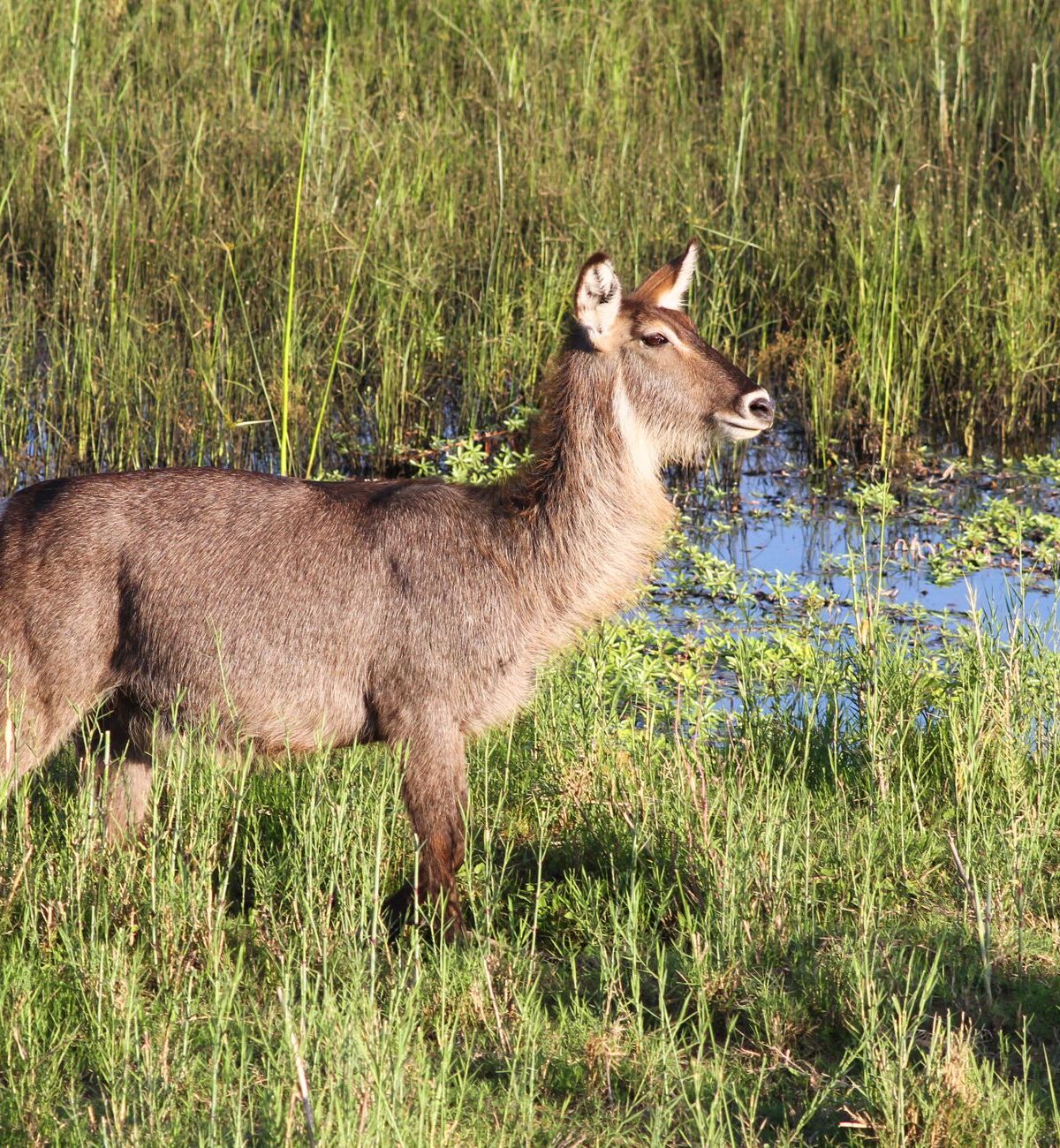
COMMON WATERBUCK
Kobus ellipsiprymnus ellipsiprymnus
DESCRIPTION
Common waterbuck (Kobus ellipsiprymnus ellipsiprymnus) is a large antelope known for its distinctive ringed markings on its rear. They have a shaggy, water-repellent coat that is typically brownish-gray, which helps them thrive in their wetland habitats. These animals are social and often found in groups near water sources, where they graze on grasses and other vegetation.
FUN FACTS
- Common waterbucks are excellent swimmers and can submerge themselves to evade predators, often only leaving their nostrils above water
- | Their unique coat is not only water-repellent but also helps them regulate their body temperature in hot climates, making them well-suited for their natural habitats
QUICK INFO
Lifespan10-15 years in the wild, up to 20 years in captivi
Average Weight100-150 kg
Average Length1.5-2.0 m
Diet TypeHerbivore
Social StructureThey typically form groups consisting of females and their offspring, while males are more solitary or may form small bachelor groups.
Activity PatternDiurnal
Breeding SeasonYear-round, with peaks depending on local conditions
- Habitat
- They inhabit savannas, grasslands, and wetlands, often near rivers and lakes. Their preference for areas with abundant water sources is crucial for their survival.
- Biomes
- Savanna, Wetland
- Native Range
- Common waterbuck are native to sub-Saharan Africa, particularly in regions with abundant water sources.
- Continent
- Africa
- Countries
- Kenya, Tanzania, Botswana, South Africa, Namibia, Zambia
- Diet
- Common waterbucks are herbivores that primarily feed on grasses, but they also consume leaves and aquatic plants when available.
- Diet Type
- Herbivore
- Favorite Food
- grasses
- Social Structure
- They typically form groups consisting of females and their offspring, while males are more solitary or may form small bachelor groups.
- Activity Pattern
- Diurnal
- Group Size
- 5-30
- Territorial
- 1
 LC
LC
 VU
VU
 LC
LC
100-150 kg
Weight
1.5-2.0 m
Length
1.2 m at shoulder
Height (Shoulder)
- Coloration
- Brownish-gray with a distinctive white ring on the rear.
- Sexual Dimorphism
- Males are larger and have long, spiral horns.
- Lifespan
- 10-15 years in the wild, up to 20 years in captivi
- Gestation Period
- 240 days
- Offspring per Birth
- 1
- Sexual Maturity
- 2-3 years
- Breeding Season
- Year-round, with peaks depending on local conditions
LC
Least Concern
IUCN Red List Status
- Population Status
- The population is currently stable, but habitat loss poses a threat.
- Wild Population Estimate
- 50,000-100,000
- Population Trend
- Stable
- Endangered
- 0
- Threats
- Main threats include habitat loss due to agriculture and human encroachment, as well as poaching in some areas. However, they are generally adaptable and can thrive in modified habitats.
- Predators
- Lions, leopards, hyenas, and crocodiles are known predators of the common waterbuck.
- Defense Mechanisms
- They are known to flee into water to escape predators, utilizing their swimming ability as a defense.
- Compatible Animals
- Zebras, wildebeests, various antelope species
- Found in Zoos
- Uncommon