


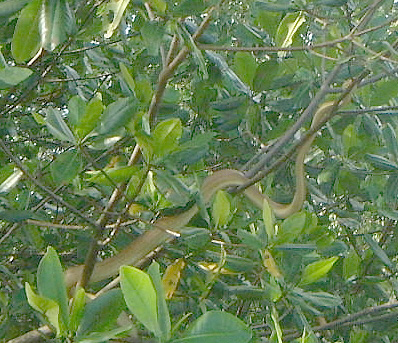
COOK'S TREE BOA
Corallus cookii
DESCRIPTION
Cook's Tree Boa (Corallus cookii) is a strikingly beautiful snake known for its vibrant coloration, which typically includes shades of green, yellow, and brown. This species is primarily arboreal, spending much of its time in trees, where it uses its prehensile tail to navigate and secure itself among branches. Cook's Tree Boas are nocturnal hunters, often ambushing their prey from a coiled position, showcasing their remarkable ability to blend into their surroundings.
FUN FACTS
- Cook's Tree Boas are known for their impressive ability to change color slightly based on their environment, which helps them remain hidden from both predators and prey
- Additionally, they have a unique method of hunting; they can sense the heat of their prey using specialized pits located on their lips, allowing them to accurately strike even in low-light conditions
QUICK INFO
Lifespan15-20 years in the wild, up to 30 in captivity
Average Weight1.5-2.5 kg
Average Length1.5-2.0 m
Diet TypeCarnivore
Social Structuresolitary
Activity PatternNocturnal
Breeding SeasonSpring (March-May)
- Habitat
- This species inhabits tropical rainforests, where it prefers humid environments with plenty of vegetation. They are often found in the canopy layer, which provides ample opportunities for hunting and shelter.
- Biomes
- Tropical Rainforest
- Native Range
- Cook's Tree Boa is native to the rainforests of Central and South America, particularly in regions such as Panama, Colombia, and parts of Brazil.
- Continent
- South America, Central America
- Countries
- Panama, Colombia, Brazil
- Diet
- Cook's Tree Boas primarily feed on small mammals and birds, using constriction to subdue their prey. They are skilled hunters, often waiting patiently for hours to catch unsuspecting animals.
- Diet Type
- Carnivore
- Favorite Food
- small mammals, birds
- Social Structure
- solitary
- Activity Pattern
- Nocturnal
- Group Size
- 1
- Territorial
- 0
 VU
VU
1.5-2.5 kg
Weight
1.5-2.0 m
Length
- Coloration
- vibrant green with yellow and brown markings
- Sexual Dimorphism
- females are generally larger than males
- Lifespan
- 15-20 years in the wild, up to 30 in captivity
- Offspring per Birth
- 5-15
- Sexual Maturity
- 3-4 years
- Breeding Season
- Spring (March-May)
LC
Least Concern
IUCN Red List Status
- Population Status
- The population status of Cook's Tree Boa is currently stable, but habitat loss poses a potential threat.
- Wild Population Estimate
- unknown
- Population Trend
- Stable
- Endangered
- 0
- Threats
- The main threats to Cook's Tree Boa include habitat destruction due to deforestation and illegal pet trade. These factors can lead to localized declines in their populations.
- Predators
- birds of prey, larger snakes, and mammals such as raccoons
- Defense Mechanisms
- Cook's Tree Boas rely on their camouflage to avoid detection by predators, blending seamlessly into the foliage of their habitat.
- Compatible Animals
- none
- Found in Zoos
- Uncommon