


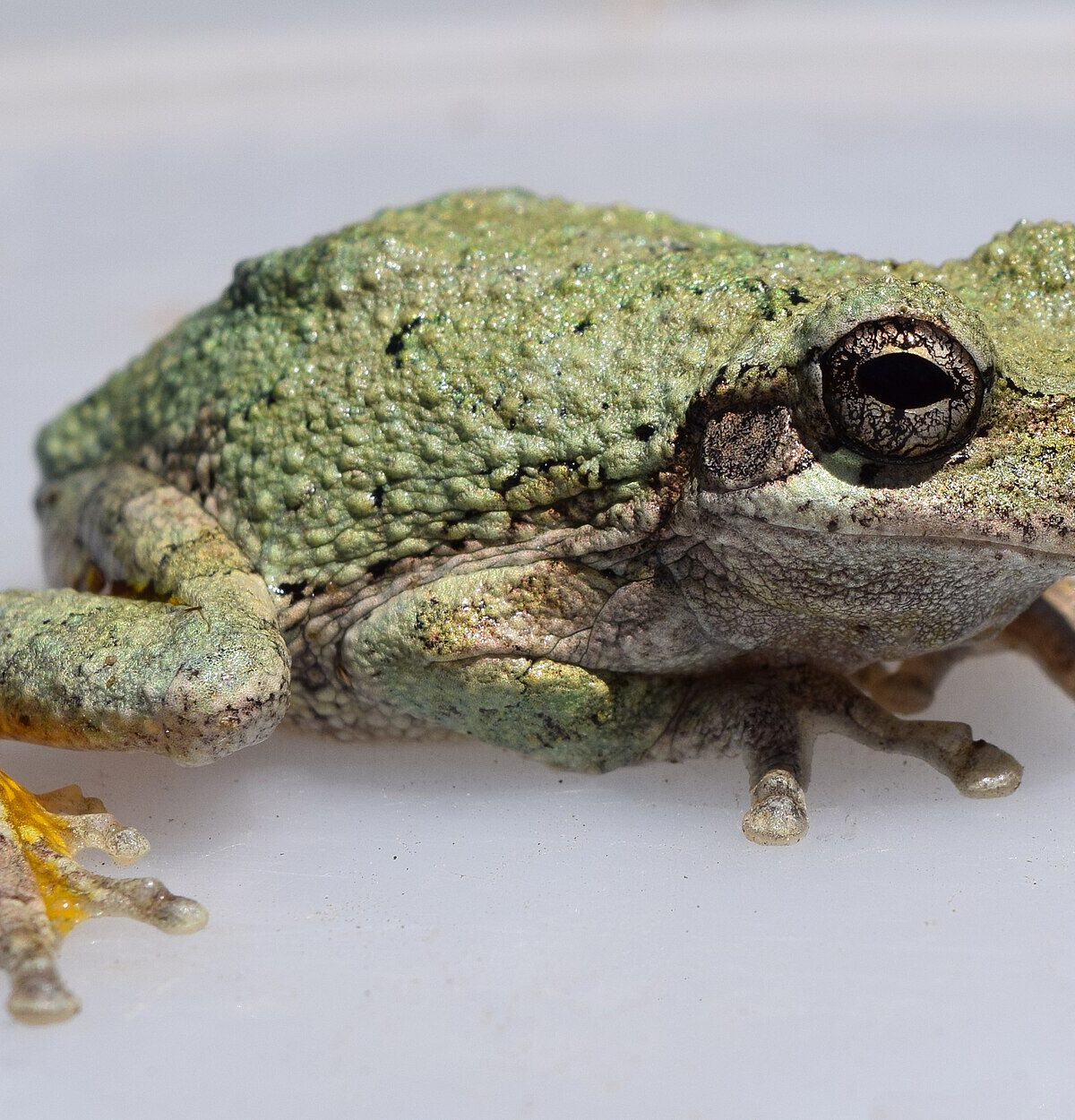
COPE'S GRAY TREE FROG
Hyla chrysoscelis
DESCRIPTION
Cope's Gray Tree Frog (Hyla chrysoscelis) is commonly known as the Southern Gray Tree Frog. This small amphibian typically exhibits a gray or green coloration with dark spots, allowing it to blend seamlessly into its surroundings. It is known for its distinctive, loud call during the breeding season, which can be heard at night, and it often inhabits trees and shrubs near water sources, showcasing its arboreal lifestyle.
FUN FACTS
- Cope's Gray Tree Frog has the remarkable ability to change its color to match its surroundings, which helps it evade predators
- Additionally, this species can survive being frozen during winter months, entering a state of suspended animation until temperatures rise again.|These frogs are known for their loud, distinctive calls that can be heard from a distance, especially during the breeding season
- The calls are used by males to attract females and can vary in pitch and duration, making them a fascinating subject for study in acoustic ecology
QUICK INFO
Lifespan3-5 years in the wild
Average Weight2-5 g
Average Length2.5-4.0 cm
Diet TypeInsectivore
Social Structuresolitary, though they may gather in groups during the breeding season
Activity PatternNocturnal
Breeding SeasonSpring (April-June)
- Habitat
- This species thrives in a variety of habitats, including woodlands, wetlands, and suburban areas. They are often found near ponds or streams where they can breed and find food.
- Biomes
- Temperate Forest, Wetlands
- Native Range
- Cope's Gray Tree Frog is native to the eastern United States, ranging from the Great Lakes region down to the Gulf Coast.
- Continent
- North America
- Countries
- United States
- Diet
- Cope's Gray Tree Frog primarily feeds on small insects and invertebrates. Its diet consists mainly of crickets, beetles, and other small arthropods.
- Diet Type
- Insectivore
- Favorite Food
- crickets, beetles
- Social Structure
- solitary, though they may gather in groups during the breeding season
- Activity Pattern
- Nocturnal
- Group Size
- 5-15
- Territorial
- 0
 LC
LC
 VU
VU
2-5 g
Weight
2.5-4.0 cm
Length
- Coloration
- gray or green with dark spots
- Sexual Dimorphism
- males are typically smaller and have a darker throat during the breeding season
- Lifespan
- 3-5 years in the wild
- Offspring per Birth
- 100-200 eggs
- Sexual Maturity
- 1-2 years
- Breeding Season
- Spring (April-June)
LC
Least Concern
IUCN Red List Status
- Population Status
- The population of Cope's Gray Tree Frog is currently stable, with no significant declines reported.
- Wild Population Estimate
- unknown
- Population Trend
- Stable
- Endangered
- 0
- Threats
- Main threats include habitat loss due to urbanization and pollution. Additionally, climate change may impact their breeding habitats and food availability.
- Predators
- snakes, birds, and larger amphibians
- Defense Mechanisms
- They rely on camouflage to avoid predation and can also produce a loud call to startle potential threats.
- Found in Zoos
- Uncommon