


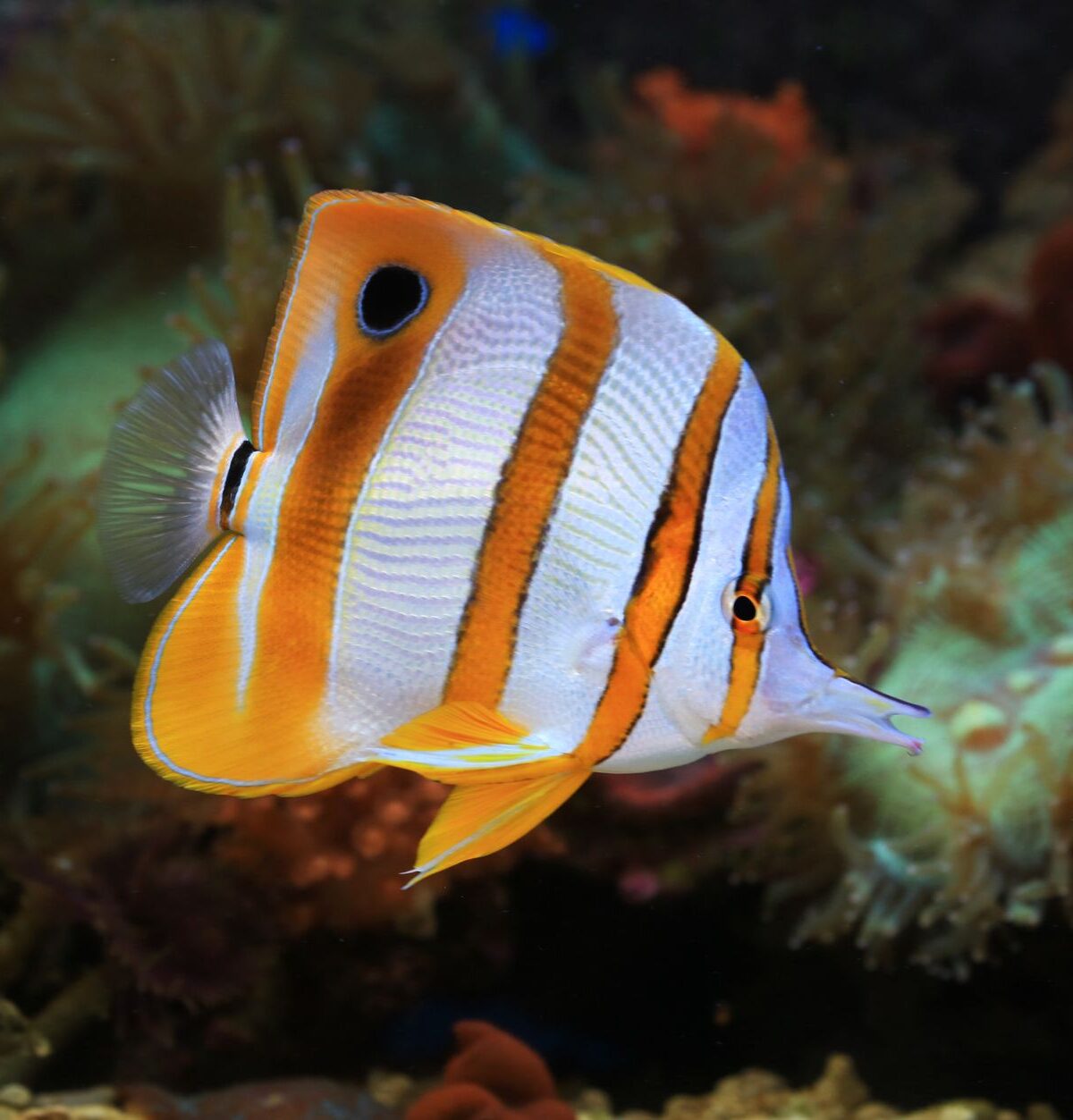
COPPERBAND BUTTERFLYFISH
DESCRIPTION
Copperband Butterflyfish, also known as the Copperbanded Butterflyfish, is a striking marine species characterized by its elongated body and vibrant coloration, featuring vertical orange and white stripes. This fish is often found in coral reefs, where it exhibits a peaceful demeanor and is known for its unique feeding behavior, using its long snout to extract small invertebrates from crevices. Ecologically, it plays a vital role in maintaining the health of coral reef ecosystems by controlling the population of pests such as aiptasia anemones.
FUN FACTS
- Copperband Butterflyfish are often sought after in the aquarium trade due to their striking appearance and unique feeding habits
- They are known to be difficult to keep in captivity, as they require specific water conditions and a diet rich in live foods
- | Interestingly, Copperband Butterflyfish have a unique symbiotic relationship with certain species of anemones, which provide them with protection while they feed on the pests that threaten the anemones
- This relationship highlights the interconnectedness of marine ecosystems and the importance of each species in maintaining ecological balance
QUICK INFO
Lifespan10-15 years in the wild, up to 20 years in captivi
Average Length4-7 inches
Diet TypeCarnivore
Social Structuresolitary or in pairs, they are often seen alone but can form monogamous pairs during breeding.
Activity PatternDiurnal
Breeding SeasonYear-round in tropical regions
- Habitat
- This species inhabits shallow coral reefs and lagoons, often preferring areas with abundant coral cover. They are typically found at depths of 1 to 30 meters.
- Biomes
- Coral Reef, Marine
- Native Range
- Copperband Butterflyfish is native to the Indo-Pacific region, including the Great Barrier Reef and the Red Sea.
- Continent
- Asia, Australia, Africa
- Countries
- Australia, Indonesia, Philippines, Maldives, Red Sea countries
- Diet
- Copperband Butterflyfish primarily feeds on small invertebrates, including polychaete worms, small crustaceans, and coral polyps.
- Diet Type
- Carnivore
- Favorite Food
- aiptasia anemones, small crustaceans
- Social Structure
- solitary or in pairs, they are often seen alone but can form monogamous pairs during breeding.
- Activity Pattern
- Diurnal
- Group Size
- 1-2
- Territorial
- 0

4-7 inches
Length
- Coloration
- The body is predominantly white with bright orange vertical stripes and a distinctive long snout.
- Lifespan
- 10-15 years in the wild, up to 20 years in captivi
- Sexual Maturity
- 1-2 years
- Breeding Season
- Year-round in tropical regions
LC
Least Concern
IUCN Red List Status
- Population Status
- The population is currently stable, but habitat loss poses a potential threat.
- Population Trend
- Stable
- Endangered
- 0
- Threats
- Main threats include habitat destruction due to coral reef degradation and collection for the aquarium trade. Overfishing and climate change also pose risks to their populations.
- Predators
- Larger fish species, such as groupers and moray eels, are known predators of the Copperband Butterflyfish.
- Defense Mechanisms
- They rely on their ability to hide among corals and their coloration for camouflage.
- Compatible Animals
- Clownfish, Gobies, other small reef fish
- Found in Zoos
- Common