


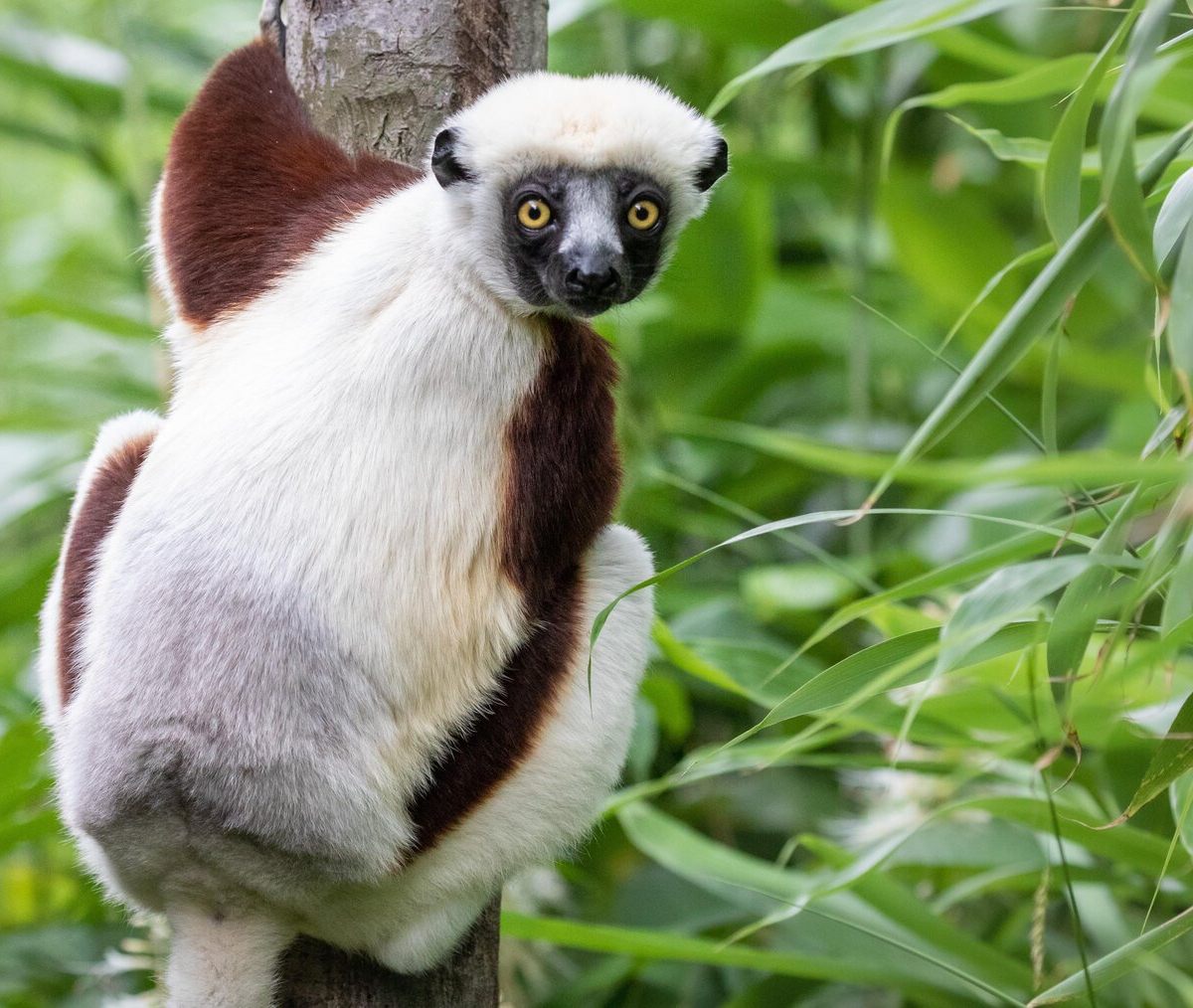
COQUEREL'S SIFAKA
DESCRIPTION
Coquerel's Sifaka is a species of lemur native to Madagascar, known for its striking appearance and unique locomotion. They are characterized by their long limbs and ability to leap between trees with remarkable agility.
FUN FACTS
- Coquerel's Sifakas are known for their unique way of moving, which involves leaping from tree to tree
- | They are named after the French zoologist Charles Coquerel
- | Their social structure is matriarchal, with females often leading the group
QUICK INFO
Lifespan15-20 years in the wild, up to 30 in captivity
Average Weight4-5 kg
Average Length45-60 cm
Diet TypeHerbivore
Social Structuregroup — they typically live in small family groups.
Activity PatternDiurnal
Breeding SeasonSpring (September-November)
- Habitat
- These sifakas inhabit dry deciduous forests and can also be found in some spiny forests. They prefer areas with abundant vegetation for foraging and nesting.
- Biomes
- Tropical Dry Forest, Spiny Forest
- Native Range
- Endemic to Madagascar, specifically found in the western part of the island.
- Continent
- Africa
- Countries
- Madagascar
- Diet
- Coquerel's Sifaka primarily feeds on leaves, fruits, and flowers. They have a preference for young leaves and are known to consume a variety of plant materials.
- Diet Type
- Herbivore
- Favorite Food
- young leaves, fruits
- Social Structure
- group — they typically live in small family groups.
- Activity Pattern
- Diurnal
- Group Size
- 3-10
- Territorial
- 1
4-5 kg
Weight
45-60 cm
Length
- Coloration
- They have a distinctive coloration with a white body and dark brown or black markings on the face and limbs.
- Sexual Dimorphism
- males are slightly larger than females
- Lifespan
- 15-20 years in the wild, up to 30 in captivity
- Gestation Period
- 150 days
- Offspring per Birth
- 1
- Sexual Maturity
- 2-3 years
- Breeding Season
- Spring (September-November)
EN
Endangered
IUCN Red List Status
- Population Status
- The population is currently declining due to habitat loss and hunting.
- Wild Population Estimate
- 10,000-20,000
- Population Trend
- Decreasing
- Endangered
- 1
- Threats
- Main threats include deforestation and habitat destruction due to agriculture and logging. Hunting also poses a risk to their population.
- Conservation Program
- Conservation efforts include habitat protection and restoration initiatives.
- Predators
- Madagascar's native raptors and carnivorous mammals, such as the fossa.
- Defense Mechanisms
- They use vocalizations to warn of predators and can leap to escape threats.
- Found in Zoos
- Uncommon