


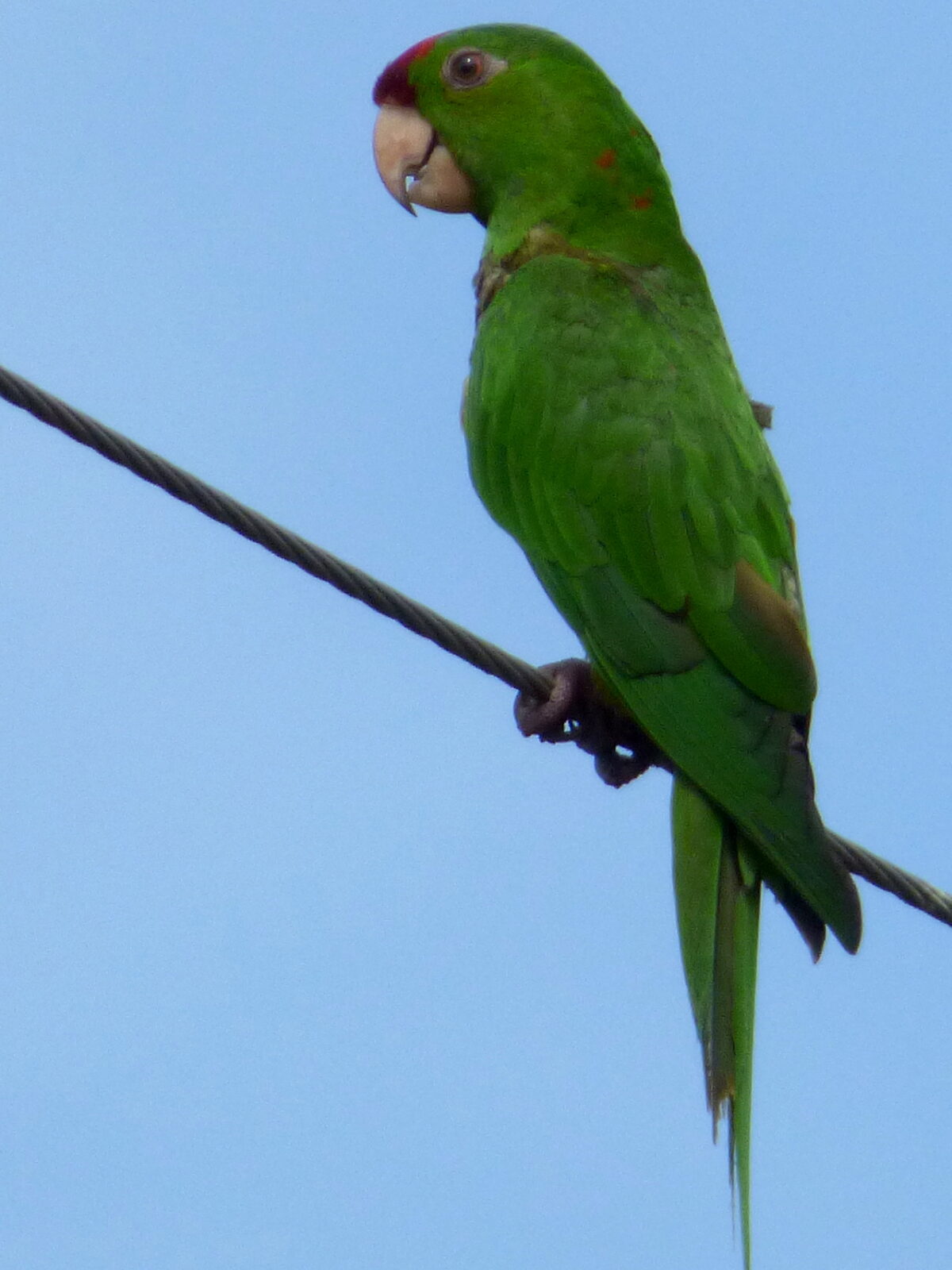
CORDILLERAN PARAKEET
Psittacara wagleri
DESCRIPTION
Cordilleran Parakeet (Psittacara wagleri), also known as Wagler's Parakeet, is a vibrant green bird with a distinctive red forehead and blue wing feathers. This species is known for its social behavior, often seen in flocks, and is highly vocal, communicating with a variety of calls. Inhabiting mountainous regions, they are adapted to a life in the trees, where they forage for food and build their nests in tree cavities.
FUN FACTS
- Cordilleran Parakeets are known for their intelligence and problem-solving abilities, often using tools to access food
- They also have a unique social structure, where they engage in mutual grooming to strengthen bonds within their flocks
QUICK INFO
Lifespan15-20 years in the wild, up to 30 in captivity
Average Weight100-150 g
Average Length25-30 cm
Diet TypeHerbivore
Social StructureThey are typically found in groups, which can range from small family units to larger flocks during foraging.
Activity PatternDiurnal
Breeding SeasonSpring (March-May)
- Habitat
- Cordilleran Parakeets inhabit subtropical or tropical moist montane forests, often found at elevations ranging from 1,200 to 2,500 meters. They prefer areas with abundant tree cover for nesting and foraging.
- Biomes
- Montane Forest
- Native Range
- This species is native to the mountainous regions of Central America, particularly in the highlands of Costa Rica and western Panama.
- Continent
- North America, Central America
- Countries
- Costa Rica, Panama
- Diet
- They primarily feed on seeds, fruits, and nuts, foraging in the canopy for their food. Their diet is supplemented with flowers and leaves when available.
- Diet Type
- Herbivore
- Favorite Food
- seeds, fruits, nuts
- Social Structure
- They are typically found in groups, which can range from small family units to larger flocks during foraging.
- Activity Pattern
- Diurnal
- Group Size
- 5-30
- Territorial
- 0
 LC
LC
100-150 g
Weight
25-30 cm
Length
- Coloration
- Predominantly green with a red forehead and blue wing feathers.
- Sexual Dimorphism
- Males and females are similar in appearance, making it difficult to distinguish between the sexes.
- Lifespan
- 15-20 years in the wild, up to 30 in captivity
- Offspring per Birth
- 2-4
- Sexual Maturity
- 2-3 years
- Breeding Season
- Spring (March-May)
LC
Least Concern
IUCN Red List Status
- Population Status
- The population is currently stable, but habitat loss poses a potential threat.
- Wild Population Estimate
- 10,000-20,000
- Population Trend
- Stable
- Endangered
- 0
- Threats
- Main threats include habitat destruction due to deforestation and agricultural expansion. Additionally, they may be affected by the illegal pet trade.
- Predators
- Natural predators include hawks and snakes, which pose a threat to both adults and their nests.
- Defense Mechanisms
- They rely on their ability to fly quickly and maneuver through trees to evade predators.
- Compatible Animals
- Other parakeets, small parrots
- Found in Zoos
- Uncommon