


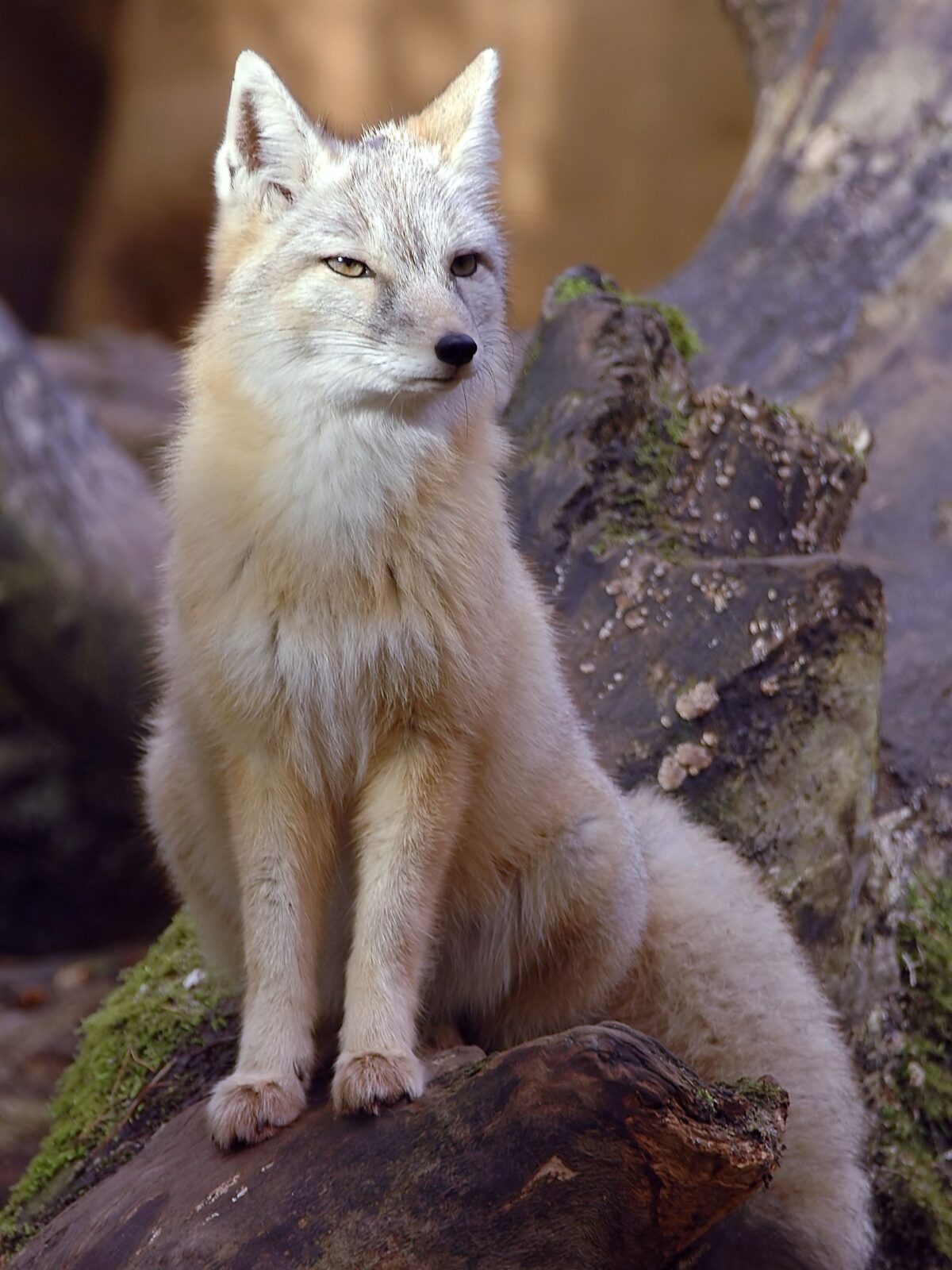
CORSAC FOX
Vulpes corsac
DESCRIPTION
Corsac Fox (Vulpes corsac) is a small fox species characterized by its slender body, long legs, and bushy tail. Its fur is typically a sandy or grayish color, providing excellent camouflage in its arid and semi-arid habitats. These foxes are known for their agility and are primarily nocturnal, often hunting alone or in pairs, showcasing a range of vocalizations to communicate with one another.
FUN FACTS
- Corsac Foxes are known for their unique vocalizations, which include barks, howls, and yips, used for communication with mates and during territorial disputes
- They are also skilled diggers, capable of creating extensive burrow systems that can serve as homes and places to store food.|These foxes have a remarkable ability to adapt to various environments, allowing them to thrive in both arid and semi-arid regions
- Their keen sense of hearing helps them locate prey even under snow or dense vegetation
QUICK INFO
Lifespan5-10 years in the wild, up to 12 years in captivit
Average Weight5-10 kg
Average Length45-60 cm
Diet TypeCarnivore
Social Structuresolitary or pair, often seen alone or with a mate during the breeding season
Activity PatternNocturnal
Breeding SeasonSpring (March-May)
- Habitat
- Corsac Foxes inhabit grasslands, steppes, and semi-desert regions, where they can easily dig burrows for shelter. They prefer open areas with sparse vegetation that allows them to hunt effectively.
- Biomes
- Grassland, Desert
- Native Range
- Corsac Foxes are native to Central Asia, particularly found in countries like Mongolia, Kazakhstan, and parts of northern China.
- Continent
- Asia
- Countries
- Mongolia, Kazakhstan, China, Russia
- Diet
- Corsac Foxes primarily feed on small mammals, birds, and insects, but they may also consume fruits and vegetation when prey is scarce. Their diet can vary significantly based on the availability of food sources in their environment.
- Diet Type
- Carnivore
- Favorite Food
- small mammals, birds, insects
- Social Structure
- solitary or pair, often seen alone or with a mate during the breeding season
- Activity Pattern
- Nocturnal
- Group Size
- 1-2
- Territorial
- 1
 LC
LC
 LC
LC
5-10 kg
Weight
45-60 cm
Length
- Coloration
- sandy or grayish fur with a lighter underbelly
- Sexual Dimorphism
- males are generally larger than females
- Lifespan
- 5-10 years in the wild, up to 12 years in captivit
- Gestation Period
- 50-55 days
- Offspring per Birth
- 3-6
- Sexual Maturity
- 10-12 months
- Breeding Season
- Spring (March-May)
LC
Least Concern
IUCN Red List Status
- Population Status
- The population of Corsac Foxes is currently stable, but they face threats from habitat loss and hunting.
- Wild Population Estimate
- unknown
- Population Trend
- Stable
- Endangered
- 0
- Threats
- Main threats include habitat destruction due to agriculture and urbanization, as well as hunting for fur. These factors can lead to localized declines in their populations.
- Predators
- wolves, eagles, and larger carnivores may prey on Corsac Foxes, especially when they are young or vulnerable.
- Defense Mechanisms
- Corsac Foxes rely on their agility and speed to escape predators, often using their burrows as a refuge.
- Found in Zoos
- Uncommon