


COTTON PYGMY GOOSE
Nettapus coromandelianus
DESCRIPTION
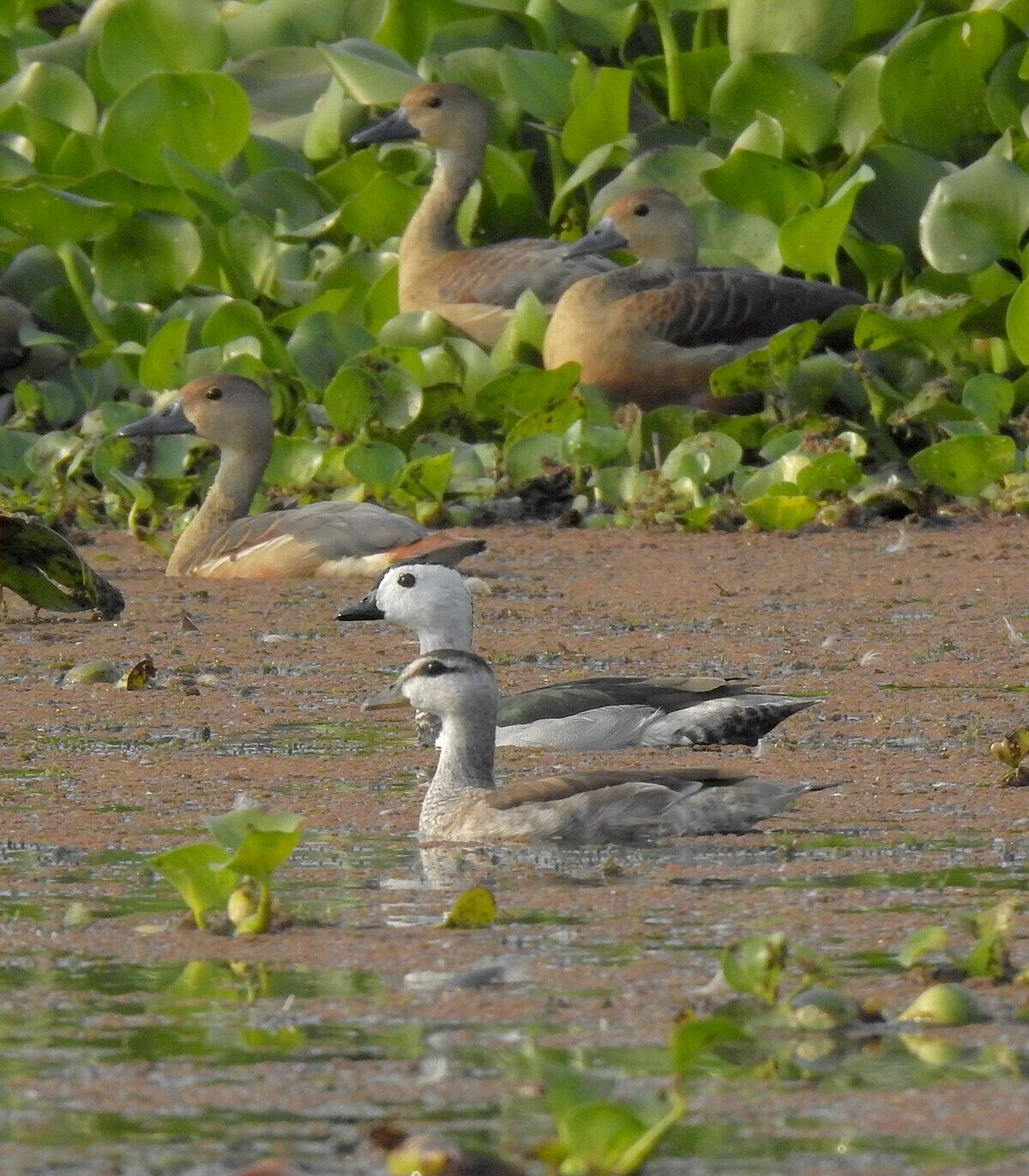
Cotton Pygmy Goose (Nettapus coromandelianus) is a small, dabbling duck known for its striking appearance, featuring a distinctive greenish-black head and a white body with a brownish back. This species is often found in pairs or small groups, exhibiting a playful and agile demeanor as they navigate through their aquatic habitats. They are primarily found in freshwater wetlands, where they forage for food and engage in social interactions with other waterfowl.
FUN FACTS
- Cotton Pygmy Geese are among the smallest ducks in the world, making them a unique sight in their natural habitats
- They are also known for their distinctive courtship displays, which include elaborate swimming patterns and vocalizations to attract mates
QUICK INFO
Lifespan5-10 years in the wild
Average Weight300-400 g
Average Length30-35 cm
Diet TypeHerbivore
Social StructureThey are often found in pairs or small groups, displaying a social structure that promotes interaction among individuals.
Activity PatternDiurnal
Breeding SeasonMonsoon season (June-September)
- Habitat
- These ducks inhabit freshwater wetlands, marshes, and ponds, often favoring areas with dense vegetation for cover. They are typically found in shallow waters where they can easily access their food sources.
- Biomes
- Wetlands, Freshwater
- Native Range
- Cotton Pygmy Goose is native to parts of South Asia and Southeast Asia, including India, Bangladesh, and Myanmar.
- Continent
- Asia
- Countries
- India, Bangladesh, Myanmar, Thailand, Cambodia, Vietnam
- Diet
- Cotton Pygmy Geese primarily feed on seeds, aquatic plants, and small invertebrates. They are known to dabble on the water's surface and dive to reach submerged vegetation.
- Diet Type
- Herbivore
- Favorite Food
- aquatic plants, seeds
- Social Structure
- They are often found in pairs or small groups, displaying a social structure that promotes interaction among individuals.
- Activity Pattern
- Diurnal
- Group Size
- 2-10
- Territorial
- 0
 LC
LC
 LC
LC
300-400 g
Weight
30-35 cm
Length
- Coloration
- The male has a striking greenish-black head, white body, and brownish back, while the female is similar but slightly duller in coloration.
- Sexual Dimorphism
- Males are more brightly colored than females.
- Lifespan
- 5-10 years in the wild
- Offspring per Birth
- 6-10
- Sexual Maturity
- 1-2 years
- Breeding Season
- Monsoon season (June-September)
LC
Least Concern
IUCN Red List Status
- Population Status
- The population of Cotton Pygmy Goose is currently stable, but habitat loss poses a potential threat.
- Wild Population Estimate
- Unknown
- Population Trend
- Stable
- Endangered
- 0
- Threats
- Main threats include habitat destruction due to agricultural expansion and pollution of water bodies. These factors can lead to a decline in suitable habitats for breeding and foraging.
- Predators
- Predators include larger birds of prey, snakes, and mammals such as foxes and raccoons.
- Defense Mechanisms
- They rely on their ability to quickly dive underwater to escape from predators.
- Compatible Animals
- Other small waterfowl, such as teal and other dabbling ducks
- Found in Zoos
- Uncommon