


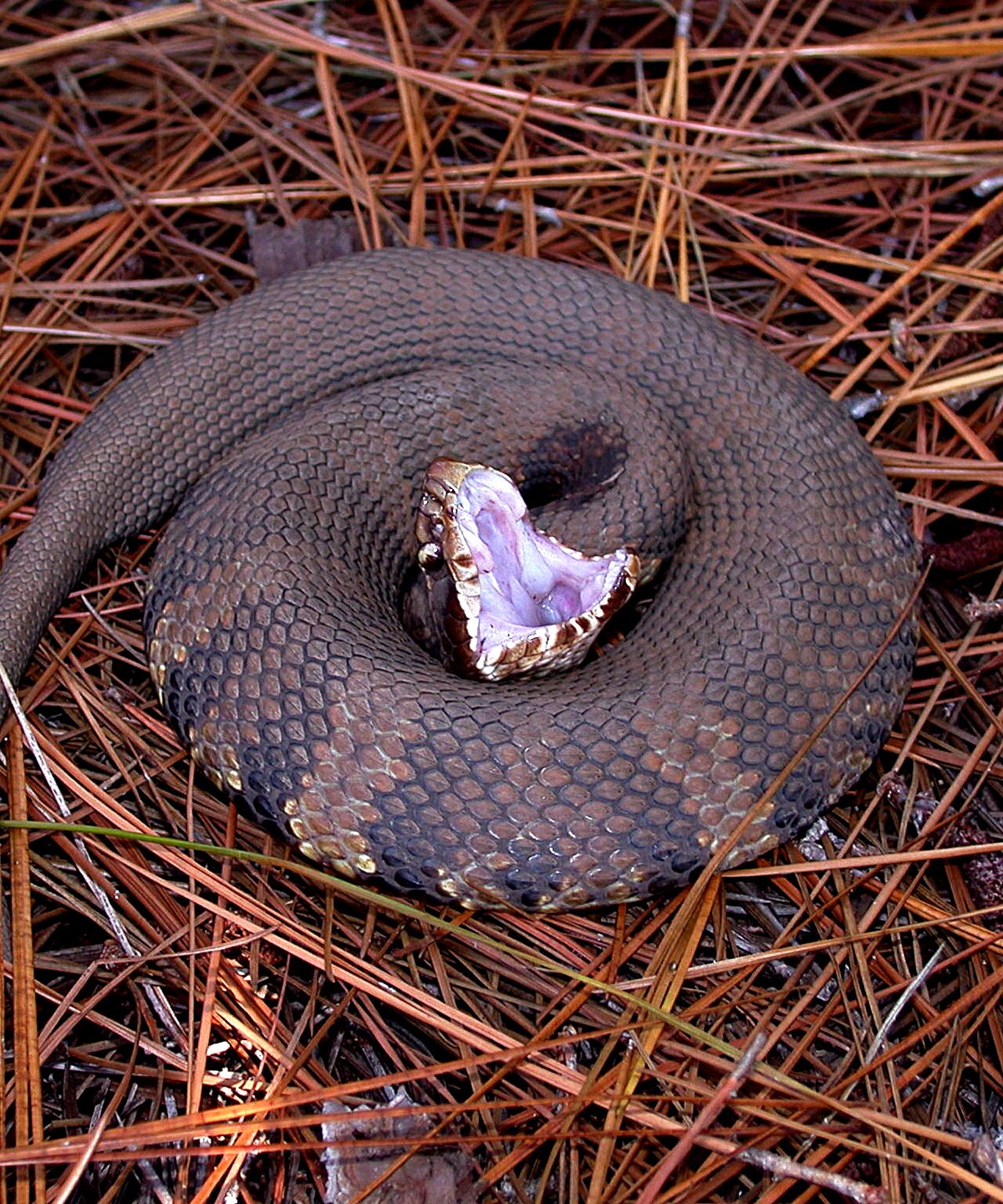
COTTONMOUTH
Agkistrodon piscivorus
DESCRIPTION
Cottonmouth (Agkistrodon piscivorus) is commonly known as the Water Moccasin due to its aquatic habits. This venomous snake is characterized by its thick body, triangular head, and distinctive white mouth lining, which it displays when threatened. Cottonmouths are semi-aquatic and are often found in swamps, marshes, and along the banks of rivers, where they play a crucial role in the ecosystem as both predator and prey.
FUN FACTS
- Cottonmouths are one of the few venomous snakes that are known to swim with their heads above water, making them easily recognizable in their aquatic habitats
- They are also known for their unique behavior of 'playing dead' when threatened, which can sometimes confuse potential predators
QUICK INFO
Lifespan10-15 years in the wild, up to 20 years in captivi
Average Weight0.5-1.5 kg
Average Length0.6-1.2 m
Diet TypePiscivore
Social Structuresolitary
Activity PatternNocturnal
Breeding SeasonSpring (April-June)
- Habitat
- Cottonmouths inhabit freshwater environments such as swamps, marshes, and rivers. They prefer areas with abundant vegetation and cover, which provide both hunting grounds and protection.
- Biomes
- Wetlands, Freshwater
- Native Range
- Cottonmouths are native to the southeastern United States, ranging from North Carolina to Texas.
- Continent
- North America
- Countries
- United States
- Diet
- Cottonmouths primarily feed on fish, amphibians, and small mammals. They are known to hunt both in water and on land, using their excellent swimming abilities to catch prey.
- Diet Type
- Piscivore
- Favorite Food
- fish, amphibians
- Social Structure
- solitary
- Activity Pattern
- Nocturnal
- Group Size
- 1-2
- Territorial
- 0
 VU
VU
0.5-1.5 kg
Weight
0.6-1.2 m
Length
- Coloration
- Cottonmouths have a dark brown or olive coloration with darker crossbands, providing excellent camouflage in their natural habitat.
- Sexual Dimorphism
- Males are generally larger than females.
- Lifespan
- 10-15 years in the wild, up to 20 years in captivi
- Gestation Period
- 6-7 months
- Offspring per Birth
- 5-20
- Sexual Maturity
- 2-3 years
- Breeding Season
- Spring (April-June)
LC
Least Concern
IUCN Red List Status
- Population Status
- Cottonmouth populations are generally stable, but local declines may occur due to habitat loss.
- Wild Population Estimate
- Unknown
- Population Trend
- Stable
- Endangered
- 0
- Threats
- Main threats include habitat destruction and persecution due to fear of their venomous bite. They are often killed by humans who mistakenly believe they are a danger.
- Predators
- Birds of prey, larger snakes, and alligators are known predators of Cottonmouths.
- Defense Mechanisms
- Cottonmouths will display their white mouth lining as a warning when threatened and can also deliver a venomous bite if provoked.
- Found in Zoos
- Uncommon