


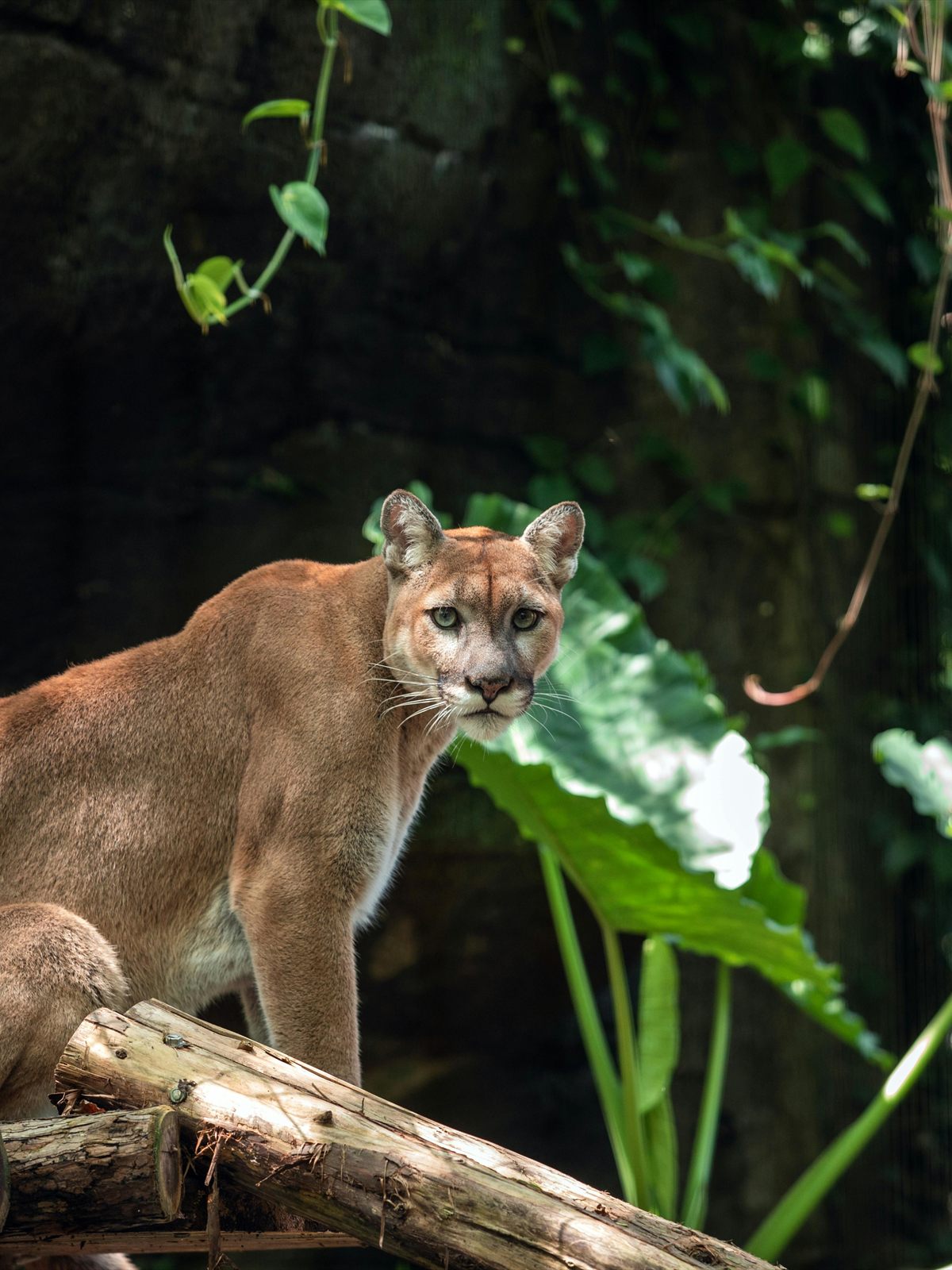
COUGAR
Puma concolor
DESCRIPTION
The cougar, also known as the mountain lion or puma, is a large feline native to the Americas. It is known for its adaptability to various habitats and its solitary nature.
FUN FACTS
- Cougars can leap up to 15 feet high | They are the second largest cat in the Americas | Cougars can purr, but only when exhaling
QUICK INFO
Lifespan10-12 years in the wild, up to 20 in captivity
Average Weight53-100 kg
Average Length1.5-2.4 m
Diet TypeCarnivore
Social Structuresolitary, typically only coming together for mating
Activity PatternCrepuscular
Breeding SeasonYear-round, with peaks depending on the region
- Habitat
- Cougars inhabit a wide range of environments, including forests, mountains, deserts, and grasslands. They prefer areas with ample cover for stalking prey.
- Biomes
- Temperate Forest, Grassland, Desert, Mountain
- Native Range
- Cougars are found throughout North and South America, from Canada to the southern Andes in South America.
- Continent
- North America, South America
- Countries
- United States, Canada, Mexico, Argentina, Chile
- Diet
- Cougars are carnivorous and primarily hunt large ungulates. They also consume smaller mammals and birds when larger prey is scarce.
- Diet Type
- Carnivore
- Favorite Food
- deer, elk, and smaller mammals
- Social Structure
- solitary, typically only coming together for mating
- Activity Pattern
- Crepuscular
- Group Size
- 1
- Territorial
- 1
53-100 kg
Weight
1.5-2.4 m
Length
0.6 m at shoulder
Height (Shoulder)
- Coloration
- tawny or grayish with lighter underparts and black markings on the ears and tip of the tail
- Sexual Dimorphism
- males are generally larger than females
- Lifespan
- 10-12 years in the wild, up to 20 in captivity
- Gestation Period
- 91-95 days
- Offspring per Birth
- 1-6
- Sexual Maturity
- 2-3 years
- Breeding Season
- Year-round, with peaks depending on the region
LC
Least Concern
IUCN Red List Status
- Population Status
- The population is considered stable in many areas, but local declines have been noted due to habitat loss and hunting.
- Wild Population Estimate
- 20,000-50,000
- Population Trend
- Stable
- Endangered
- 0
- Threats
- Main threats include habitat destruction, vehicle collisions, and hunting. Human-wildlife conflict can also pose risks to their populations.
- Defense Mechanisms
- Cougars use stealth and strength to evade threats, and they can climb trees to escape danger.
- Found in Zoos
- Common