


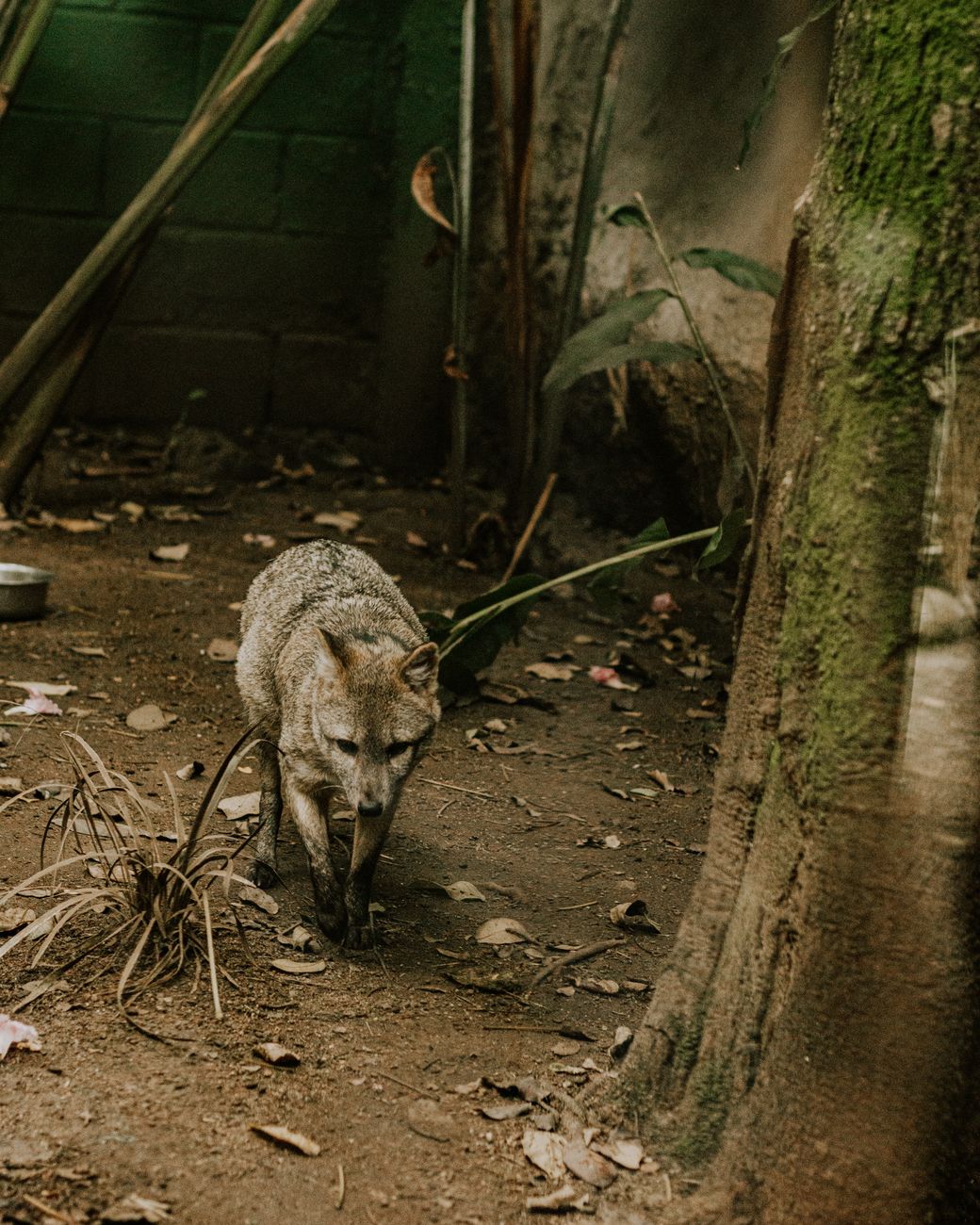
CRAB-EATING FOX
Cerdocyon thous
DESCRIPTION
Crab-Eating Fox (Cerdocyon thous) is commonly known as the Brazilian Fox and Forest Fox. This medium-sized canid has a slender body, long legs, and a bushy tail, with a coat that is typically a mix of yellowish-brown and gray, often with darker markings. They are primarily found in open and forested areas of South America, exhibiting a range of behaviors from foraging for food to social interactions with other foxes.
FUN FACTS
- Crab-Eating Foxes are known for their unique feeding habits, often foraging along riverbanks and wetlands where they can find crabs and other aquatic invertebrates
- They have a remarkable ability to adapt their diet based on seasonal changes, which allows them to thrive in various environments
- | These foxes are also known for their playful nature, often engaging in social play with each other, which helps strengthen bonds between individuals
- Their vocalizations are quite diverse, ranging from barks to howls, which they use to communicate with one another
QUICK INFO
Lifespan10-12 years in the wild
Average Weight5-10 kg
Average Length60-80 cm
Diet TypeOmnivore
Social StructureThey are typically solitary but can form pairs during the breeding season.
Activity PatternCrepuscular
Breeding SeasonSpring (August-October)
- Habitat
- Crab-Eating Foxes inhabit a range of environments, including savannas, forests, and wetlands. They are adaptable and can thrive in both natural and altered landscapes.
- Biomes
- Savanna, Tropical Rainforest, Wetlands
- Native Range
- They are native to a wide range of South America, from the Amazon Basin to the southern regions of Brazil and Argentina.
- Continent
- South America
- Countries
- Brazil, Argentina, Paraguay, Bolivia
- Diet
- They are omnivorous, feeding on a variety of foods including fruits, small mammals, and invertebrates. Their diet can vary significantly based on the availability of food sources in their habitat.
- Diet Type
- Omnivore
- Favorite Food
- fruits, small mammals, invertebrates
- Social Structure
- They are typically solitary but can form pairs during the breeding season.
- Activity Pattern
- Crepuscular
- Group Size
- 1-2
- Territorial
- 1
 NT
NT

5-10 kg
Weight
60-80 cm
Length
- Coloration
- yellowish-brown and gray with darker markings
- Lifespan
- 10-12 years in the wild
- Gestation Period
- 60-65 days
- Offspring per Birth
- 2-5
- Sexual Maturity
- 1-2 years
- Breeding Season
- Spring (August-October)
LC
Least Concern
IUCN Red List Status
- Population Status
- The population is currently stable, but habitat loss poses a potential threat.
- Wild Population Estimate
- Unknown
- Population Trend
- Stable
- Endangered
- 0
- Threats
- Main threats include habitat destruction due to agriculture and urbanization. Additionally, they may face competition with domestic animals and hunting in some areas.
- Predators
- Jaguars, pumas, and large birds of prey are known to prey on Crab-Eating Foxes.
- Defense Mechanisms
- They rely on their agility and speed to escape from predators, often using dense vegetation for cover.
- Found in Zoos
- Uncommon