


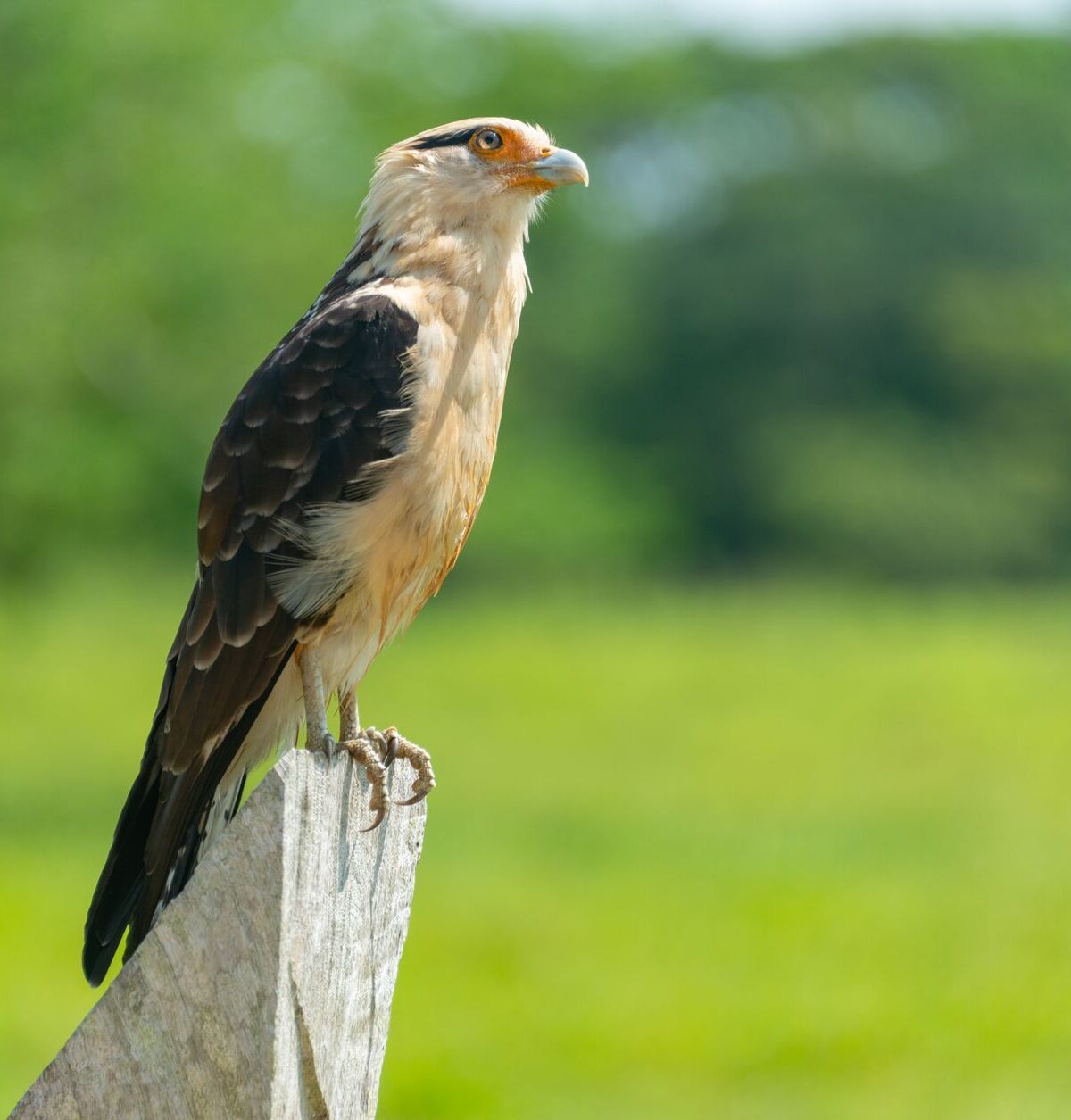
CRESTED CARACARA
Caracara cheriway
DESCRIPTION
Crested Caracara (Caracara cheriway) is a large bird of prey known for its striking appearance and distinctive crest. It has a bold black and white plumage with a bright orange facial skin and a strong, hooked beak. This species is often seen walking on the ground, foraging for food, and is known for its scavenging behavior, often following larger predators to feed on leftovers.
FUN FACTS
- Crested Caracaras are known for their intelligence and problem-solving abilities, often using tools to access food
- They have a unique social structure, often foraging in groups and displaying complex social interactions, which is relatively rare among birds of prey
QUICK INFO
Lifespan15-20 years in the wild, up to 30 in captivity
Average Weight1.5-2.5 kg
Average Length50-65 cm
Diet TypeOmnivore
Social StructureThey are often seen in pairs or small groups, especially during the breeding season.
Activity PatternDiurnal
Breeding SeasonSpring (March-May)
- Habitat
- Crested Caracaras inhabit open landscapes such as grasslands, savannas, and agricultural areas. They prefer areas with low vegetation where they can easily spot food.
- Biomes
- Grassland, Savanna
- Native Range
- Crested Caracara is native to parts of North and South America, primarily found in the southern United States, Mexico, and Central America down to Argentina.
- Continent
- North America, South America
- Countries
- United States, Mexico, Argentina, Brazil, Colombia
- Diet
- Crested Caracaras are opportunistic feeders, primarily scavenging but also hunting small animals and birds. They are known to eat carrion, insects, and fruits.
- Diet Type
- Omnivore
- Favorite Food
- carrion, small mammals, birds
- Social Structure
- They are often seen in pairs or small groups, especially during the breeding season.
- Activity Pattern
- Diurnal
- Group Size
- 2-10
- Territorial
- 1
 DD
DD
1.5-2.5 kg
Weight
50-65 cm
Length
- Coloration
- Black and white plumage with a distinctive orange facial skin.
- Sexual Dimorphism
- Males are generally larger than females.
- Lifespan
- 15-20 years in the wild, up to 30 in captivity
- Offspring per Birth
- 2-4
- Sexual Maturity
- 3-4 years
- Breeding Season
- Spring (March-May)
LC
Least Concern
IUCN Red List Status
- Population Status
- The population is currently stable, with a wide distribution across its range.
- Wild Population Estimate
- 50,000-100,000
- Population Trend
- Stable
- Endangered
- 0
- Threats
- Main threats include habitat loss due to agricultural expansion and vehicle collisions. They are also sometimes persecuted as pests.
- Predators
- Large raptors, such as eagles, may prey on young or vulnerable individuals.
- Defense Mechanisms
- Crested Caracaras use their strong beaks and talons to defend themselves and can be quite aggressive when threatened.
- Found in Zoos
- Uncommon