


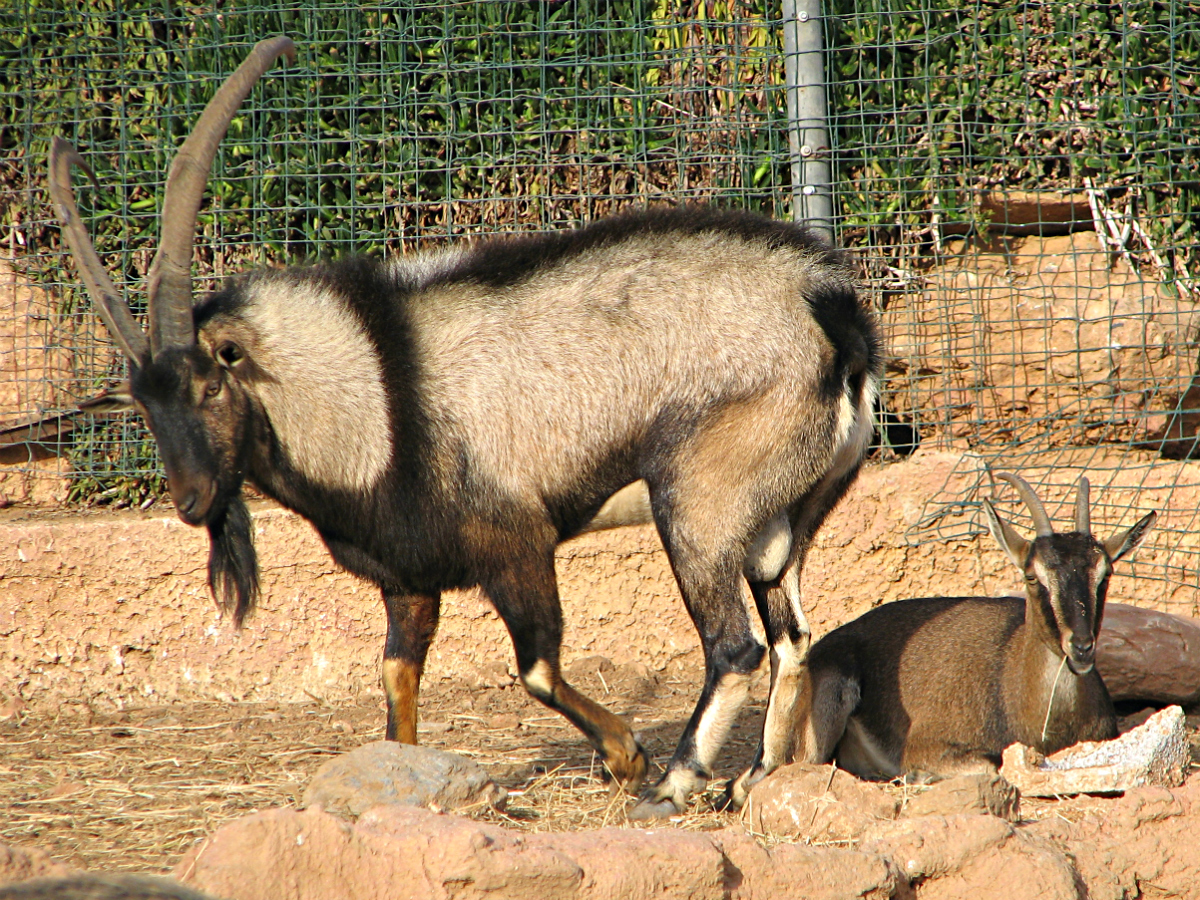
CRETAN WILD GOAT
Capra aegagrus cretica
DESCRIPTION
Cretan wild goat (Capra aegagrus cretica), also known as Kri-kri, is a subspecies of the wild goat native to the Greek island of Crete. It has a robust body, with males typically exhibiting long, curved horns and a distinctive beard, while females are smaller and lack prominent horns. This species is known for its agility and ability to navigate steep, rocky terrains, often found in mountainous areas where it can evade predators.
FUN FACTS
- Cretan wild goats are known for their incredible climbing abilities, often seen scaling steep cliffs that would be impossible for most other animals
- They have a unique social structure where females and young stay together, while males often roam alone or in small bachelor groups, especially outside of the breeding season.|The Kri-kri is a symbol of Crete's natural heritage and has been featured in various cultural references, including local folklore and art
- Their conservation is crucial not only for biodiversity but also for maintaining the cultural identity of the island
QUICK INFO
Lifespan15-20 years in the wild, up to 25 years in captivi
Average Weight50-100 kg
Average Length1.2-1.5 m
Diet TypeHerbivore
Social StructureThey typically form small groups, often consisting of females and their young, while males may be solitary or form bachelor groups.
Activity PatternDiurnal
Breeding SeasonAutumn (October-November)
- Habitat
- They inhabit rocky, mountainous regions, often favoring steep cliffs and rugged terrain that provide cover and escape routes from predators.
- Biomes
- Mountain, Mediterranean
- Native Range
- Endemic to the island of Crete in Greece.
- Continent
- Europe
- Countries
- Greece
- Diet
- Cretan wild goats are herbivores, primarily grazing on grasses, shrubs, and other vegetation found in their mountainous habitat.
- Diet Type
- Herbivore
- Favorite Food
- grasses, shrubs
- Social Structure
- They typically form small groups, often consisting of females and their young, while males may be solitary or form bachelor groups.
- Activity Pattern
- Diurnal
- Group Size
- 5-15
- Territorial
- 0
 LC
LC
50-100 kg
Weight
1.2-1.5 m
Length
0.8-1.0 m at shoulder
Height (Shoulder)
- Coloration
- Their coloration ranges from light brown to grayish, often with darker markings on the face and legs.
- Sexual Dimorphism
- Males are larger and have prominent curved horns, while females are smaller and hornless.
- Lifespan
- 15-20 years in the wild, up to 25 years in captivi
- Gestation Period
- 150 days
- Offspring per Birth
- 1-2
- Sexual Maturity
- 2-3 years
- Breeding Season
- Autumn (October-November)
LC
Least Concern
IUCN Red List Status
- Population Status
- The population is currently stable but faces threats from habitat loss and hunting.
- Wild Population Estimate
- 2,000-3,000
- Population Trend
- Stable
- Endangered
- 0
- Threats
- Main threats include habitat destruction due to agriculture and urban development, as well as hunting pressures. Conservation efforts are in place to protect their habitats.
- Conservation Program
- Protected areas established in Crete, including the Samaria Gorge National Park.
- Predators
- Main predators include wolves and golden eagles.
- Defense Mechanisms
- They rely on their agility and ability to navigate steep terrain to escape predators.
- Found in Zoos
- Uncommon