


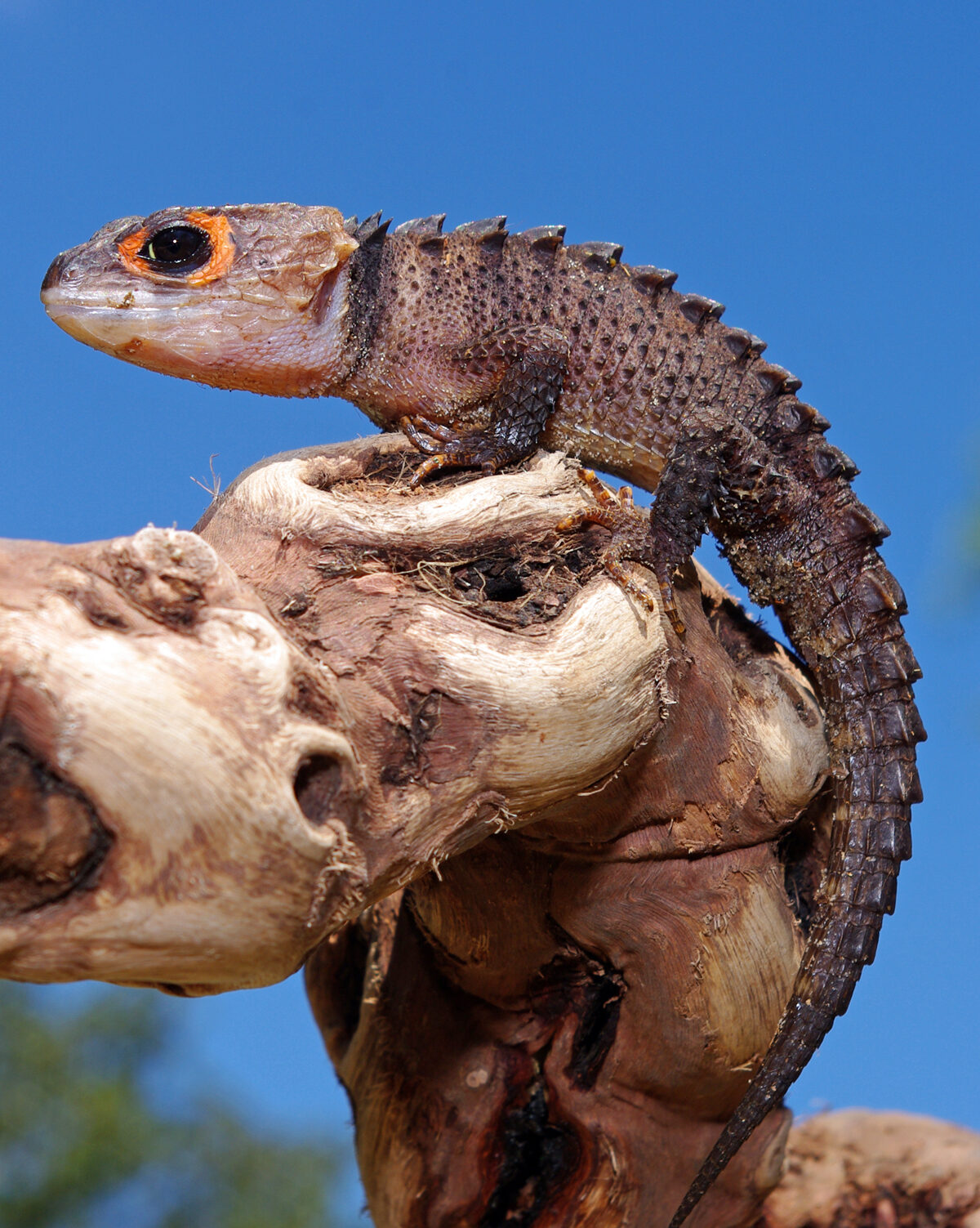
CROCODILE SKINK
Tribolonotus gracilis
DESCRIPTION
Crocodile Skink (Tribolonotus gracilis) is a unique lizard known for its distinctive appearance, resembling a small crocodile with its armored scales and elongated body. This species exhibits a dark brown to black coloration with lighter spots, providing excellent camouflage in its natural habitat. Crocodile Skinks are primarily nocturnal and are often found in leaf litter or among rocks, where they hunt for insects and other small prey.
FUN FACTS
- Crocodile Skinks are often mistaken for baby crocodiles due to their unique appearance, which includes a long body and scaly skin
- They are also known for their ability to climb, using their strong limbs to navigate through trees and shrubs in their forest habitat.|These skinks have a fascinating reproductive strategy, laying eggs that are often hidden in leaf litter to protect them from predators
- The young skinks are miniature versions of adults, which allows them to fend for themselves shortly after hatching
QUICK INFO
Lifespan5-10 years in captivity
Average Length20-30 cm
Diet TypeInsectivore
Social Structuresolitary
Activity PatternNocturnal
- Habitat
- Crocodile Skinks inhabit humid tropical forests, often near water sources. They prefer areas with dense vegetation that provides cover and hunting grounds.
- Biomes
- Tropical Rainforest
- Native Range
- Crocodile Skinks are native to New Guinea and surrounding islands.
- Continent
- Oceania
- Countries
- Papua New Guinea, Indonesia
- Diet
- Crocodile Skinks primarily feed on insects and other small invertebrates, showcasing their insectivorous diet. They are known to hunt at night, using their keen sense of smell to locate food.
- Diet Type
- Insectivore
- Favorite Food
- insects, small invertebrates
- Social Structure
- solitary
- Activity Pattern
- Nocturnal
- Group Size
- 1
- Territorial
- 0
 VU
VU
 LC
LC
20-30 cm
Length
- Coloration
- dark brown to black with lighter spots
- Sexual Dimorphism
- males tend to be slightly larger than females
- Lifespan
- 5-10 years in captivity
- Offspring per Birth
- 2-6
- Sexual Maturity
- 1-2 years
LC
Least Concern
IUCN Red List Status
- Population Status
- The population status of Crocodile Skinks is not well-documented, but they are not considered endangered.
- Wild Population Estimate
- unknown
- Population Trend
- Stable
- Endangered
- 0
- Threats
- Habitat destruction due to deforestation poses a significant threat to Crocodile Skinks. Additionally, they may be affected by the pet trade, although this impact is not well quantified.
- Predators
- birds of prey, snakes, larger reptiles
- Defense Mechanisms
- Crocodile Skinks can use their camouflage to blend into their surroundings, making it difficult for predators to spot them.
- Found in Zoos
- Uncommon