


CROWNED CRANE
DESCRIPTION
The Crowned Crane is a large, elegant bird known for its striking appearance and elaborate courtship displays. It features a distinctive golden crown of feathers and is often seen in pairs or small groups.
FUN FACTS
- Crowned Cranes are the national bird of Uganda | They perform elaborate courtship dances that involve jumping and bowing | Their unique calls can be heard from a distance of up to 2 kilometers
QUICK INFO
Lifespan20-25 years in the wild, up to 30 in captivity
Average Weight3-4.5 kg
Average Length0.9-1.2 m
Diet TypeOmnivore
Social Structurepair or group, often seen in small family groups or pairs during breeding season
Activity PatternDiurnal
Breeding SeasonWet season (varies by region)
- Habitat
- Crowned Cranes inhabit wetlands, grasslands, and savannas. They prefer areas with shallow water and abundant vegetation for foraging.
- Biomes
- Wetlands, Savanna
- Native Range
- Sub-Saharan Africa, particularly in eastern and southern regions.
- Continent
- Africa
- Countries
- Kenya, Uganda, Tanzania, South Africa, Botswana
- Diet
- Crowned Cranes primarily feed on seeds, grains, and small invertebrates. They forage in wetlands and grasslands, using their long legs to probe the ground.
- Diet Type
- Omnivore
- Favorite Food
- seeds, grains, insects
- Social Structure
- pair or group, often seen in small family groups or pairs during breeding season
- Activity Pattern
- Diurnal
- Group Size
- 2-10
- Territorial
- 1
 VU
VU
 VU
VU
3-4.5 kg
Weight
0.9-1.2 m
Length
- Coloration
- Gray body with a striking golden crown and red facial skin.
- Sexual Dimorphism
- Males are generally larger and have more vibrant coloration than females.
- Lifespan
- 20-25 years in the wild, up to 30 in captivity
- Offspring per Birth
- 1-3
- Sexual Maturity
- 2-3 years
- Breeding Season
- Wet season (varies by region)
LC
Least Concern
IUCN Red List Status
- Population Status
- Population is currently stable but faces threats from habitat loss.
- Wild Population Estimate
- 50,000-100,000
- Population Trend
- Stable
- Endangered
- 0
- Threats
- Main threats include habitat destruction due to agriculture and wetland drainage. They are also vulnerable to hunting and poaching.
- Conservation Program
- Various local conservation programs aimed at habitat preservation.
- Predators
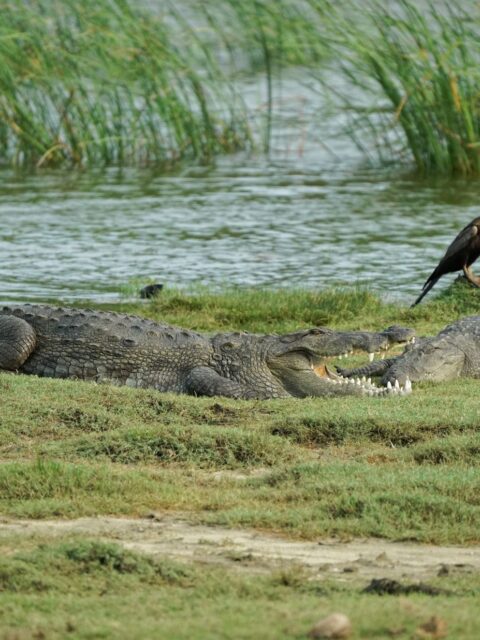
- Large birds of prey, crocodiles, and humans.
- Defense Mechanisms
- Crowned Cranes use their agility and flight to escape predators.
- Compatible Animals
- Other crane species, waterfowl, and various birds in aviaries.
- Found in Zoos
- Common