



CROWNED LEMUR
Eulemur coronatus
DESCRIPTION
The Crowned Lemur is a medium-sized primate native to Madagascar, characterized by its distinctive crown-like tuft of fur on its head. Its fur is primarily a reddish-brown color, with a lighter underside and striking white facial markings that enhance its expressive features. These lemurs are social animals, often found in groups, and are known for their playful behavior and vocalizations, which include a variety of calls used for communication within their social structure.
FUN FACTS
- Crowned Lemurs are known for their unique social structure, where females often dominate males, which is relatively rare among primates
- They also have a fascinating way of communicating, using a variety of vocalizations that can convey different messages, from alerting others to danger to coordinating group movements.| These lemurs are particularly interesting because they exhibit seasonal breeding patterns, with births typically occurring during the rainy season when food is more abundant
- This timing helps ensure that the young have access to the necessary resources for growth and development
QUICK INFO
Lifespan15-20 years in the wild, up to 25 years in captivi
Average Weight2.5-3.5 kg
Average Length40-50 cm
Diet TypeOmnivore
Social StructureThey live in small groups, typically consisting of 5 to 15 individuals, with a matriarchal social structure.
Activity PatternDiurnal
Breeding SeasonSpring (September-November)
- Habitat
- Crowned Lemurs inhabit the dry deciduous forests of Madagascar, where they can be found in both primary and secondary forests. They prefer areas with abundant fruiting trees, which provide essential food resources.
- Biomes
- Tropical Dry Forest
- Native Range
- Endemic to Madagascar, specifically found in the northern regions of the island.
- Continent
- Africa
- Countries
- Madagascar
- Diet
- Crowned Lemurs are primarily frugivorous, feeding on a diet that consists mainly of fruits, leaves, and flowers. They may also consume insects and other small invertebrates occasionally.
- Diet Type
- Omnivore
- Favorite Food
- Fruits, leaves, flowers
- Social Structure
- They live in small groups, typically consisting of 5 to 15 individuals, with a matriarchal social structure.
- Activity Pattern
- Diurnal
- Group Size
- 5-15
- Territorial
- 1
 VU
VU
 EN
EN
2.5-3.5 kg
Weight
40-50 cm
Length
- Coloration
- Reddish-brown fur with a lighter underside and white facial markings.
- Sexual Dimorphism
- Males are generally slightly larger than females.
- Lifespan
- 15-20 years in the wild, up to 25 years in captivi
- Gestation Period
- 120 days
- Offspring per Birth
- 1-2
- Sexual Maturity
- 2-3 years
- Breeding Season
- Spring (September-November)
EN
Endangered
IUCN Red List Status
- Population Status
- The population is currently declining due to habitat loss and hunting.
- Wild Population Estimate
- 10,000-20,000
- Population Trend
- Decreasing
- Endangered
- 1
- Threats
- The main threats to the Crowned Lemur include habitat destruction due to deforestation and agricultural expansion, as well as hunting for bushmeat. These pressures have significantly impacted their populations in the wild.
- Conservation Program
- Conservation efforts are underway, including habitat protection and community education programs.
- Predators
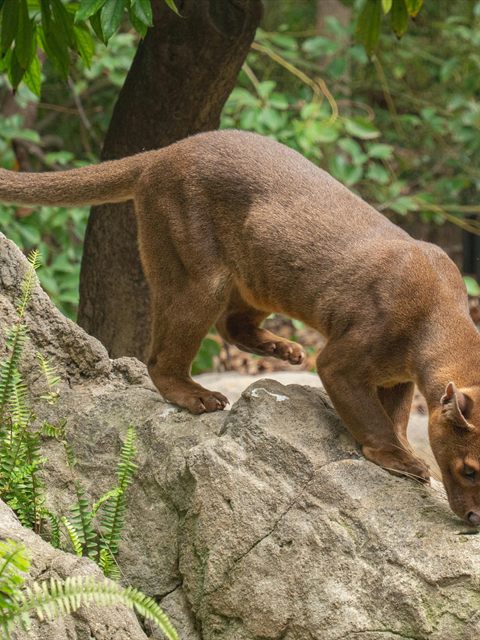
- Birds of prey, fossa, and domestic dogs are known predators of the Crowned Lemur.
- Defense Mechanisms
- Crowned Lemurs use vocalizations to warn of predators and may also flee to higher branches to escape threats.
- Compatible Animals
- Other lemur species, small primates
- Found in Zoos
- Uncommon