


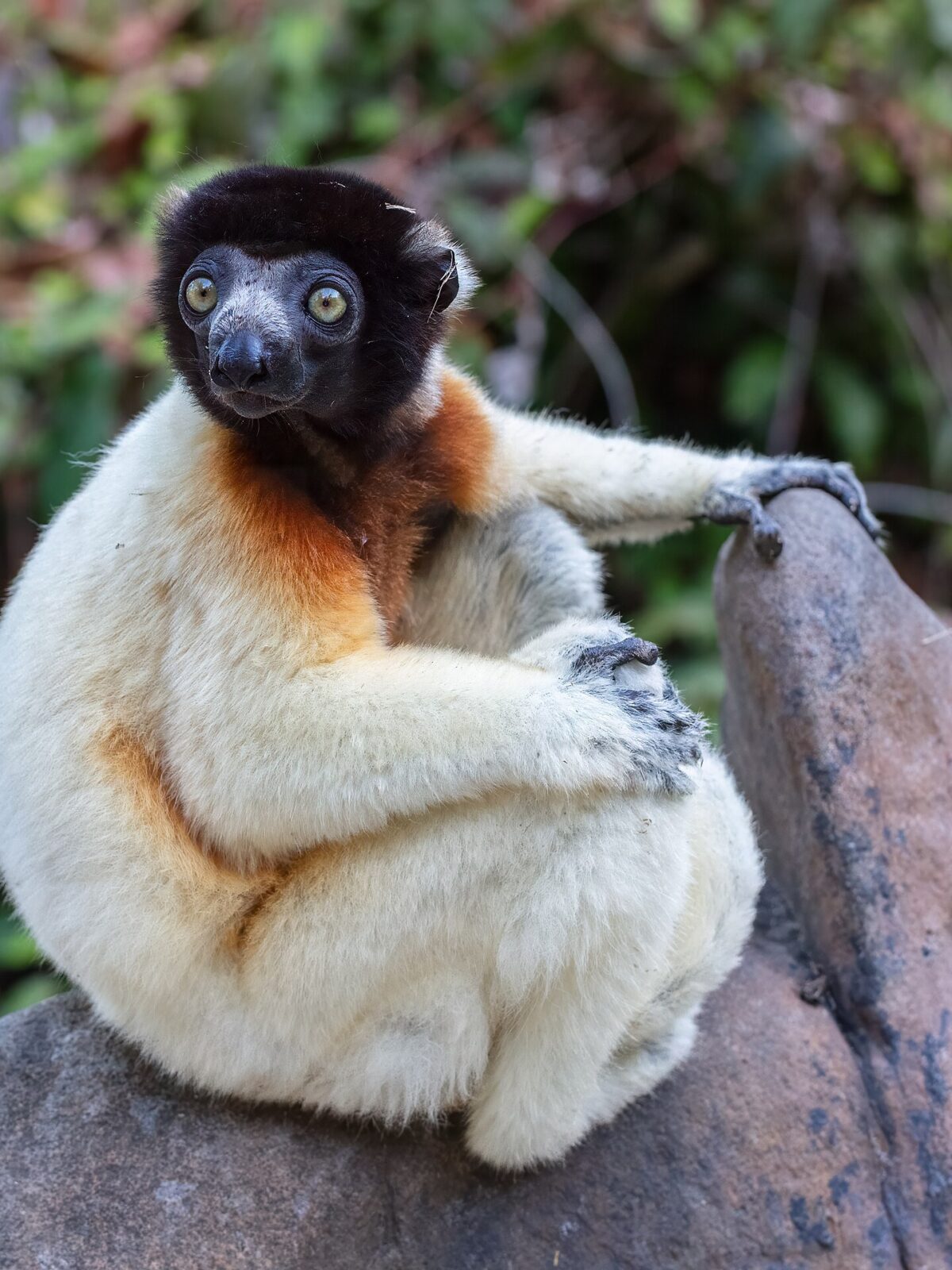
CROWNED SIFAKA
Propithecus coronatus
DESCRIPTION
Crowned Sifaka (Propithecus coronatus) is a strikingly beautiful lemur native to Madagascar, characterized by its distinctive crown of fur on its head and a predominantly white body with black markings. These primates are known for their remarkable leaping ability, which allows them to navigate the treetops of their forest habitat with ease. Socially, they are active during the day and live in small groups, often engaging in playful interactions and vocalizations to communicate with one another.
FUN FACTS
- Crowned Sifakas are known for their unique mode of locomotion, which involves leaping from tree to tree, covering distances of up to 10 meters in a single bound
- This impressive ability is not only a means of travel but also a way to evade predators and navigate their forest habitat
- | These lemurs have a complex social structure and are known for their vocal communication, which includes a variety of calls that can be heard over long distances
- Their social interactions are vital for maintaining group cohesion and ensuring the survival of their young
QUICK INFO
Lifespan15-20 years in the wild, up to 25 years in captivi
Average Weight4-5 kg
Average Length50-60 cm
Diet TypeHerbivore
Social StructureCrowned Sifakas typically live in small groups, often consisting of a few individuals that maintain strong social bonds.
Activity PatternDiurnal
Breeding SeasonSpring (September-November)
- Habitat
- Crowned Sifakas inhabit the dry deciduous forests of Madagascar, where they are well-adapted to the arboreal lifestyle. They prefer areas with abundant foliage to support their herbivorous diet.
- Biomes
- Tropical Rainforest, Dry Forest
- Native Range
- Crowned Sifakas are endemic to Madagascar, specifically found in the western and southern regions of the island.
- Continent
- Africa
- Countries
- Madagascar
- Diet
- Crowned Sifakas primarily feed on leaves, fruits, and flowers, showcasing a preference for young leaves. Their diet is crucial for their survival, as it provides the necessary nutrients for their active lifestyle.
- Diet Type
- Herbivore
- Favorite Food
- young leaves, fruits, flowers
- Social Structure
- Crowned Sifakas typically live in small groups, often consisting of a few individuals that maintain strong social bonds.
- Activity Pattern
- Diurnal
- Group Size
- 3-10
- Territorial
- 1
 LC
LC
4-5 kg
Weight
50-60 cm
Length
- Coloration
- predominantly white with black markings and a distinctive crown of fur
- Sexual Dimorphism
- males and females are similar in size, but males may have slightly larger body mass
- Lifespan
- 15-20 years in the wild, up to 25 years in captivi
- Gestation Period
- 120 days
- Offspring per Birth
- 1
- Sexual Maturity
- 3-4 years
- Breeding Season
- Spring (September-November)
EN
Endangered
IUCN Red List Status
- Population Status
- The population of Crowned Sifakas is currently declining due to habitat loss and hunting.
- Wild Population Estimate
- 10,000-20,000
- Population Trend
- Decreasing
- Endangered
- 1
- Threats
- The main threats to Crowned Sifakas include deforestation due to agricultural expansion and illegal hunting. These pressures have significantly impacted their natural habitat and population numbers.
- Conservation Program
- Conservation efforts are underway in Madagascar to protect their habitat and raise awareness about their plight.
- Predators
- Main predators include Madagascar's native raptors and snakes, as well as domestic dogs in some areas.
- Defense Mechanisms
- Crowned Sifakas use their agility to escape predators by leaping between trees and can also emit loud calls to alert others of danger.
- Found in Zoos
- Uncommon