


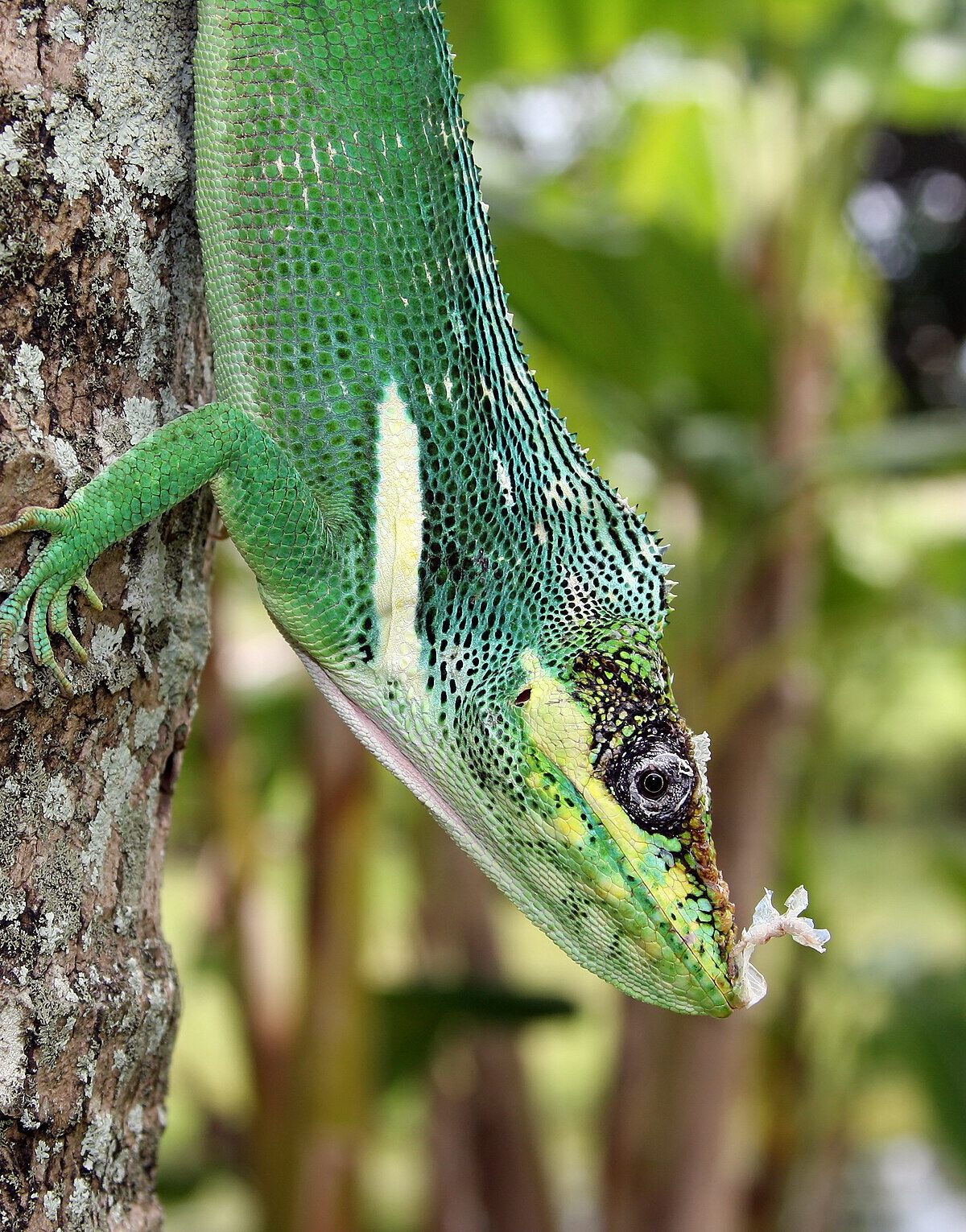
CUBAN KNIGHT ANOLE
Anolis equestris
DESCRIPTION
Cuban Knight Anole (Anolis equestris) is a large, robust lizard known for its vibrant green coloration, which can sometimes appear brownish depending on its environment. This species exhibits a distinctive dewlap, which is used in communication and displays during mating rituals. They are primarily arboreal, often found in trees and shrubs, and are known for their territorial behavior, especially among males.
FUN FACTS
- Cuban Knight Anoles are known for their impressive ability to change color, which helps them adapt to their environment and communicate with other lizards
- They are also capable of running quickly and can leap considerable distances to evade predators.|These lizards have a unique mating ritual where males display their colorful dewlaps and perform push-up movements to attract females
- This display not only showcases their fitness but also helps establish territory among competing males
QUICK INFO
Lifespan5-10 years in the wild, up to 15 years in captivit
Average Weight50-100 g
Average Length20-30 cm
Diet TypeInsectivore
Social Structuresolitary, with males being particularly territorial
Activity PatternDiurnal
Breeding SeasonSpring to early summer
- Habitat
- These lizards inhabit tropical forests, urban areas, and gardens, often preferring areas with plenty of vegetation for cover. They are adept climbers and can often be seen basking on branches.
- Biomes
- Tropical Rainforest, Urban
- Native Range
- The Cuban Knight Anole is native to Cuba and the surrounding islands, including the Bahamas.
- Continent
- North America
- Countries
- Cuba, Bahamas
- Diet
- Cuban Knight Anoles are primarily insectivorous, feeding on a variety of insects and other small invertebrates. They may also consume plant matter occasionally.
- Diet Type
- Insectivore
- Favorite Food
- insects, particularly crickets and beetles
- Social Structure
- solitary, with males being particularly territorial
- Activity Pattern
- Diurnal
- Group Size
- 1-2
- Territorial
- 1
 VU
VU
 LC
LC
50-100 g
Weight
20-30 cm
Length
- Coloration
- vibrant green with possible brown hues, especially in different lighting
- Sexual Dimorphism
- males are generally larger and have more pronounced dewlaps than females
- Lifespan
- 5-10 years in the wild, up to 15 years in captivit
- Offspring per Birth
- 5-10
- Sexual Maturity
- 6-12 months
- Breeding Season
- Spring to early summer
LC
Least Concern
IUCN Red List Status
- Population Status
- The population is currently stable, but habitat loss poses a potential threat.
- Wild Population Estimate
- unknown
- Population Trend
- Stable
- Endangered
- 0
- Threats
- Main threats include habitat destruction due to urbanization and deforestation. Invasive species may also pose a risk to their populations.
- Predators
- birds of prey, snakes, and larger lizards
- Defense Mechanisms
- They can change color to blend into their surroundings and may also drop from branches to escape predators.
- Found in Zoos
- Uncommon