


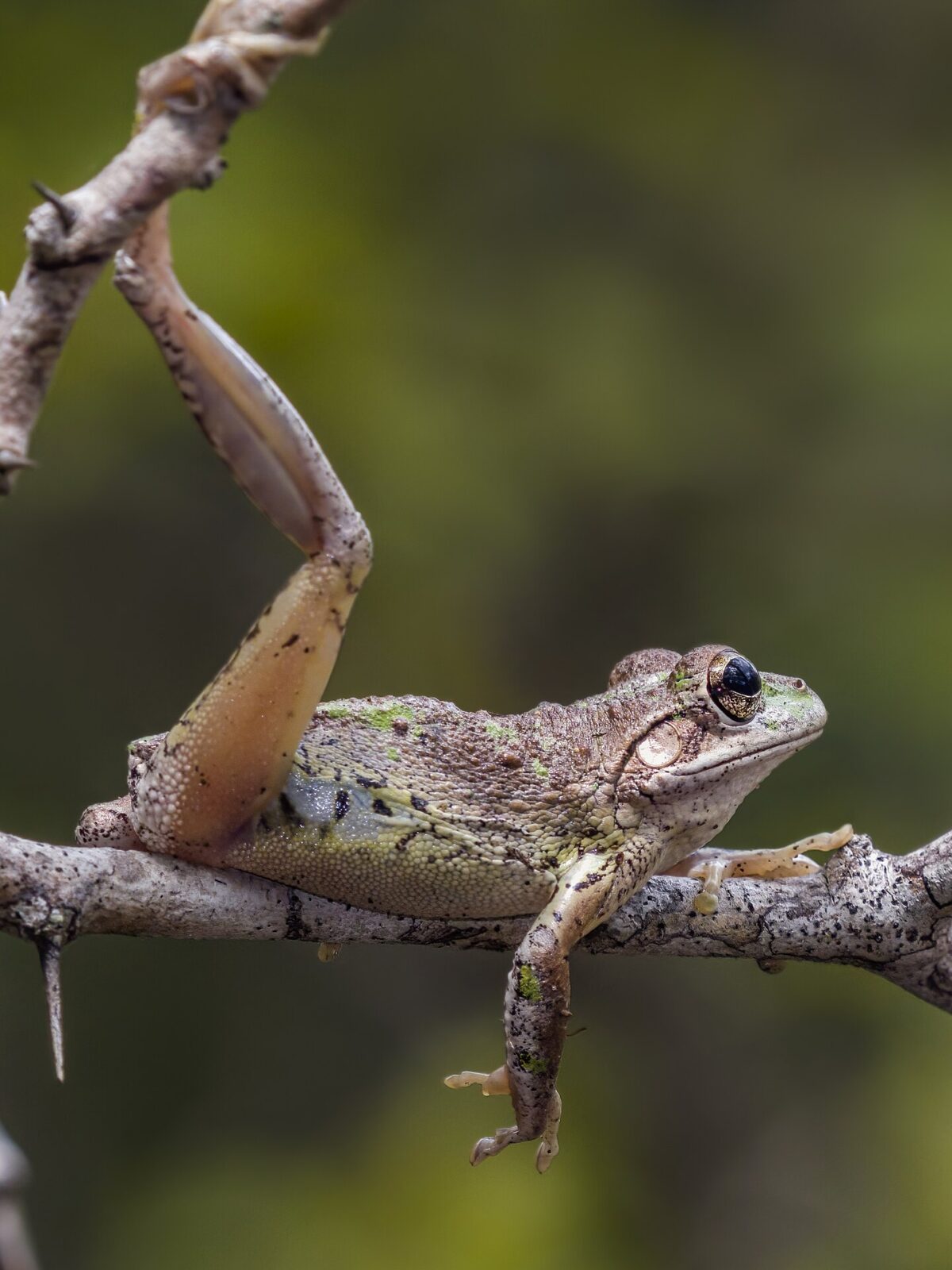
CUBAN TREE FROG
Osteopilus septentrionalis
DESCRIPTION
Cuban Tree Frog (Osteopilus septentrionalis) is commonly known as the Northern Cuban Tree Frog and the Giant Tree Frog. This species is characterized by its large size, with adults reaching up to 4 inches in length, and its distinctive coloration, which can range from green to brown with dark spots. They are primarily nocturnal and are known for their loud, distinctive calls during the breeding season, which can be heard from a considerable distance.
FUN FACTS
- Cuban Tree Frogs are known for their impressive vocalizations, which can be heard during the breeding season and are used to attract mates
- Their calls can vary significantly in pitch and volume, making them one of the loudest frogs in their habitat
- | This species has adapted well to urban environments, often being found in gardens and around homes, where they help control insect populations
- Their ability to thrive in various habitats has contributed to their spread beyond their native range
QUICK INFO
Lifespan5-10 years in the wild, up to 15 years in captivit
Average Weight30-50 g
Average Length10-12 cm
Diet TypeCarnivore
Social Structuresolitary, occasionally found in pairs during breeding
Activity PatternNocturnal
Breeding SeasonSpring to early summer
- Habitat
- Cuban Tree Frogs inhabit a variety of environments, including tropical and subtropical forests, wetlands, and urban areas. They are often found in trees and shrubs, where they can easily access their prey.
- Biomes
- Tropical Rainforest, Wetlands, Urban
- Native Range
- The native range of the Cuban Tree Frog includes Cuba and the Bahamas, but it has also been introduced to other areas, including the southeastern United States.
- Continent
- North America, Caribbean
- Countries
- Cuba, Bahamas, United States
- Diet
- Cuban Tree Frogs are carnivorous and primarily feed on insects and other small invertebrates. They are opportunistic feeders and will consume a variety of prey items available in their environment.
- Diet Type
- Carnivore
- Favorite Food
- insects, small invertebrates
- Social Structure
- solitary, occasionally found in pairs during breeding
- Activity Pattern
- Nocturnal
- Group Size
- 1-2
- Territorial
- 0
 VU
VU
 LC
LC

30-50 g
Weight
10-12 cm
Length
- Coloration
- varies from green to brown with dark spots
- Sexual Dimorphism
- males are generally smaller than females and have more pronounced vocal sacs
- Lifespan
- 5-10 years in the wild, up to 15 years in captivit
- Offspring per Birth
- 100-200 eggs
- Sexual Maturity
- 1-2 years
- Breeding Season
- Spring to early summer
LC
Least Concern
IUCN Red List Status
- Population Status
- The population of Cuban Tree Frogs is currently stable, but they are considered invasive in some areas.
- Wild Population Estimate
- unknown
- Population Trend
- Stable
- Endangered
- 0
- Threats
- Main threats include habitat loss and competition with native species, particularly in areas where they have been introduced. They can also be affected by pollution and climate change.
- Predators
- birds, snakes, larger amphibians, and mammals
- Defense Mechanisms
- Cuban Tree Frogs can secrete toxins through their skin as a defense mechanism against predators.
- Compatible Animals
- other tree frogs, small reptiles
- Found in Zoos
- Common