


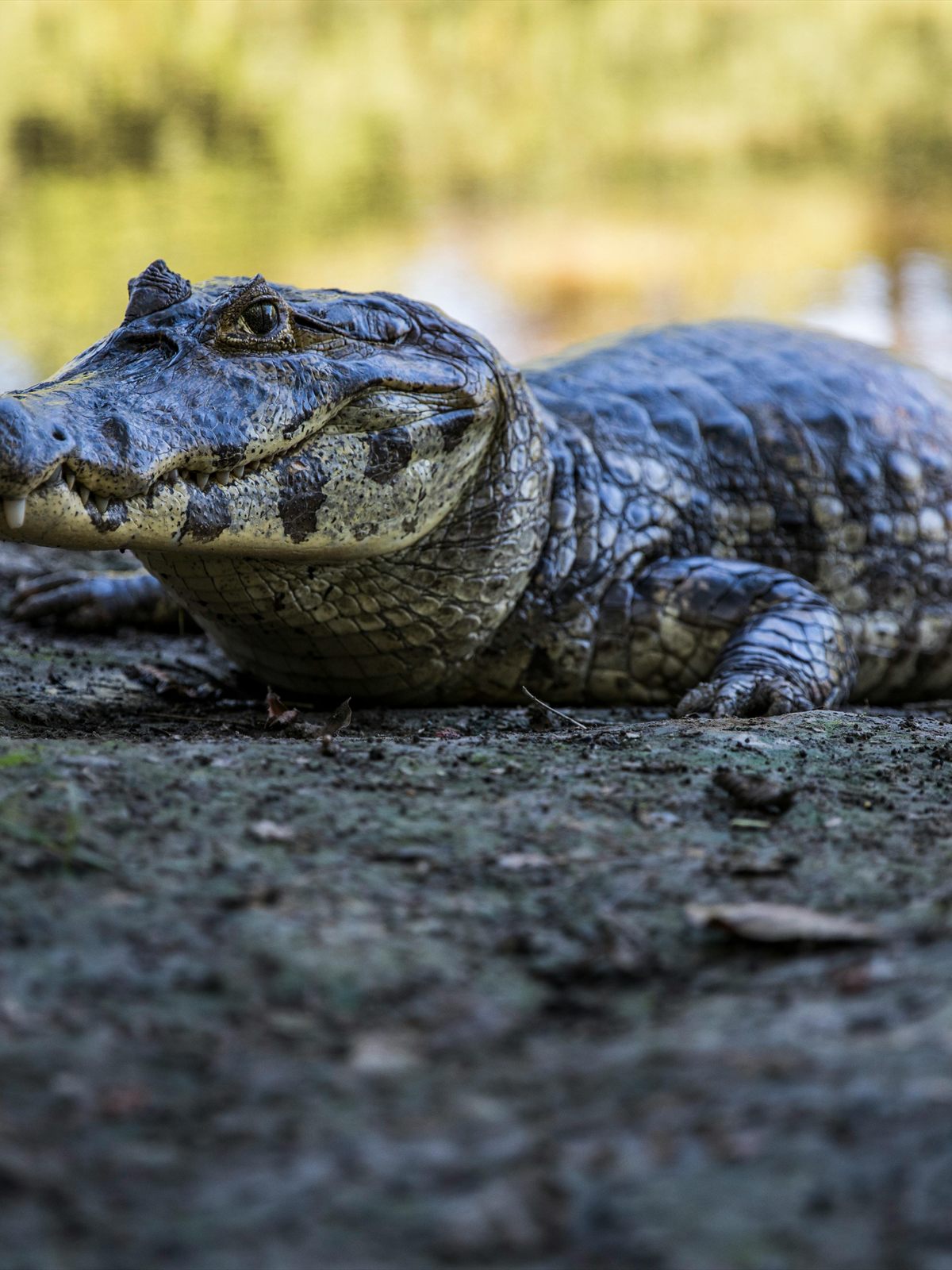
CUVIER'S DWARF CAIMAN
DESCRIPTION
Cuvier's Dwarf Caiman is one of the smallest members of the alligator family, typically reaching lengths of about 1.5 to 2 meters. They have a robust body with a broad snout and a dark coloration that helps them blend into their aquatic environments. These caimans are primarily found in freshwater habitats and exhibit a range of behaviors, including basking in the sun and foraging for food in the water.
FUN FACTS
- Cuvier's Dwarf Caiman is named after the French naturalist Georges Cuvier, who made significant contributions to the field of paleontology and comparative anatomy
- Despite their small size, they are fierce predators in their environment, using their powerful jaws to catch prey quickly and efficiently.| These caimans are often kept in captivity for educational purposes, and their small size makes them easier to manage than larger crocodilians
- They play an important role in their ecosystem by helping to control fish populations and maintain the health of their aquatic habitats
QUICK INFO
Lifespan15-20 years in the wild, up to 30 in captivity
Average Weight5-10 kg
Average Length1.5-2 m
Diet TypeCarnivore
Social Structuresolitary, occasionally found in pairs during breeding
Activity PatternNocturnal
Breeding SeasonSpring (March-May)
- Habitat
- They inhabit slow-moving rivers, swamps, and marshes, often preferring areas with dense vegetation. This habitat provides them with ample cover for hunting and protection from predators.
- Biomes
- Wetlands, Tropical Rainforest
- Native Range
- Cuvier's Dwarf Caiman is native to the Amazon Basin, particularly in countries like Brazil, Colombia, and Peru.
- Continent
- South America
- Countries
- Brazil, Colombia, Peru
- Diet
- Cuvier's Dwarf Caiman primarily feeds on small fish, crustaceans, and invertebrates. They are opportunistic feeders and will consume whatever prey is available in their habitat.
- Diet Type
- Carnivore
- Favorite Food
- small fish, crustaceans
- Social Structure
- solitary, occasionally found in pairs during breeding
- Activity Pattern
- Nocturnal
- Group Size
- 1-2
- Territorial
- 0
 VU
VU
 NT
NT
5-10 kg
Weight
1.5-2 m
Length
- Coloration
- dark olive green to black with lighter spots or stripes
- Sexual Dimorphism
- males are generally larger than females
- Lifespan
- 15-20 years in the wild, up to 30 in captivity
- Gestation Period
- 110 days
- Offspring per Birth
- 2-10
- Sexual Maturity
- 3-4 years
- Breeding Season
- Spring (March-May)
LC
Least Concern
IUCN Red List Status
- Population Status
- The population is currently stable, but habitat loss poses a potential threat.
- Wild Population Estimate
- unknown
- Population Trend
- Stable
- Endangered
- 0
- Threats
- Main threats include habitat destruction due to deforestation and pollution. Additionally, they are sometimes hunted for their skin.
- Predators
- Large birds of prey, jaguars, and larger reptiles may prey on juvenile Cuvier's Dwarf Caiman.
- Defense Mechanisms
- They rely on camouflage and the ability to remain still in the water to avoid detection by predators.
- Found in Zoos
- Uncommon