


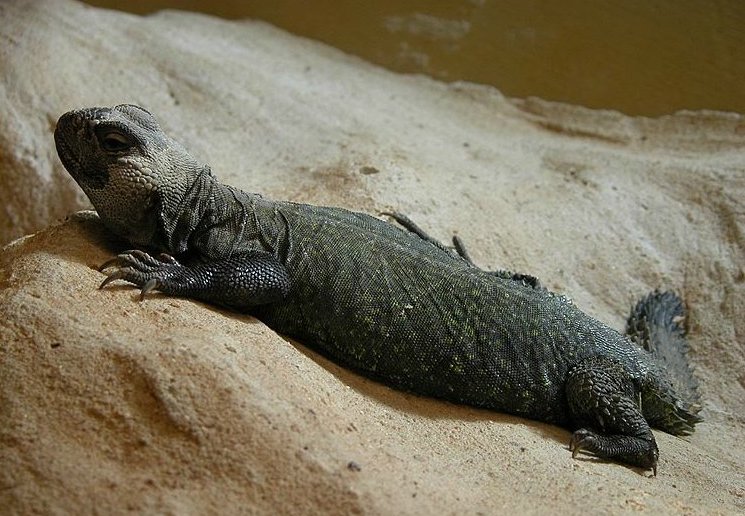
DABB SPINY-TAILED LIZARD
Uromastyx acanthinura
DESCRIPTION
Dabb Spiny-Tailed Lizard (Uromastyx acanthinura) is commonly known as the Spiny-Tailed Lizard and is characterized by its robust body and spiny scales along its tail. This lizard exhibits a range of colors, typically featuring shades of brown, yellow, and gray, which help it blend into its arid desert environment. Behaviorally, it is a diurnal species, often basking in the sun during the day and retreating to burrows or rocky crevices to escape the heat.
FUN FACTS
- Dabb Spiny-Tailed Lizards are known for their unique ability to tolerate high temperatures, allowing them to thrive in extreme desert environments
- They can also store fat in their tails, which serves as an energy reserve during periods of food scarcity.| These lizards are often seen basking on rocks or sandy surfaces, using the sun's heat to regulate their body temperature
- Their spiny tails not only provide protection but also play a role in social interactions among individuals
QUICK INFO
Lifespan10-15 years in the wild, up to 20 years in captivi
Average Weight0.5-1 kg
Average Length30-50 cm
Diet TypeHerbivore
Social Structuresolitary, occasionally seen in pairs during breeding
Activity PatternDiurnal
Breeding SeasonSpring (March-May)
- Habitat
- Dabb Spiny-Tailed Lizard inhabits arid and semi-arid regions, often found in rocky deserts and scrublands. It prefers areas with ample vegetation for foraging and suitable burrowing sites.
- Biomes
- Desert, Semi-arid
- Native Range
- This species is native to parts of North Africa and the Arabian Peninsula.
- Continent
- Africa, Asia
- Countries
- Egypt, Libya, Sudan, Saudi Arabia
- Diet
- It primarily feeds on a herbivorous diet consisting of leaves, flowers, and fruits. This lizard has adapted to consume tough plant material, which is essential for its survival in harsh desert conditions.
- Diet Type
- Herbivore
- Favorite Food
- leaves, flowers, fruits
- Social Structure
- solitary, occasionally seen in pairs during breeding
- Activity Pattern
- Diurnal
- Group Size
- 1-2
- Territorial
- 1
 VU
VU
 LC
LC
0.5-1 kg
Weight
30-50 cm
Length
- Coloration
- Typically brown or gray with yellowish markings and spiny scales on the tail.
- Sexual Dimorphism
- Males are generally larger and have more pronounced spines on their tails compared to females.
- Lifespan
- 10-15 years in the wild, up to 20 years in captivi
- Gestation Period
- 60-90 days
- Offspring per Birth
- 5-15
- Sexual Maturity
- 2-3 years
- Breeding Season
- Spring (March-May)
LC
Least Concern
IUCN Red List Status
- Population Status
- The population is currently stable, but habitat destruction poses a potential threat.
- Wild Population Estimate
- Unknown
- Population Trend
- Stable
- Endangered
- 0
- Threats
- Main threats include habitat loss due to urbanization and agriculture, as well as collection for the pet trade. These factors can lead to localized declines in certain areas.
- Predators
- Birds of prey, snakes, and larger mammals may prey on Dabb Spiny-Tailed Lizards.
- Defense Mechanisms
- When threatened, they can retreat into their burrows or use their spiny tails as a defense mechanism.
- Found in Zoos
- Uncommon