


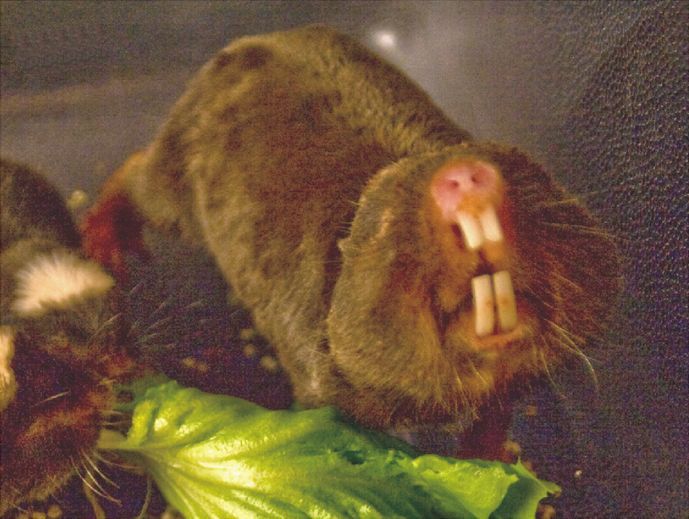
DAMARA MOLE RAT
DESCRIPTION
Damara Mole Rat is a burrowing rodent native to southern Africa, particularly found in Namibia. It has a robust body, short limbs, and a small, hairless tail, adapted for a subterranean lifestyle. These rodents are social animals, living in colonies and exhibiting complex behaviors such as cooperative breeding and foraging.
FUN FACTS
- Damara Mole Rats are fascinating for their social structure, which includes cooperative breeding where non-breeding individuals help care for the young
- This behavior is quite rare among rodents and showcases their complex social interactions
- | They have specialized adaptations for a subterranean lifestyle, including strong forelimbs for digging and a lack of external ears, which helps them navigate through their tunnels more efficiently
- Their unique adaptations make them a subject of interest in studies of evolution and social behavior
QUICK INFO
Lifespanup to 5 years in the wild
Average Weight150-300 g
Average Length20-25 cm
Diet TypeHerbivore
Social Structuregroup — they live in colonies that exhibit cooperative behaviors.
Activity PatternNocturnal
Breeding Seasonyear-round
- Habitat
- Damara Mole Rats inhabit arid and semi-arid regions, often in sandy or loamy soils that facilitate burrowing. They create extensive tunnel systems that serve as both living quarters and foraging areas.
- Biomes
- Desert, Grassland
- Native Range
- They are found in the central and western parts of Namibia.
- Continent
- Africa
- Countries
- Namibia
- Diet
- They primarily feed on underground plant parts, including tubers and roots. Their diet is adapted to their burrowing lifestyle, allowing them to access food sources that are not available to many other animals.
- Diet Type
- Herbivore
- Favorite Food
- tubers, roots
- Social Structure
- group — they live in colonies that exhibit cooperative behaviors.
- Activity Pattern
- Nocturnal
- Group Size
- 5-15
- Territorial
- 0
 LC
LC
 VU
VU
150-300 g
Weight
20-25 cm
Length
- Coloration
- brown to gray fur, with a lighter underbelly
- Sexual Dimorphism
- males are slightly larger than females
- Lifespan
- up to 5 years in the wild
- Gestation Period
- about 60 days
- Offspring per Birth
- 2-5
- Sexual Maturity
- about 3 months
- Breeding Season
- year-round
LC
Least Concern
IUCN Red List Status
- Population Status
- The population is currently stable, but habitat destruction poses a potential threat.
- Wild Population Estimate
- unknown
- Population Trend
- Stable
- Endangered
- 0
- Threats
- Habitat loss due to agricultural expansion and land development is a significant threat to their populations. Additionally, climate change may impact their food sources and habitat availability.
- Predators
- snakes, birds of prey, and small carnivores such as foxes.
- Defense Mechanisms
- They rely on their burrowing abilities to escape predators, quickly retreating into their tunnel systems.
- Found in Zoos
- Uncommon