


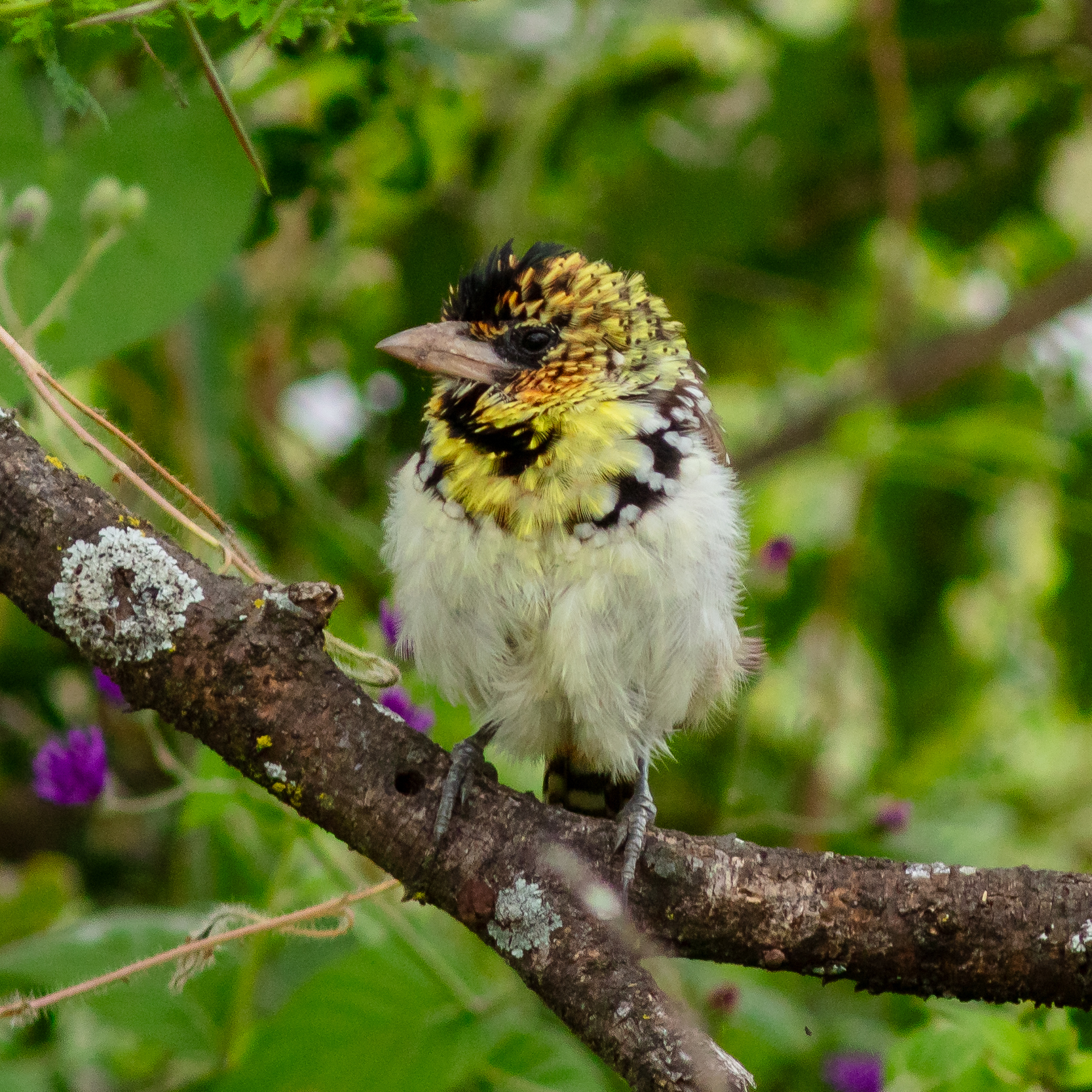
D'ARNAUD'S BARBET
Trachyphonus darnaudii
DESCRIPTION
D'Arnaud's barbet (Trachyphonus darnaudii) is a striking bird known for its vibrant plumage, which features a mix of green, yellow, and red colors. This species is primarily found in the woodlands and savannas of eastern and southern Africa, where it often forages in trees and shrubs. D'Arnaud's barbet is known for its loud, distinctive calls and social behavior, often seen in pairs or small groups as they search for food and communicate with one another.
FUN FACTS
- D'Arnaud's barbet is named after the French naturalist and explorer, Alfred D'Arnaud, who contributed to the study of African wildlife
- | These birds are known for their unique nesting habits, often excavating holes in trees to create their nests, which they line with soft materials to protect their young
QUICK INFO
Lifespanup to 10 years in the wild
Average Weight50-70 g
Average Length20-23 cm
Diet TypeOmnivore
Social Structurepair or group, often seen in small family groups or pairs during breeding season
Activity PatternDiurnal
Breeding Seasonvaries by region, typically during the rainy season
- Habitat
- This species inhabits open woodlands, savannas, and scrublands, often favoring areas with scattered trees. They are adaptable and can also be found in cultivated areas.
- Biomes
- Savanna, Woodland
- Native Range
- D'Arnaud's barbet is native to eastern and southern Africa, with a range that includes countries like Kenya, Tanzania, and South Africa.
- Continent
- Africa
- Countries
- Kenya, Tanzania, South Africa, Mozambique, Zimbabwe
- Diet
- D'Arnaud's barbet primarily feeds on fruits, seeds, and insects, showcasing a varied diet that allows it to thrive in its habitat. They are particularly fond of berries and other soft fruits.
- Diet Type
- Omnivore
- Favorite Food
- fruits, seeds, insects
- Social Structure
- pair or group, often seen in small family groups or pairs during breeding season
- Activity Pattern
- Diurnal
- Group Size
- 2-6
- Territorial
- 1
 LC
LC
 VU
VU
50-70 g
Weight
20-23 cm
Length
- Coloration
- vibrant green body with yellow and red accents, particularly on the head and underparts
- Sexual Dimorphism
- males and females are similar in appearance, with slight variations in coloration intensity
- Lifespan
- up to 10 years in the wild
- Offspring per Birth
- 2-4
- Sexual Maturity
- 1-2 years
- Breeding Season
- varies by region, typically during the rainy season
LC
Least Concern
IUCN Red List Status
- Population Status
- The population of D'Arnaud's barbet is currently stable, with no immediate threats to its survival.
- Wild Population Estimate
- unknown
- Population Trend
- Stable
- Endangered
- 0
- Threats
- Main threats include habitat loss due to deforestation and agricultural expansion. However, the species is currently not facing significant population declines.
- Predators
- snakes, birds of prey, and larger mammals may prey on D'Arnaud's barbet, particularly when they are nesting.
- Defense Mechanisms
- They often use their loud calls to warn of danger and may engage in mobbing behavior to deter predators.
- Found in Zoos
- Uncommon