


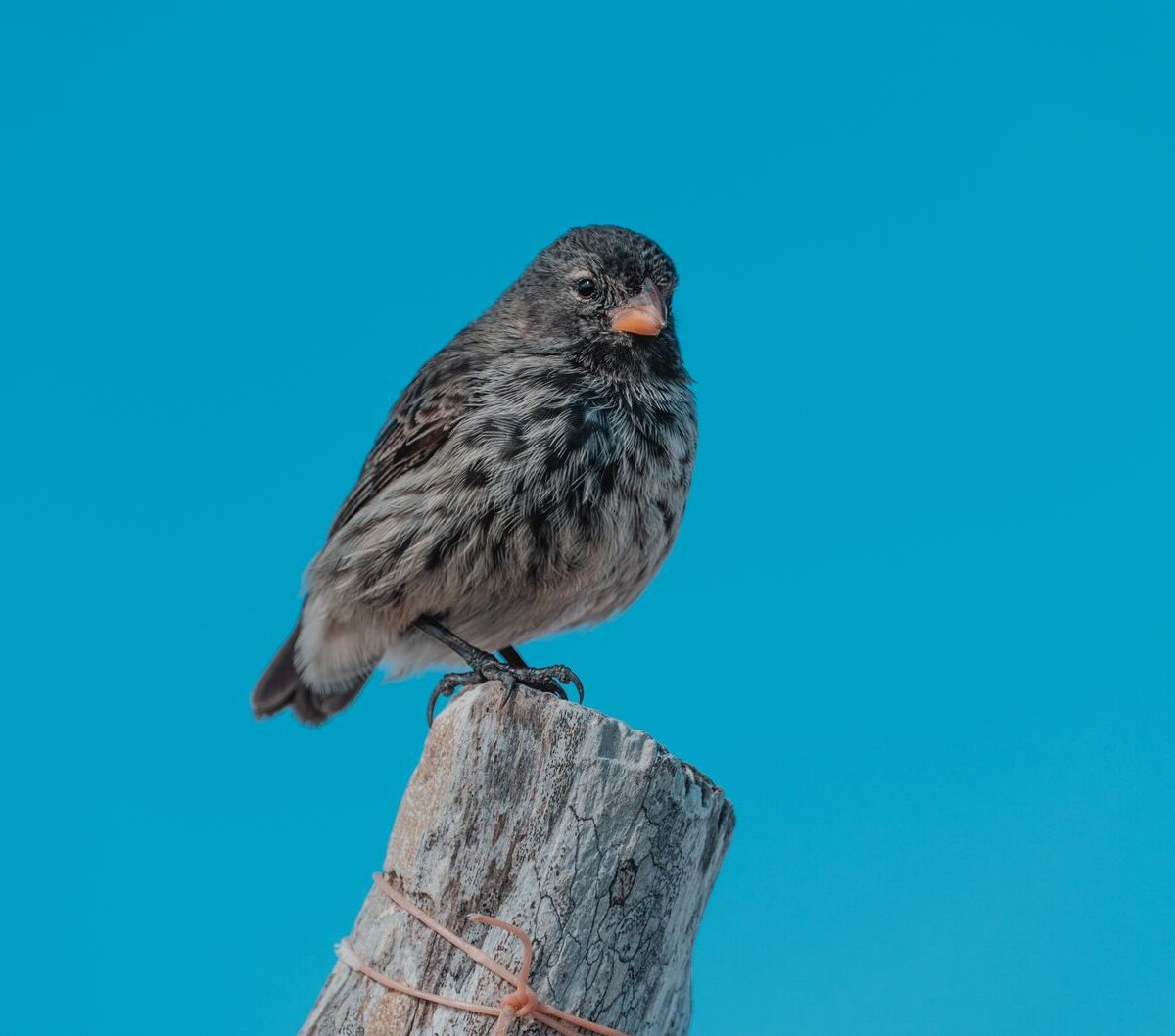
DARWIN'S FINCH
DESCRIPTION
Darwin's Finch, also known as the Galápagos Finch, is a group of small passerine birds that are primarily found in the Galápagos Islands. They exhibit a variety of beak shapes and sizes, which have evolved to exploit different food sources, showcasing remarkable adaptive radiation. These finches are known for their social behavior, often seen foraging in groups and displaying a range of vocalizations that play a role in their communication and mating rituals.
FUN FACTS
- Darwin's Finches played a crucial role in Charles Darwin's theory of evolution by natural selection, as he observed their adaptations during his visit to the Galápagos Islands
- Each species of Darwin's Finch has a unique beak shape that corresponds to its feeding habits, demonstrating the concept of adaptive radiation in action
QUICK INFO
Lifespan5-10 years in the wild.
Average Weight10-20 g
Average Length10-20 cm
Diet TypeOmnivore
Social StructureThey are often found in small groups, but can also be seen in pairs during the breeding season.
Activity PatternDiurnal
Breeding SeasonSpring (March-May)
- Habitat
- They inhabit a variety of environments, including forests, scrublands, and grasslands across the Galápagos Islands. Their adaptability allows them to thrive in both arid and lush areas.
- Biomes
- Tropical Rainforest, Savanna, Grassland
- Native Range
- Endemic to the Galápagos Islands, located in the Pacific Ocean.
- Continent
- South America
- Countries
- Ecuador
- Diet
- Darwin's Finches primarily feed on seeds, insects, and nectar, depending on the species and available resources. Their diverse diets are a key factor in their adaptability to different environments.
- Diet Type
- Omnivore
- Favorite Food
- seeds, insects, nectar
- Social Structure
- They are often found in small groups, but can also be seen in pairs during the breeding season.
- Activity Pattern
- Diurnal
- Group Size
- 2-30
- Territorial
- 0
 CR
CR
 LC
LC
10-20 g
Weight
10-20 cm
Length
- Coloration
- Their coloration varies, but many species have a brown or grayish plumage with some having brighter accents.
- Sexual Dimorphism
- Males are often more brightly colored than females, especially during the breeding season.
- Lifespan
- 5-10 years in the wild.
- Offspring per Birth
- 1-6
- Sexual Maturity
- 1-2 years
- Breeding Season
- Spring (March-May)
LC
Least Concern
IUCN Red List Status
- Population Status
- The population of Darwin's Finches varies by species, with some being more abundant than others.
- Wild Population Estimate
- Unknown, varies by species.
- Population Trend
- Stable
- Endangered
- 0
- Threats
- Main threats include habitat loss due to invasive species and climate change. These factors can impact their food sources and nesting sites.
- Conservation Program
- Ongoing conservation efforts in the Galápagos Islands focus on habitat restoration and invasive species control.
- Predators
- Hawks, rats, and introduced species such as cats pose threats to Darwin's Finches.
- Defense Mechanisms
- They rely on their agility and ability to fly to escape from predators.
- Found in Zoos
- Uncommon